tag > FFHCI
-
What a Bit Can Unlock
What mycelium teaches about energy, matter and information.
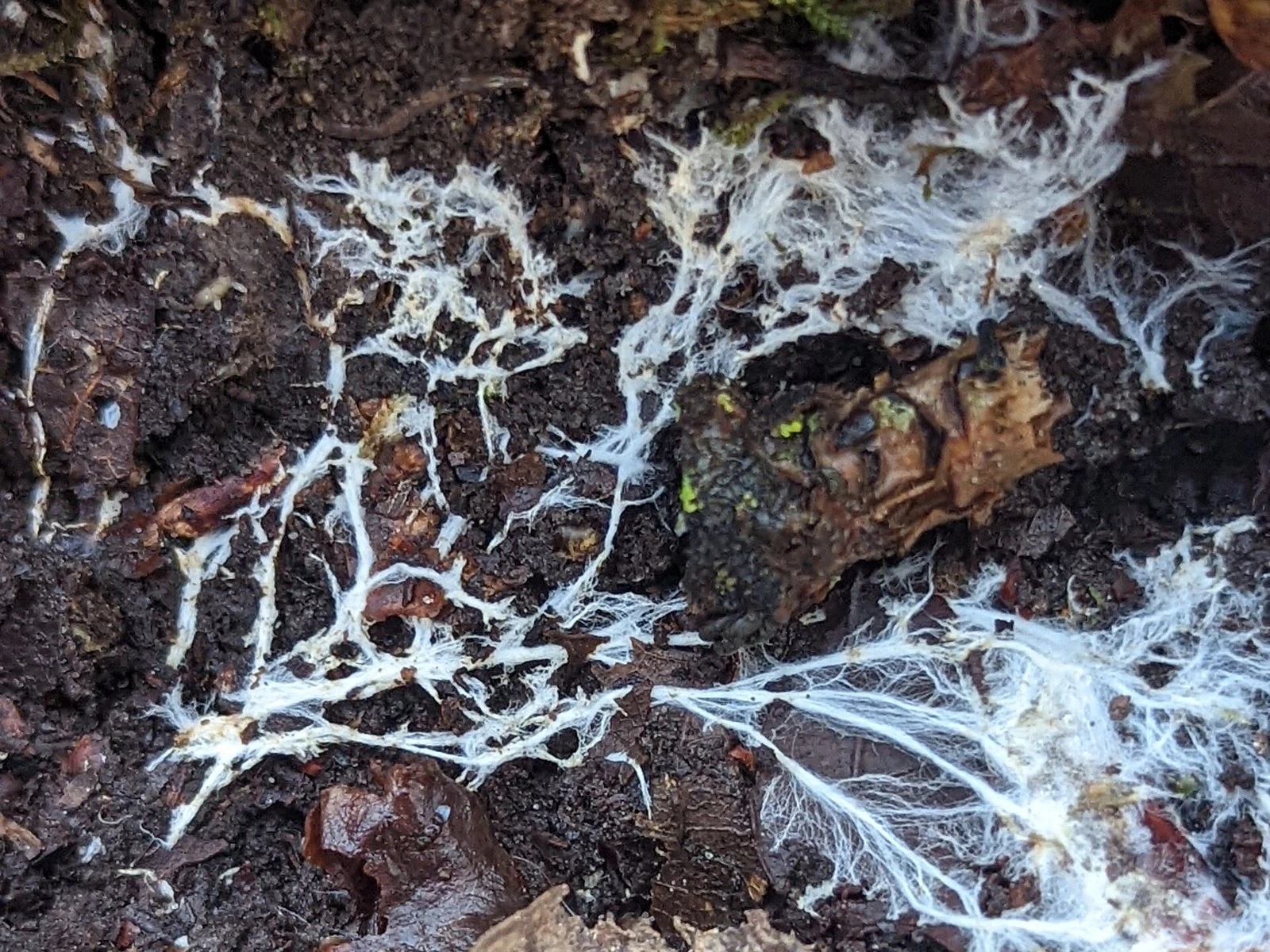
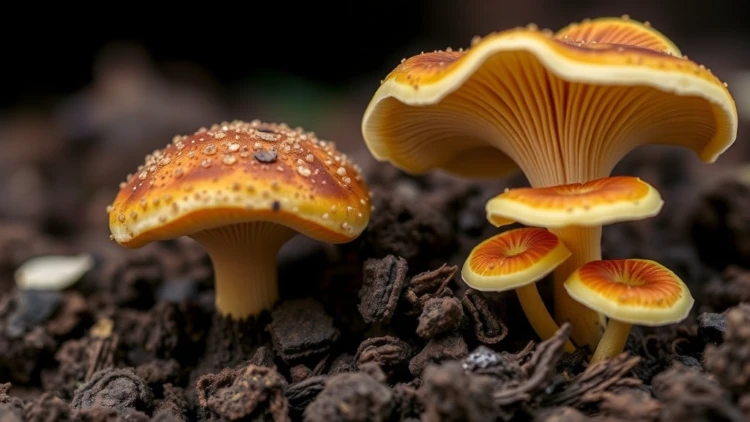
Mycelium threading through leaf litter. Photo: FungiFriendly, CC BY-SA 4.0. This started as a question about fungi: what does a mycelium run on? The answer is more than one thing. Living things deal in energy, in materials and in information, and these behave like separate currencies. Working out how they relate leads from the forest floor to the physics of a single bit, and to Leo Szilard, the man who also conceived the nuclear chain reaction. Along the way it turns up something about mycelium that’s easy to overlook.
Part oneThree currencies
Staying alive is work. A stone left alone stays a stone. A living thing left alone falls apart. Ilya Prigogine called such things dissipative structures: patterns, like a flame or a whirlpool, that exist only while energy flows through them. Humberto Maturana and Francisco Varela called life autopoiesis, self-making: a system that keeps rebuilding the parts that keep it going. Mycelium shows this plainly. Hyphae grow at their tips while older sections are broken down and recycled, so the network is less a thing than an ongoing process. Something has to pay for all that rebuilding, and life pays in more than one currency.
Energy is the universal one. Almost all of it starts as sunlight. Plants turn it into sugars, and every cell spends it as ATP. The exception is life at deep-sea vents, which runs on chemical energy.
Materials are separate currencies: nitrogen, phosphorus, water. Mycorrhizal fungi, the ones that partner with plant roots, mostly trade those. They give plants phosphorus and water, and get sugar (carbon) back. That trade exists because there are two currencies: each side has what the other lacks.
It’s a market, not a gift economy. Plants send more carbon to the fungi that deliver more phosphorus, and fungi send more phosphorus to the roots that pay more carbon (Kiers et al., Science 2011). Cheaters get cut off. The romantic “wood wide web”, where trees share through fungi like a family, is debated: a 2023 review (Karst et al.) found the field evidence much thinner than the popular story.
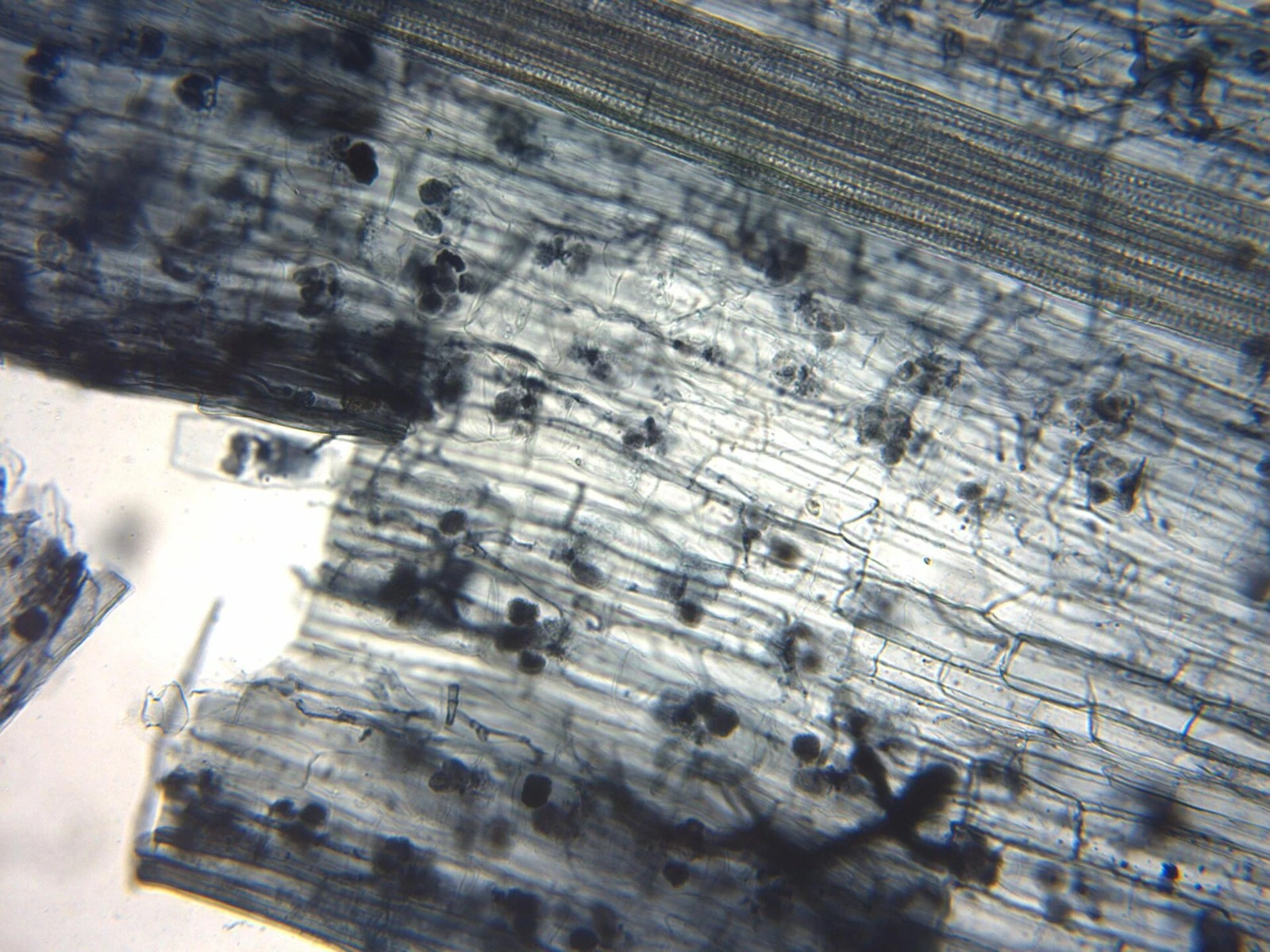
The marketplace up close: plant root cells colonised by an arbuscular mycorrhizal fungus. The dark knots are fungal structures inside the plant’s cells, where sugar and phosphorus change hands. Photo: Msturmel, public domain. Signals cost energy but aren’t energy. Electrical spikes in mycelium run on ion gradients that ATP pumps maintain. So energy pays for the signal, but the signal’s value is information: what to do, where to grow. The information pays back in energy and survival. Information is a pattern, not energy itself, but the two trade against each other.
Part twoWhat is information, then?
It’s the arrangement, not the stuff. Rearrange the same letters and you get a different message, with the same ink and the same energy. Information lives in the relations between parts.
It always needs a host. No floating information exists. It’s cut into stone, held as voltage in silicon, written in DNA, kept as an ion gradient in a hypha. Rolf Landauer’s motto: “information is physical.” Take away the carrier and the information is gone.
Meaning needs a reader. In Shannon’s sense a crystal holds a pattern whether anyone looks or not. But a chemical trail means “food here” only to a fungus that can read it. To a rock it means nothing. And the reader pays: it burns ATP to keep its reading machinery alive.
Information trades against energy. Landauer’s principle: erasing one bit costs at least kT ln 2 of energy, about 3 × 10⁻²¹ joules at room temperature (Landauer, 1961). Szilard’s engine shows the reverse: knowing one bit lets you extract up to kT ln 2 of work (Szilard, 1929). Put one gas molecule in a box, slide in a wall, find out which side it’s on, and let it push the wall. So information isn’t merely carried by energy. It’s physical, and it trades against free energy: knowing something lowers entropy, which raises the work you can extract. There’s no free lunch. To repeat the trick you have to erase the bit, and erasing pays back what you gained (Bennett, 1982).
one bit ⇄ kT ln 2 ≈ 3 × 10⁻²¹ J
The exchange rate between information and energy at room temperature
1. One molecule in a box.
2. Slide in a wall.
3. Measure which side: one bit.
4. It pushes the wall: up to kT ln 2 of work.
Life pays far above that floor. kT ln 2 is tiny: splitting one ATP molecule releases about twenty times as much. And a cell is warm, wet and noisy. To send a signal that survives the thermal jiggling it has to shout, pumping thousands to millions of ions for one clear spike. Neurons, the best-measured case, spend between ten thousand and ten million ATP per bit (Laughlin et al., 1998). That puts living signalling a hundred thousand times or more above Landauer’s limit. The extra buys reliability and speed.
Energy per event, in multiples of the Landauer limit (log scale)
Erasing one bit, the physical minimum1×Splitting one ATP~20×A neuron sending one bit10⁵–10⁸×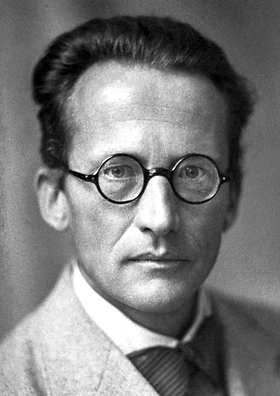
Erwin Schrödinger, 1933. Nobel Foundation, public domain. Information is leverage. A map can’t power a car, but the right map finds the well. So a cell’s information is worth something through behaviour, not through its own tiny thermodynamic value: knowing where the food is saves far more energy than the bit itself could ever pay out. The fungus spends a little ATP maintaining a pattern that maps the soil, and that pattern decides where its large budgets of energy and material go next. Schrödinger wrote in What Is Life? (1944) that “what an organism feeds upon is negative entropy.” Léon Brillouin later tied negative entropy to information. Seen that way, a living thing feeds on energy and on knowing where to spend it.
A bit has two prices. Landauer gives one exchange rate: a bit is worth at most kT ln 2 joules. There is a second, and it’s the one that matters for life. In 1956 John Kelly, working at Bell Labs, showed that a gambler with a private tip can grow their money faster, and that the extra growth rate is capped by how much information the tip carries about the outcome (Kelly, 1956). Matina Donaldson-Matasci, Carl Bergstrom and Michael Lachmann showed that, under comparable conditions, the same holds for organisms: a cue about the environment can raise a lineage’s growth rate by at most the information it carries (Donaldson-Matasci et al., 2010). So a bit has a tiny price in joules and a potentially large price in growth. Physics fixes the first. The second depends on what the bit lets you do.
Underneath, there’s only one currency. Strictly, physics counts information as a form of free energy: a system you know more about holds more extractable work (Parrondo, Horowitz and Sagawa, 2015). So the deepest currency is free energy. But in a living thing the bit’s own share is a rounding error, while what it steers is everything. That’s why, in practice, it pays to track information as its own currency.
Knowing has to pay for itself. Senses and brains are judged by one rule: they’re worth keeping only if what they tell you saves more energy than they cost. The human brain is about 2% of body weight and burns about 20% of the body’s energy. So evolution keeps nervous systems lean: sparse firing, cheap codes, no thinking without need. An eye that never finds food is a luxury, and luxuries get cut. Physics adds a sharper version: a system that keeps memories of its past which don’t help predict its future must waste energy because of them (Still et al., 2012). Useless memory has a heat bill, so being efficient and predicting well turn out to be closely linked.
Part threeWhat a bit can unlock
“… what hep humorists here are already calling ‘Critical Mass’ (get it? not too many did in 1945, the Cosmic Bomb was still trembling in its earliness, not yet revealed to the People, so you heard the term only in the very superhepcat-to-hepcat exchanges).”Thomas Pynchon, Gravity’s Rainbow (1973)
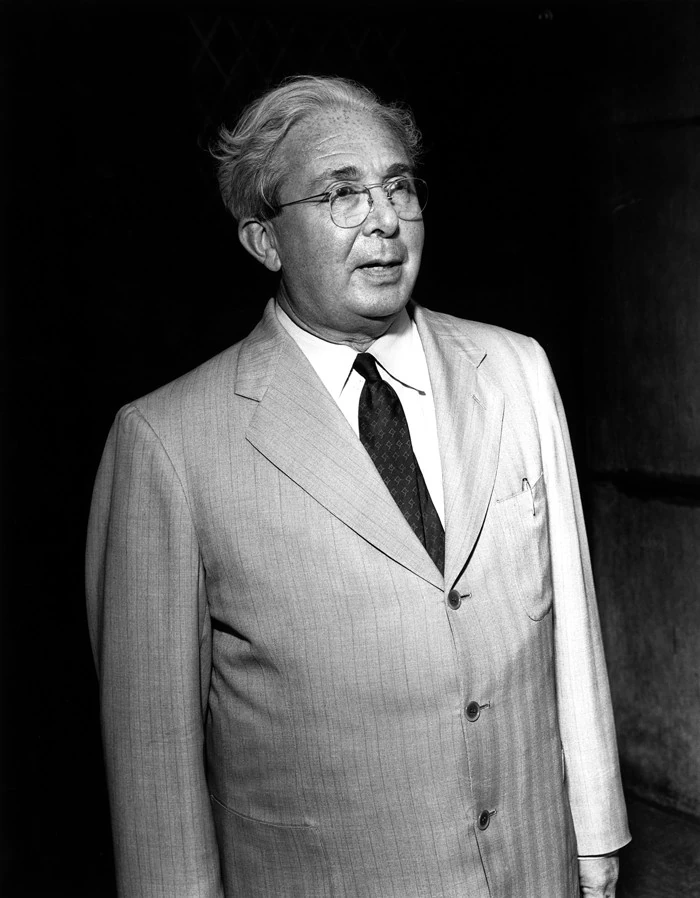
Leo Szilard. U.S. Department of Energy, public domain. The same Szilard stands at both ends. In 1929 he showed that one bit is worth almost nothing: kT ln 2 of work, about 3 × 10⁻²¹ joules. In 1933, waiting at a traffic light in London, he saw that a neutron chain reaction could release enormous energy. He patented the idea in 1934, and in 1939 he drafted the letter Einstein signed to Roosevelt. By 1945 “critical mass” was the insiders’ joke in Pynchon’s novel. A bit on its own buys almost nothing. The right piece of knowledge, applied in the right place, released enough energy to destroy a city.
A bit doesn’t contain energy. It releases it. The bomb needs three things. A store: energy held in a metastable state, here in uranium nuclei. A trigger: one neutron, one “go”. And gain: each split has to set off at least one more. Critical mass is the amount of uranium at which that gain reaches one and the reaction sustains itself; a bomb pushes it well above one. The trigger’s own energy is irrelevant. What it can unlock depends on the size of the store and on the gain.
Life runs on the same pattern. ATP is a store waiting to be spent, enzymes are triggers, and signalling cascades supply the gain. A single photon can make a rod cell in your eye respond, because each step of the cascade multiplies the signal (Baylor, Lamb and Yau, 1979).
Bomb Cell Mycelium Store Uranium nuclei ATP, sugars Dead wood, soil carbon Trigger One neutron An enzyme, a photon An enzyme, a signal at a hyphal tip Gain Chain reaction Signalling cascade Growth that reinforces what pays Mycelium sits on the largest store on land. Soils hold more carbon than the atmosphere and all plants combined, much of it from dead plant matter: stored sunlight. Decomposers decide whether that store stays locked or is released, and for wood the decomposers are mostly fungi. White-rot fungi are among the very few organisms that can break down lignin, the toughest part of wood. Some researchers argue that when fungi evolved lignin-cracking enzymes, less wood got buried, which helped end the great coal-forming era of the Carboniferous (Floudas et al., Science 2012). Others think climate and geology mattered more (Nelsen et al., PNAS 2016). That it’s a serious debate is the point: a handful of genes is a candidate for steering the planet’s carbon.
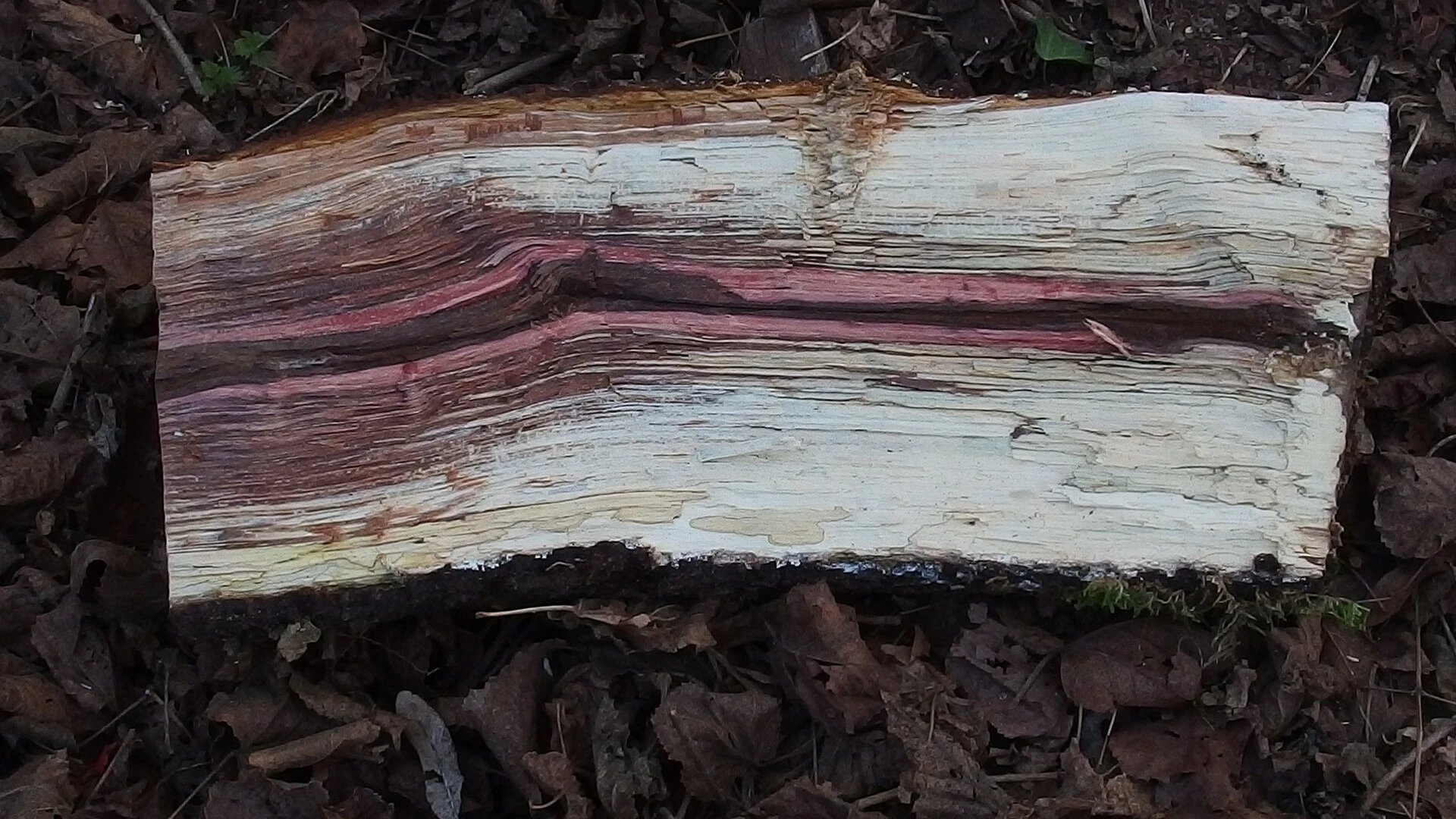
White rot in oak. The pale wood is where fungi have broken down the lignin, the part of wood almost nothing else can digest. Photo: Auró, CC BY-SA 4.0. And it steers a flow measured in gigatonnes. Plants send an estimated 13 gigatonnes of CO₂-equivalent a year to their mycorrhizal fungi, roughly a third of annual fossil-fuel emissions (Hawkins et al., Current Biology 2023; the estimate is uncertain). Inside the network, paths that find food get more growth and more transport, so a small signal at a hyphal tip turns into a large reallocation. That’s gain.
A bomb wants gain above one. Life seems to want it near one. Below one, signals die out. Above one, they run away, and a bomb is built to run away. Living systems need to stay responsive without exploding, and there’s evidence that some sit close to the edge. In slices of rat cortex, bursts of activity spread as “neuronal avalanches” whose statistics look like a system poised at a gain of about one (Beggs and Plenz, 2003). When a system tunes itself to that edge, it’s called self-organised criticality. The idea is still debated for brains and untested for fungi. But it marks the real difference between a bomb and an organism. Both use a store, a trigger and gain. Life keeps the gain at the edge, where a small signal can matter and nothing blows up.
So what are we overlooking? We tend to see mycelium as a network that carries things. It’s better seen as a control system sitting on a vast reservoir of stored energy. Its information is cheap, and what it controls is measured in gigatonnes. That’s a way of seeing, not yet a measurement: nobody has worked out how much of that flow is steered by what fungi sense and signal, rather than by plain growth and chemistry. But it’s the right question to ask. Szilard found both ends of that within a few years. Fungi have been running the quiet version for over 400 million years.
Information is worth what it can unlock, not what it weighs.
In shortThe whole picture
Energy
pays
Free energy: sunlight, sugar, ATP. Every cell spends it.
Materials
trade
Nitrogen, phosphorus, water. Scarce in different places, so they get exchanged.
Information
steers
Patterns and signals. Cheap to hold, and they decide where the rest goes.
Why does having more than one currency matter? The material currencies are what make trade, specialists and coexistence possible. Ecology has a name for the alternative: competitive exclusion (Gause, 1934). When species compete for one limiting resource, the best competitor eventually wins and the rest disappear. With two or more, different species can specialise on different ones and live side by side (Tilman, 1982). The catch is that this only works where they actually compete: without competition, a second food just favours generalists. That’s why, in the artificial creatures I’m evolving, I’m bullish on worlds with two foods that creatures have to compete for: it’s the step from a single currency to an economy.
The lesson for artificial life. Real life pays in joules. A simulated creature pays only what its world charges it, and most simulated worlds charge almost nothing: no decay, and no cost for sensing or thinking. The more a world makes energy, materials and information cost something real, the more its creatures have to do what living things do: stay alive, trade, and spend a little on knowing where to spend the rest.
-
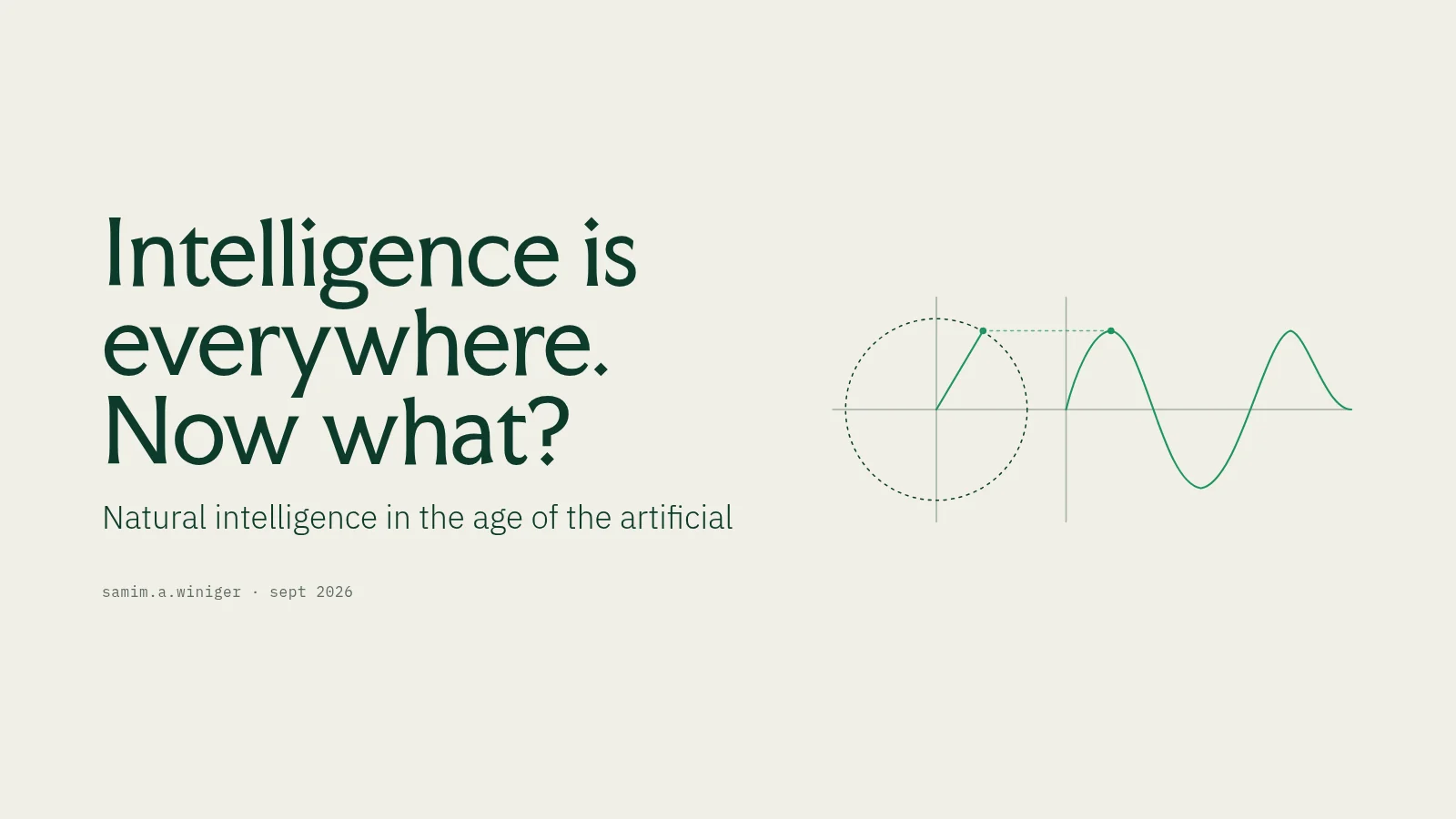
Intelligence is everywhere. Now what? Natural intelligence in the age of the artificial.
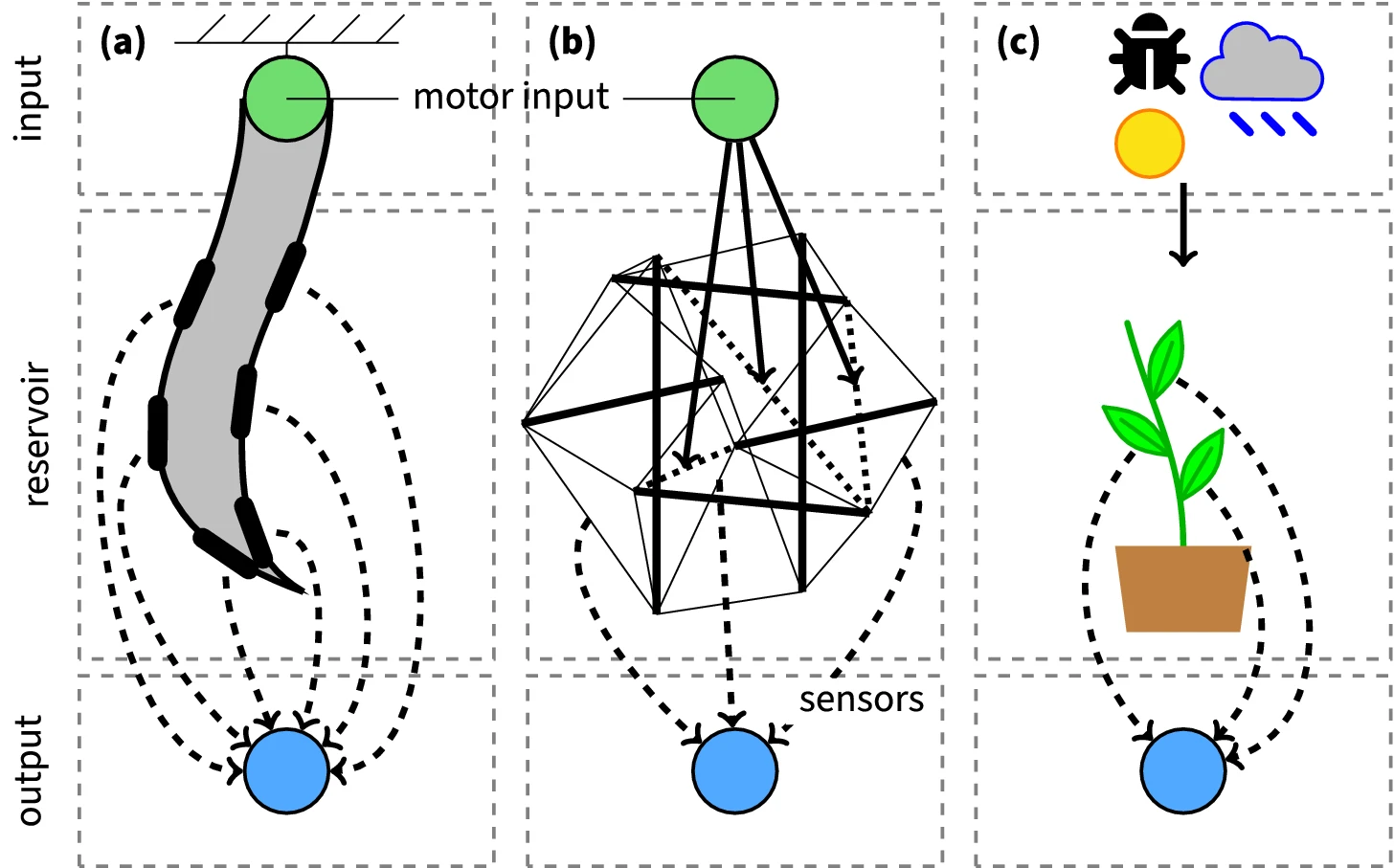
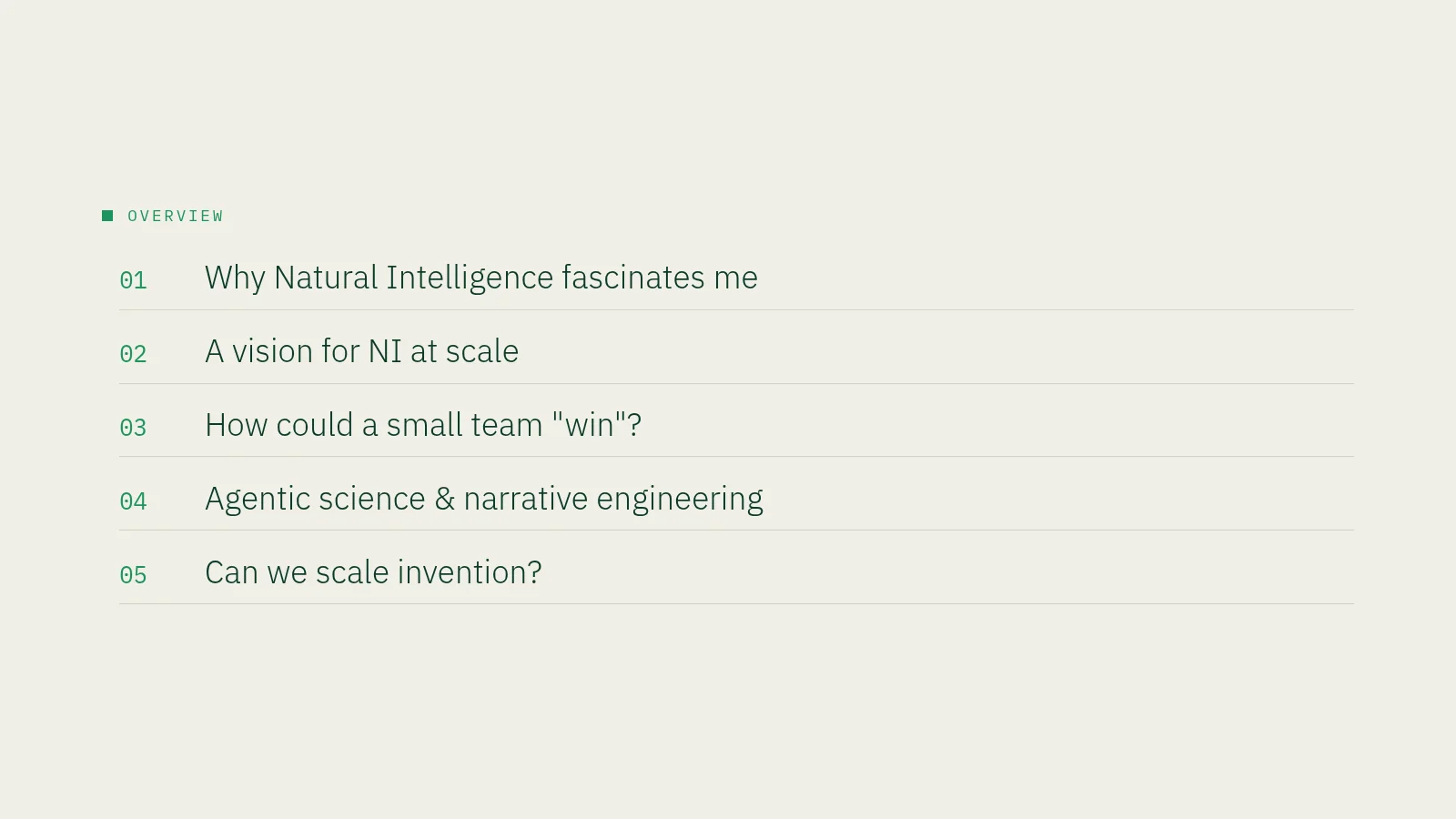
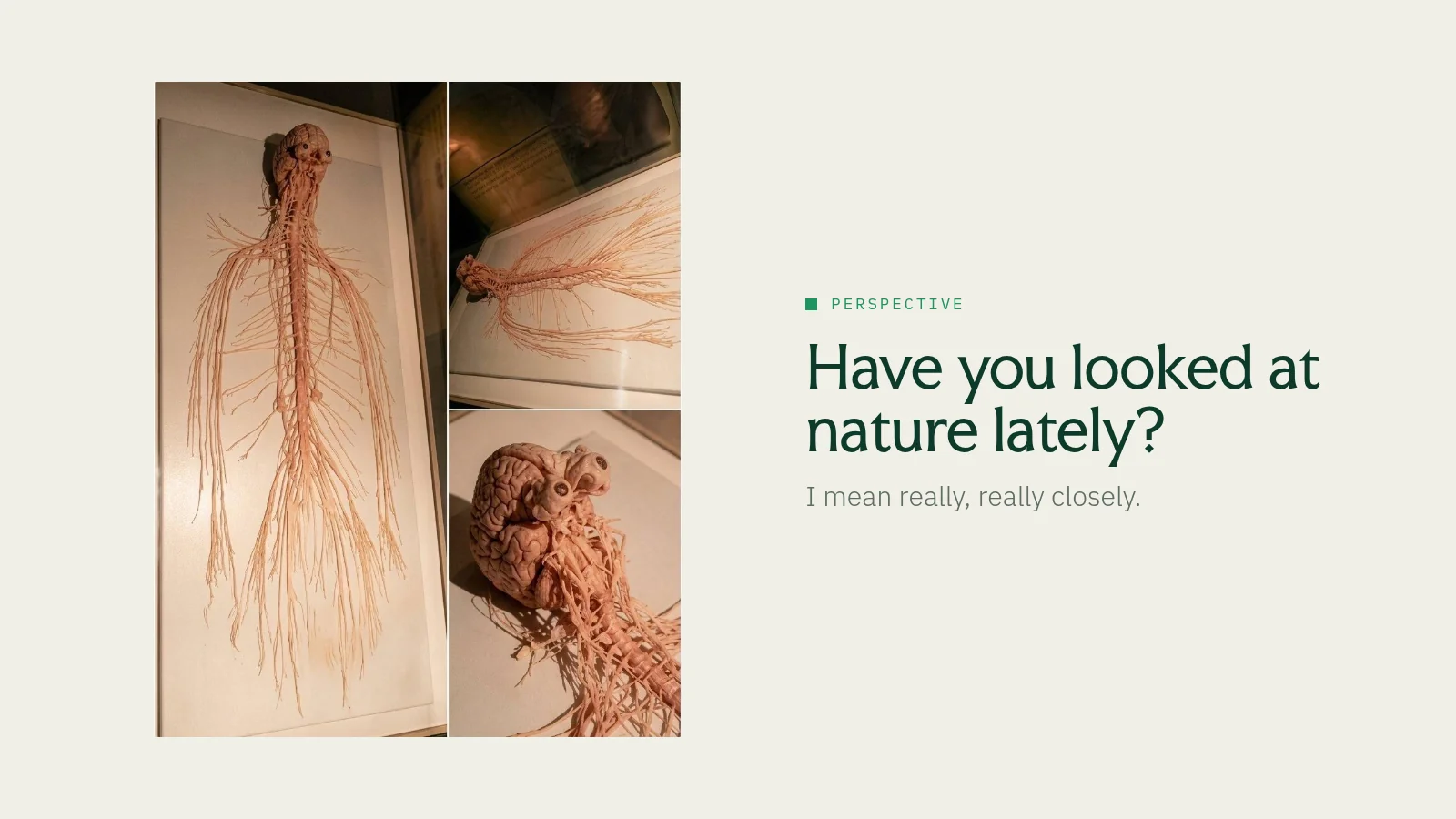
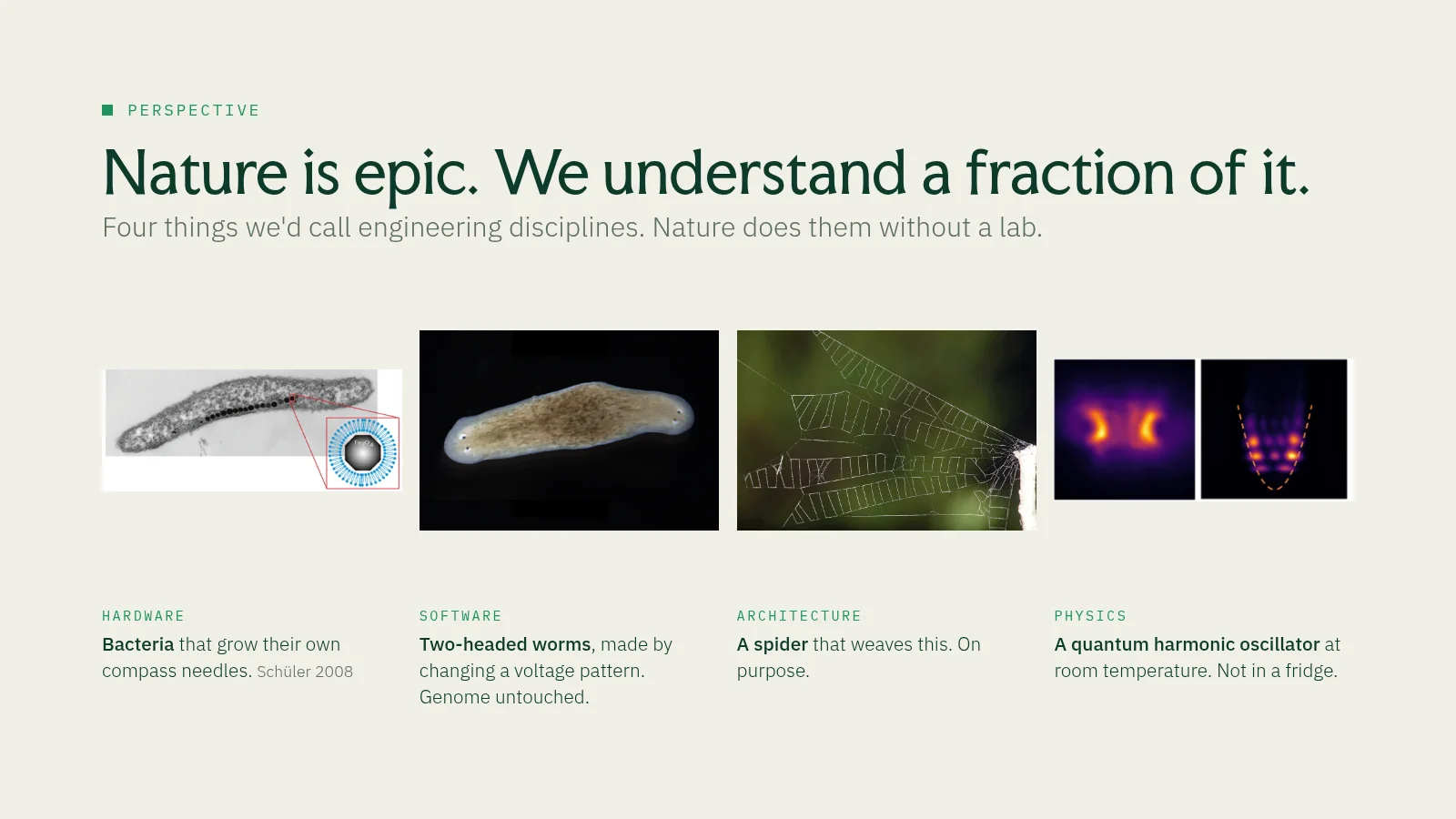
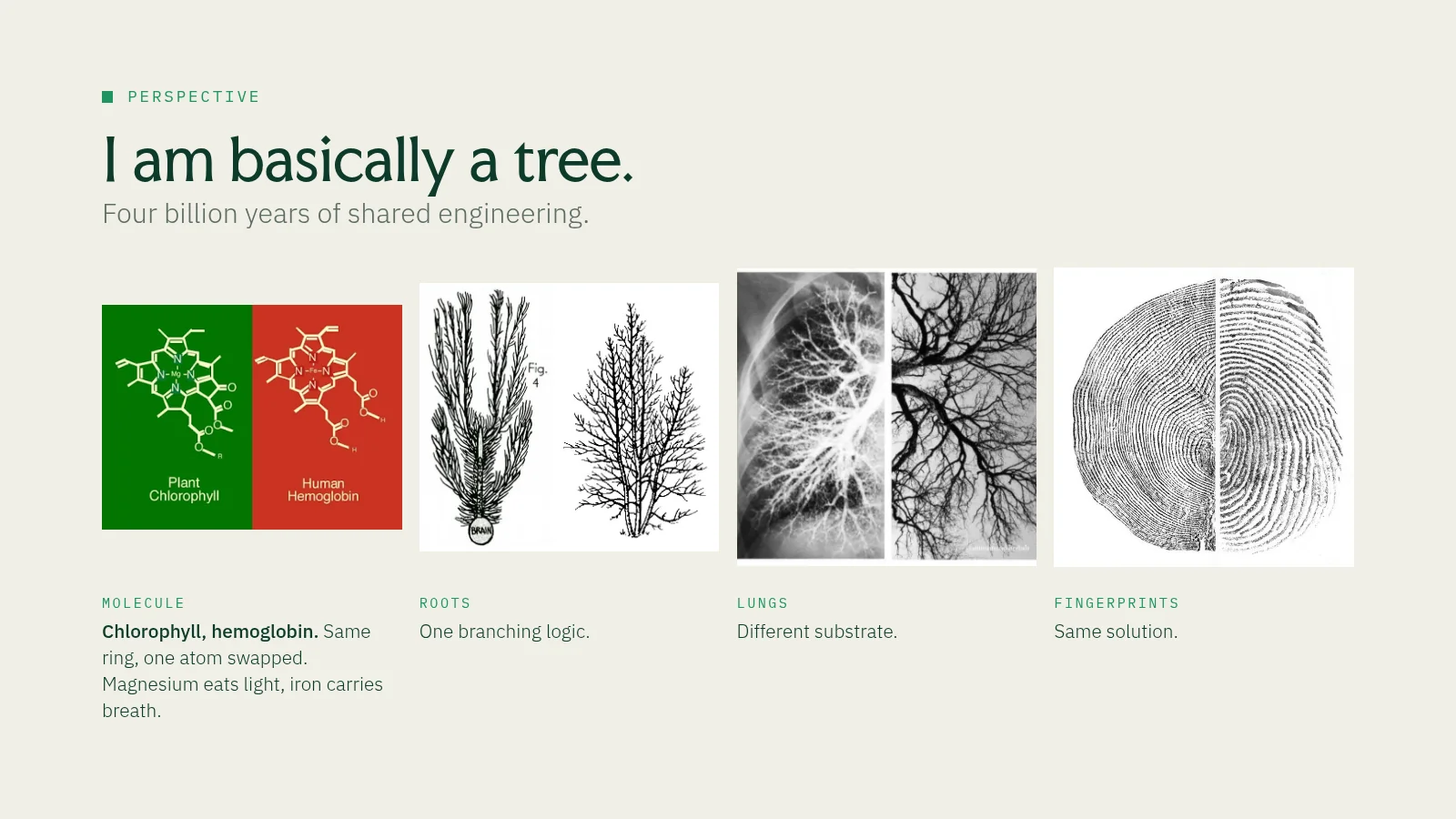
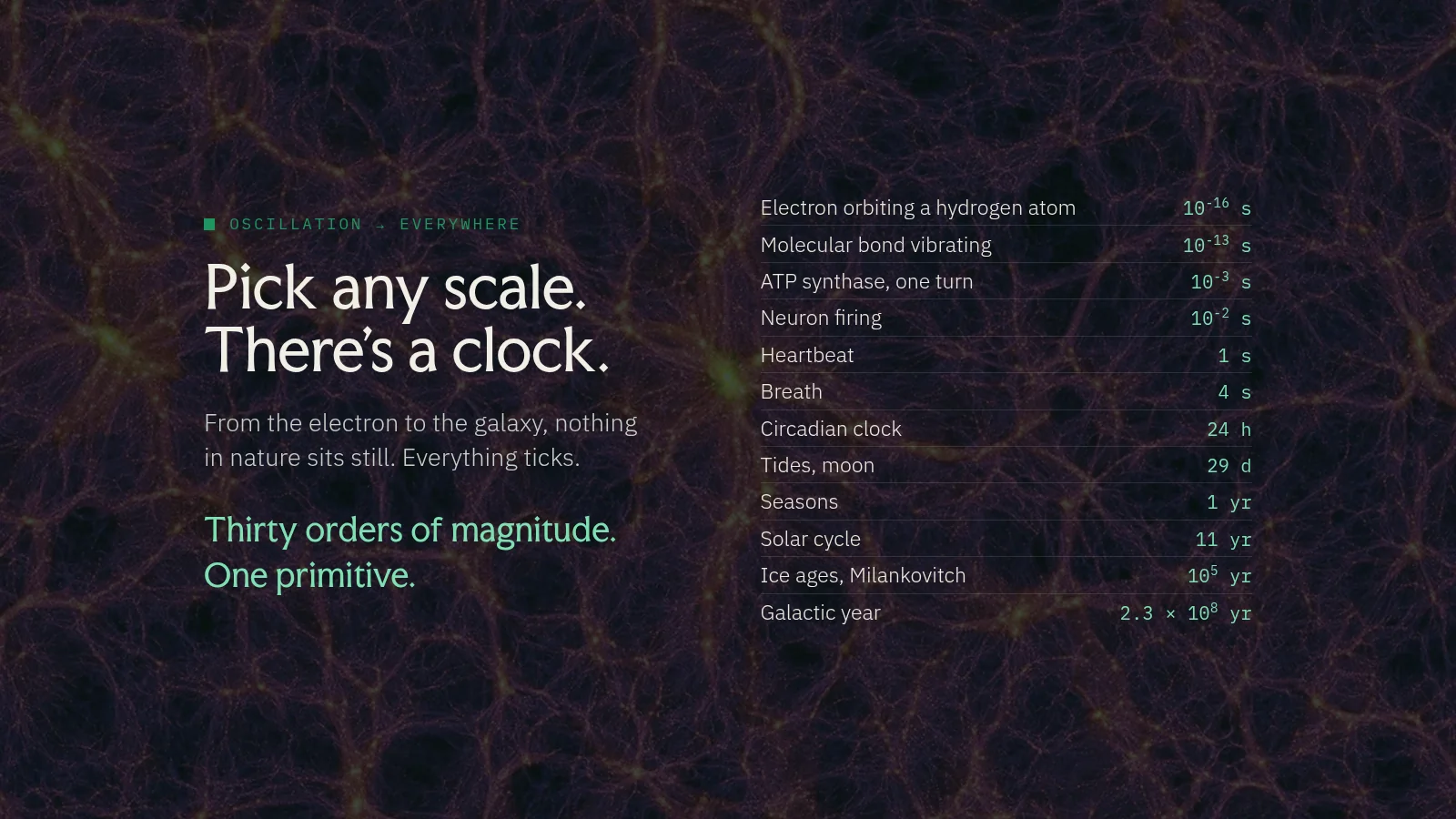
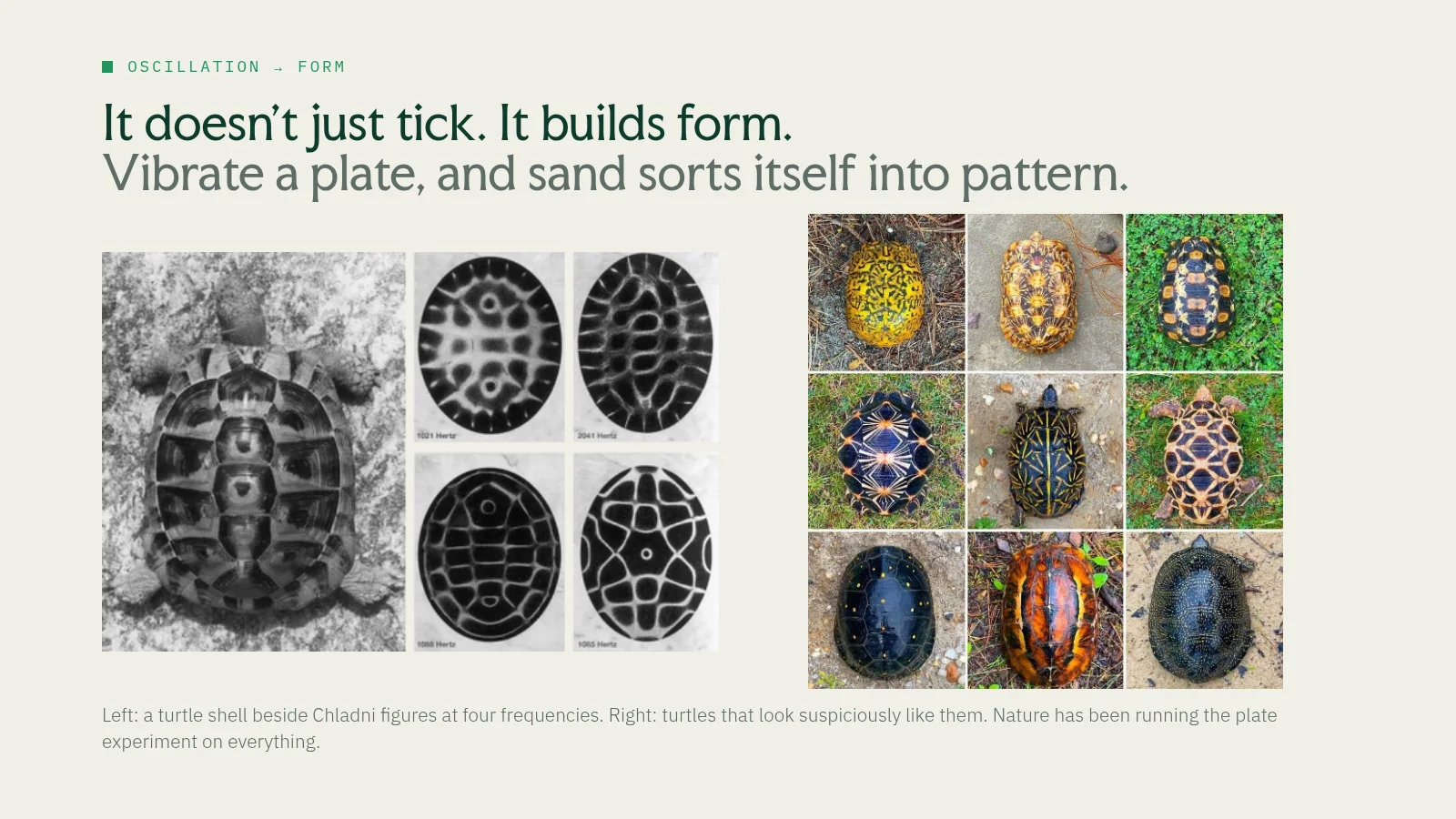
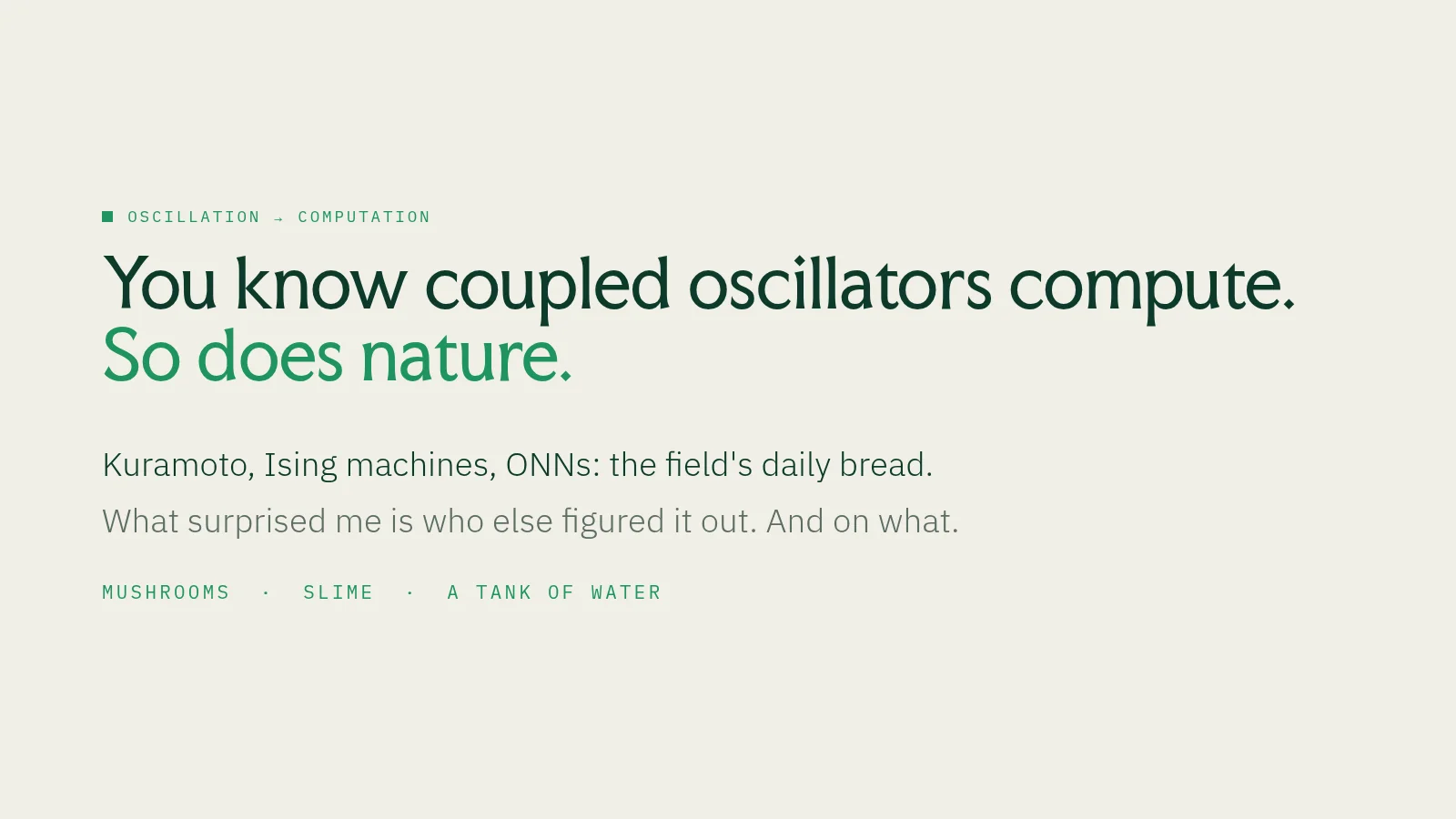
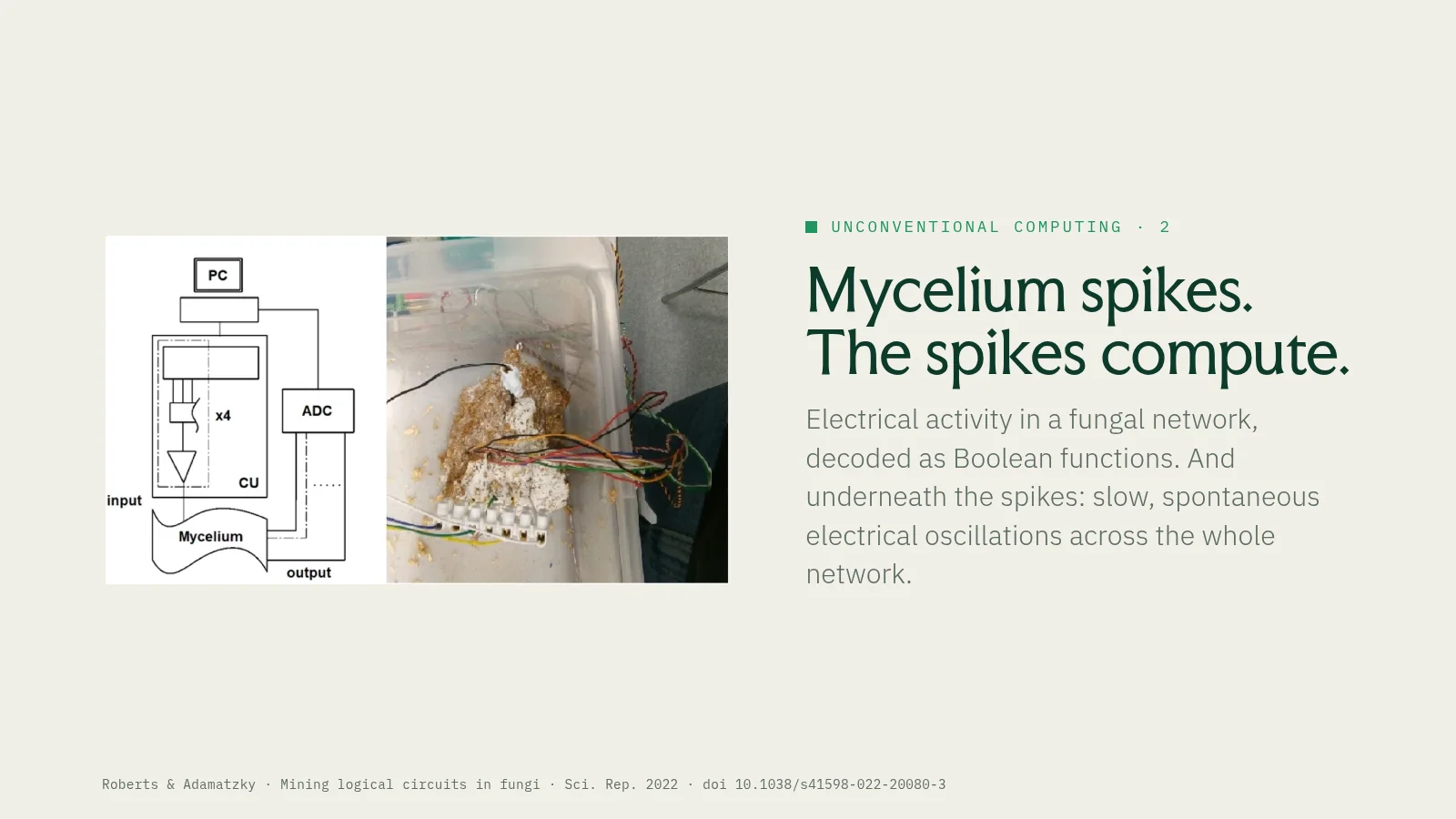
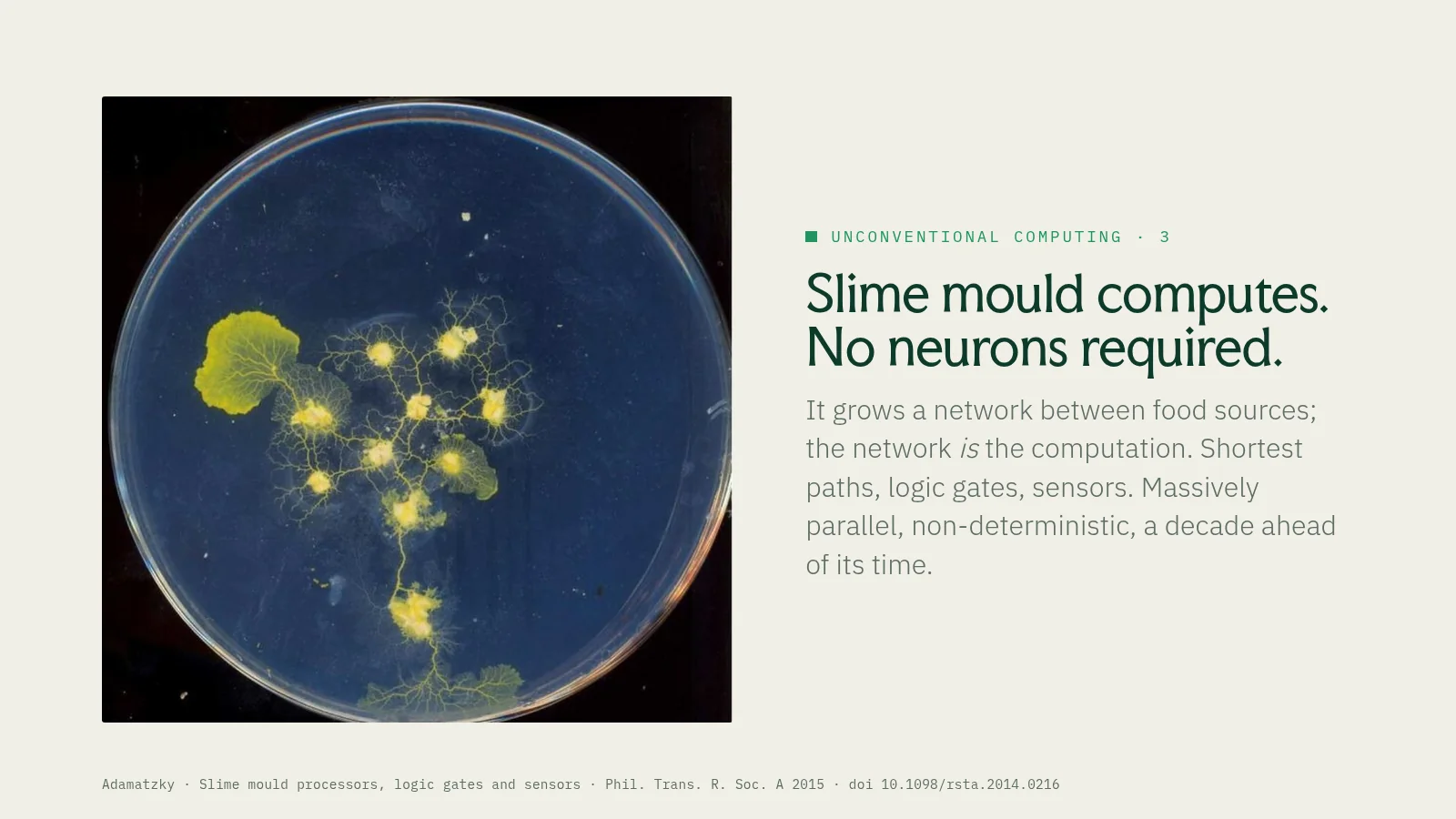
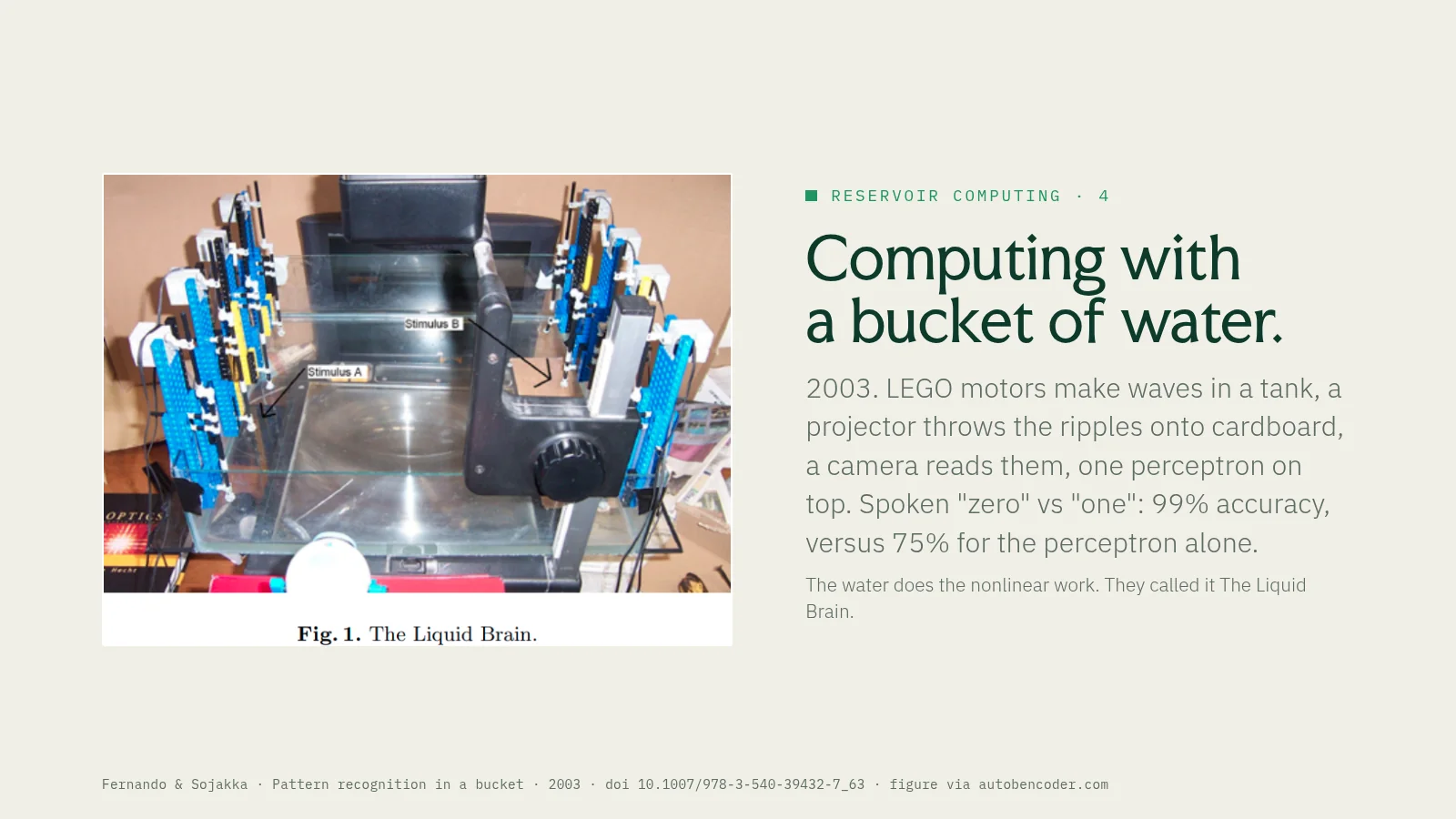
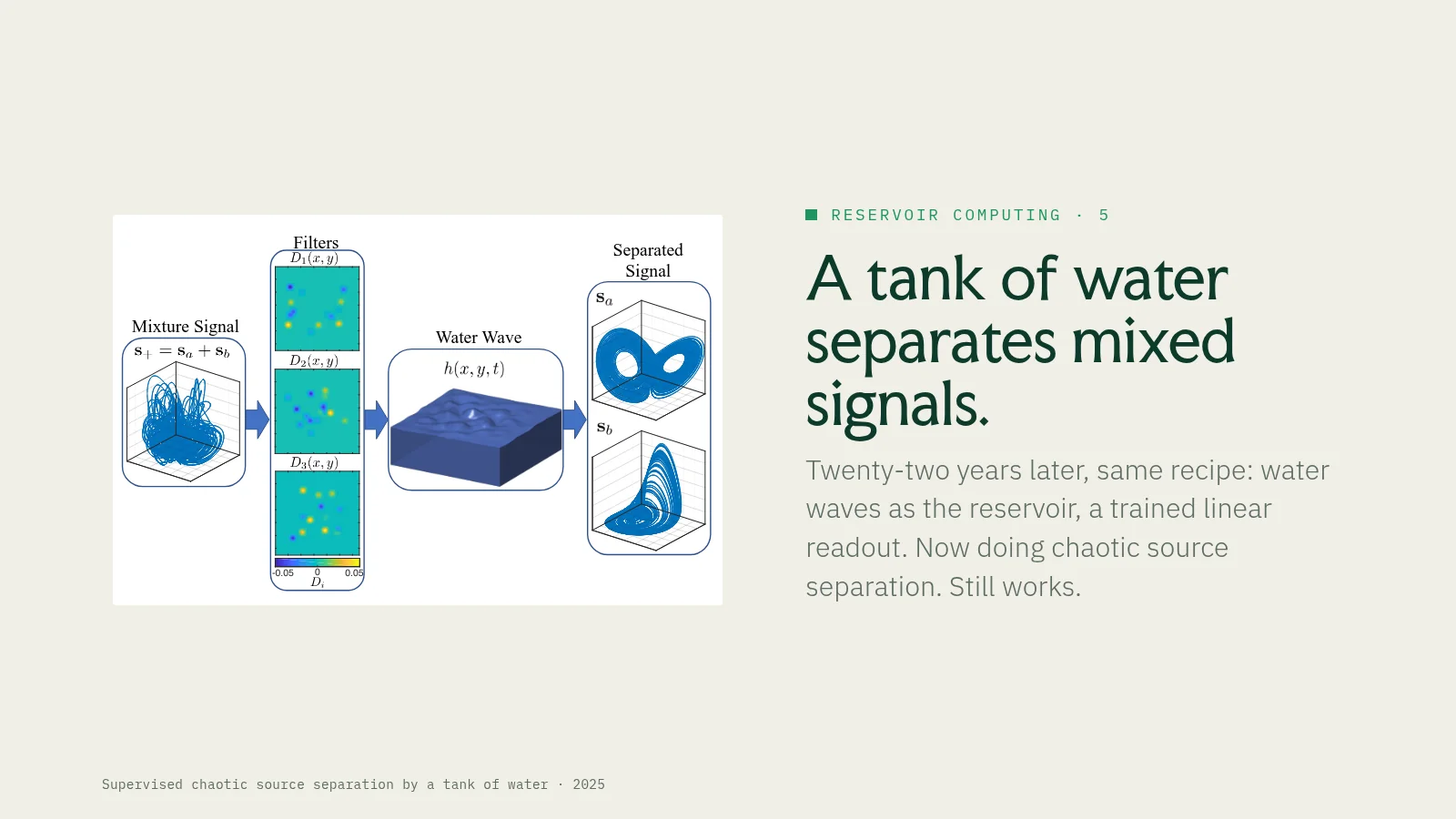
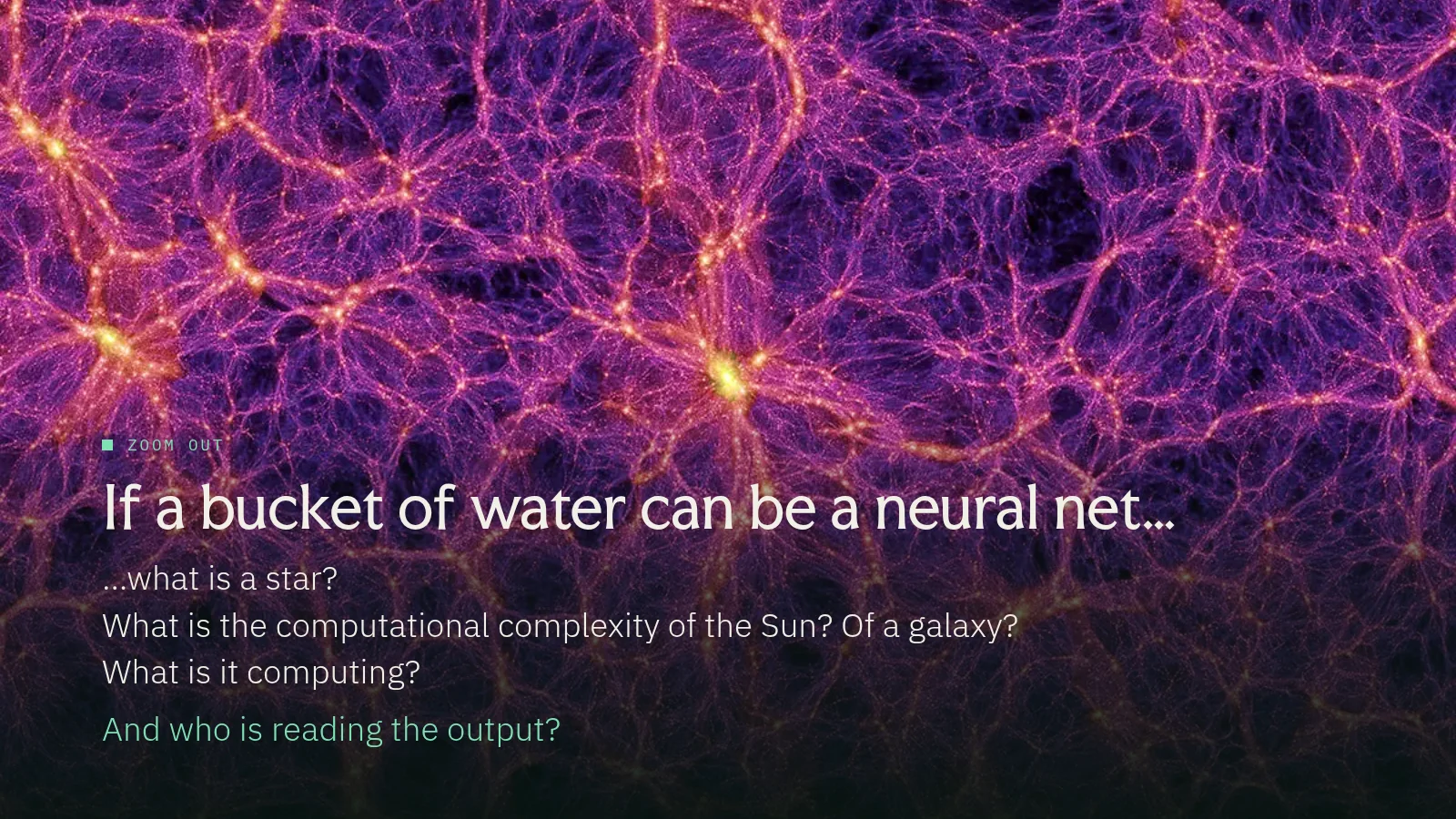
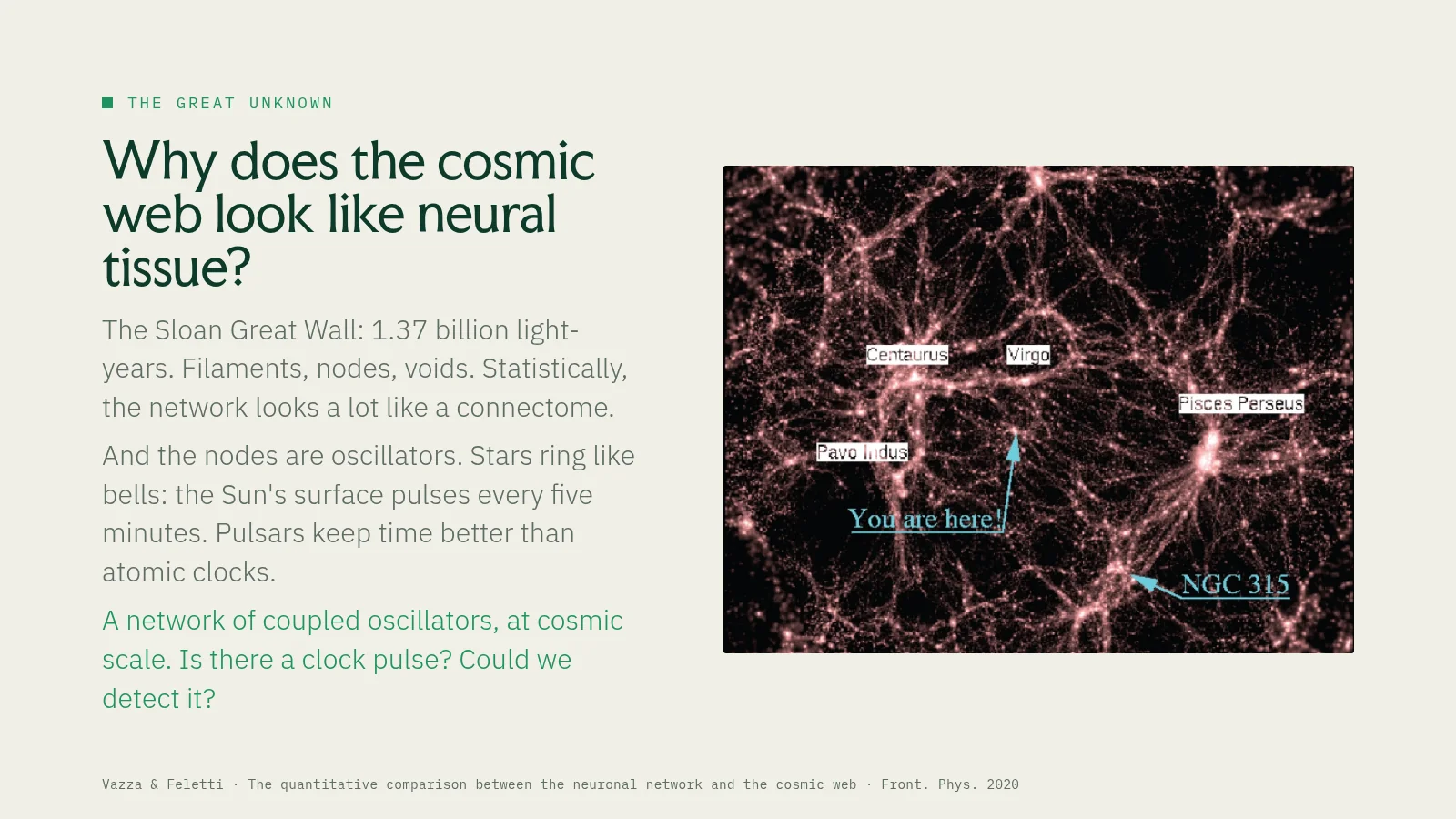
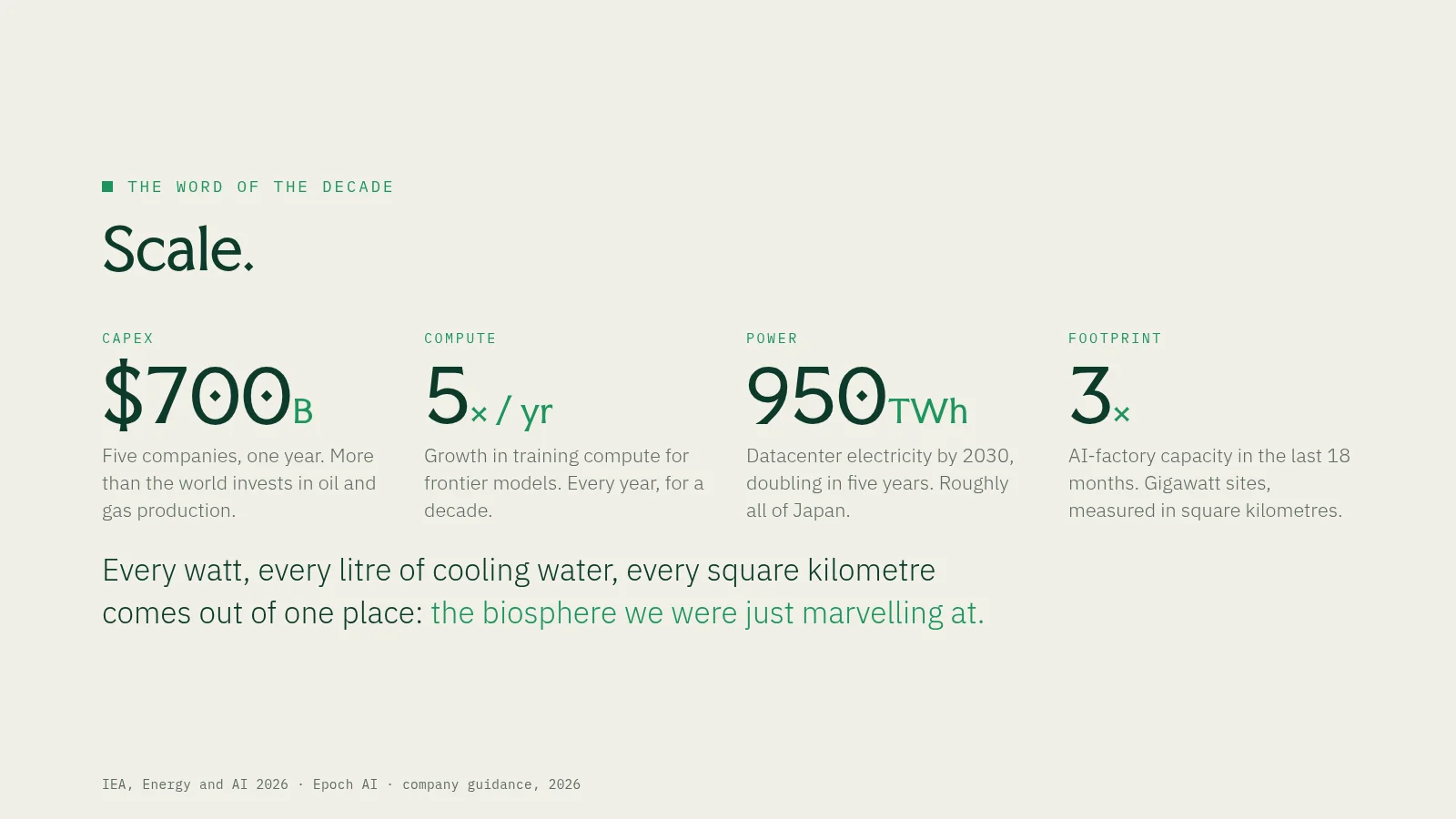
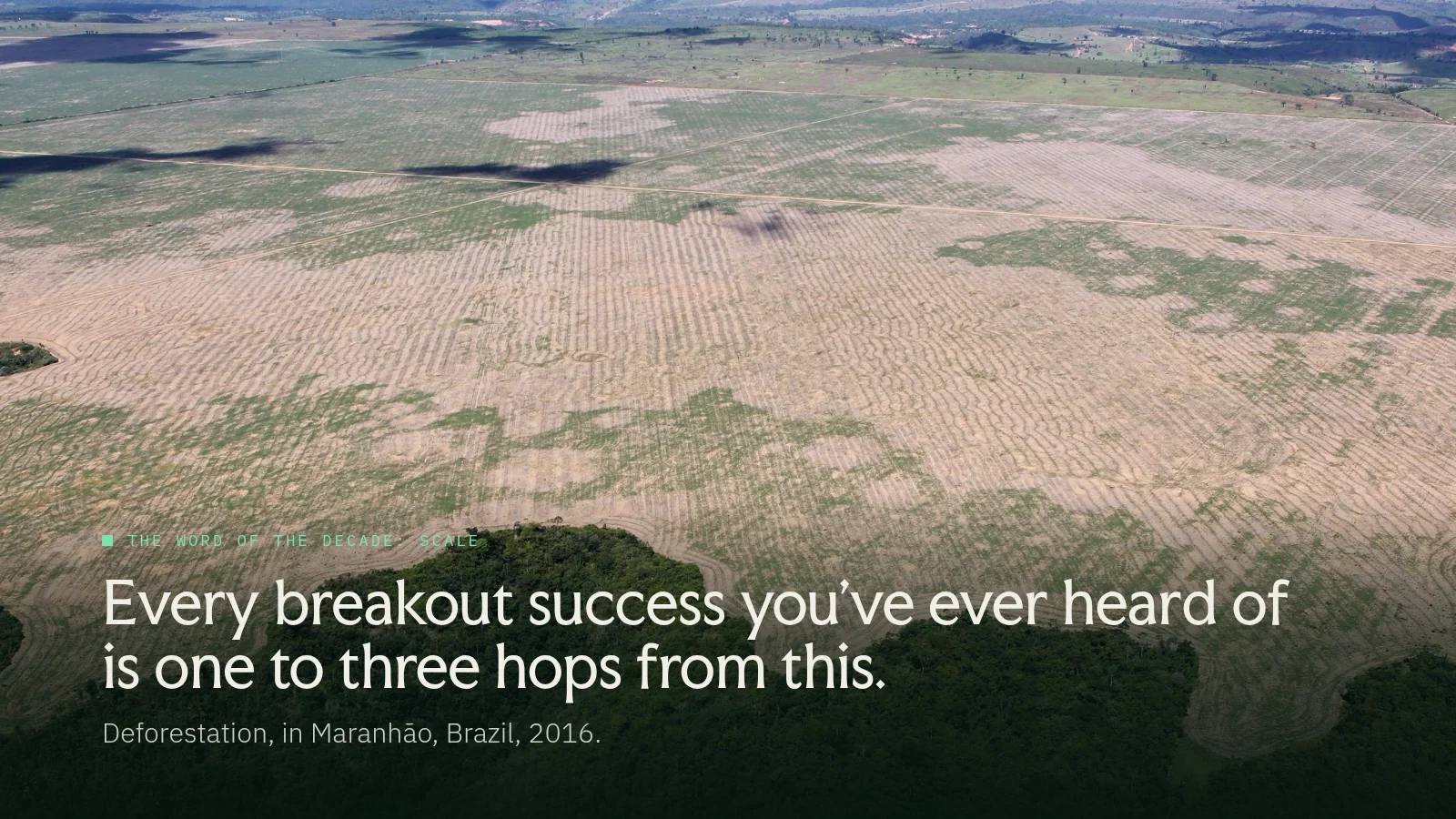
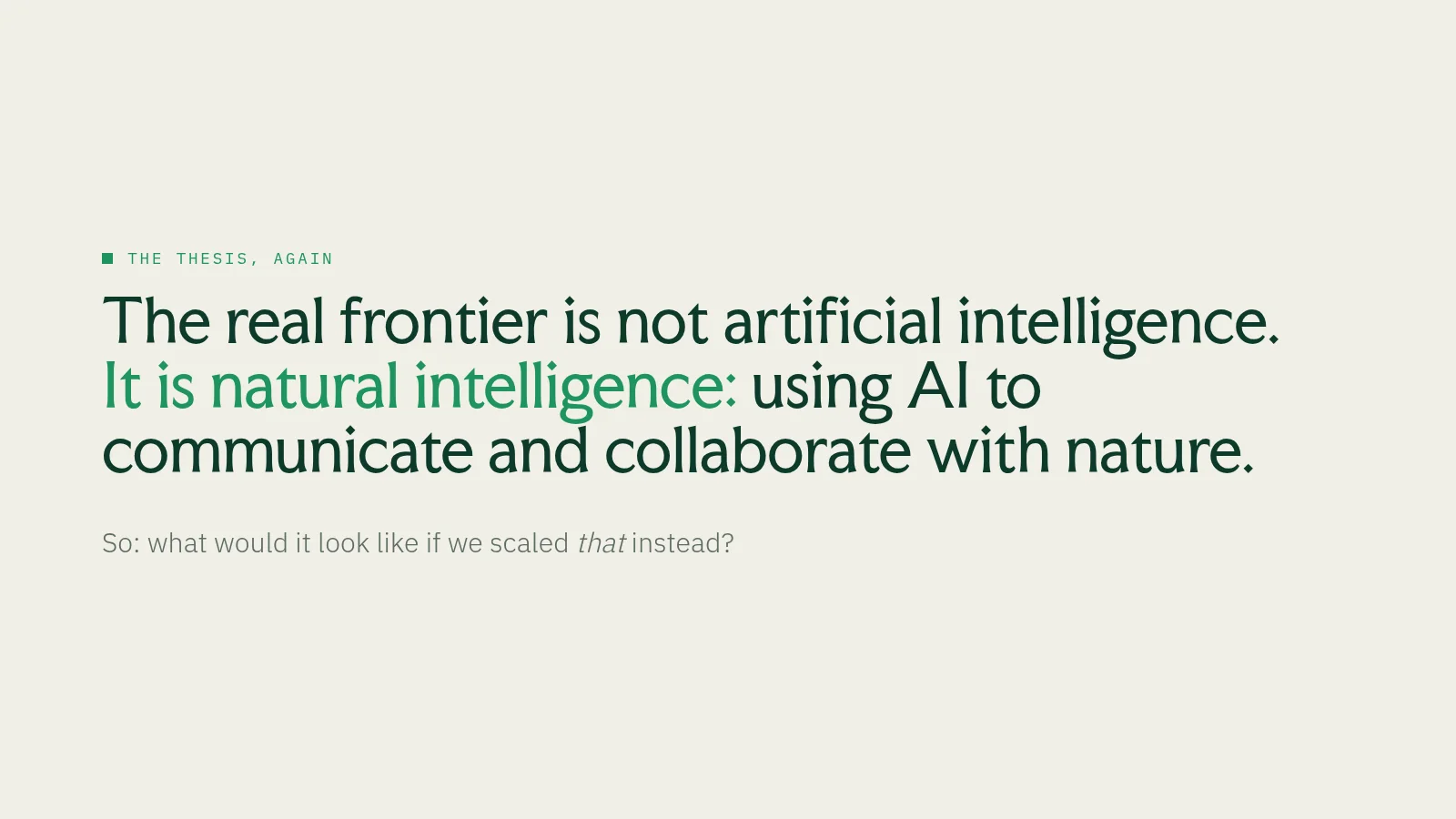
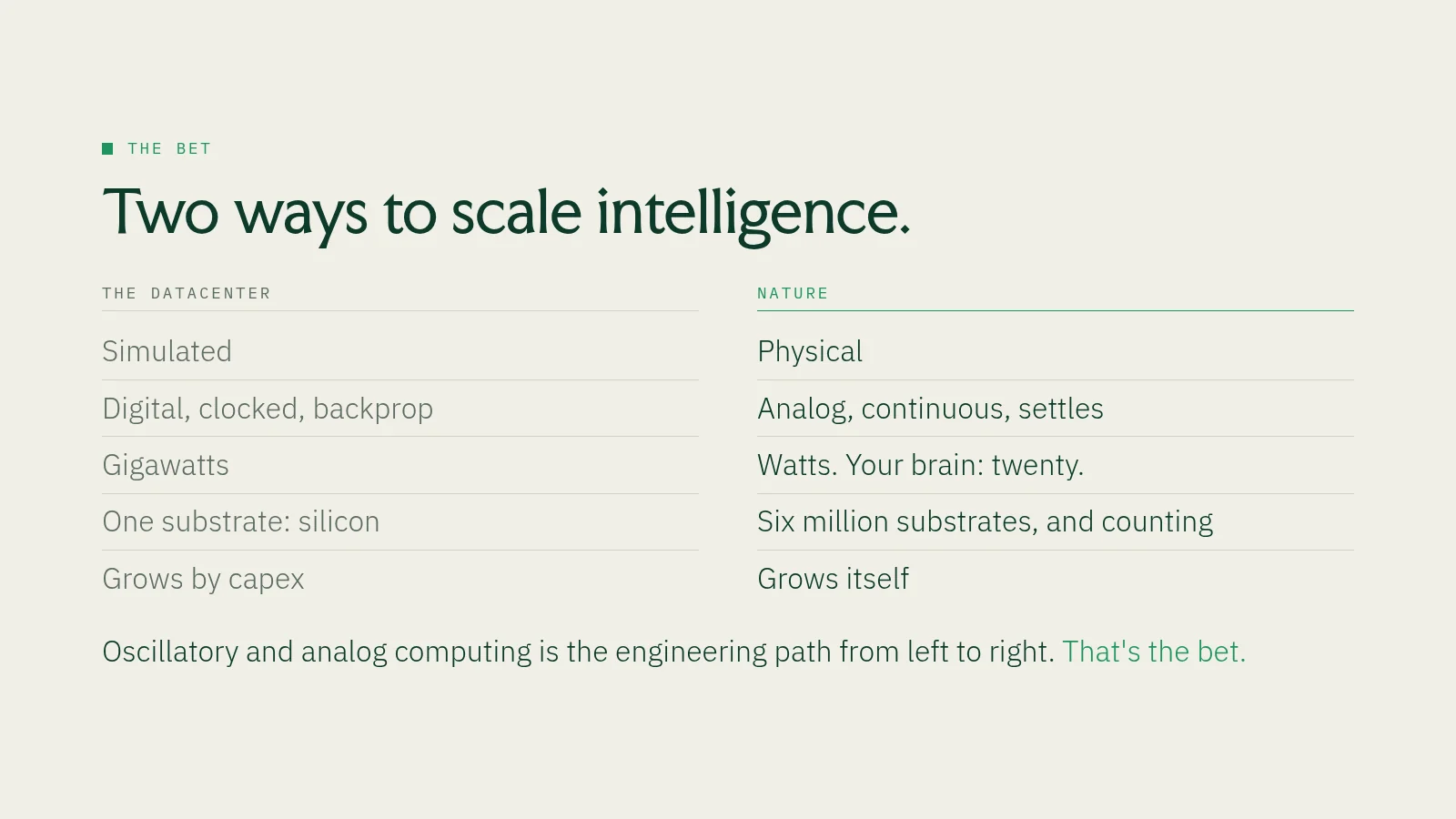
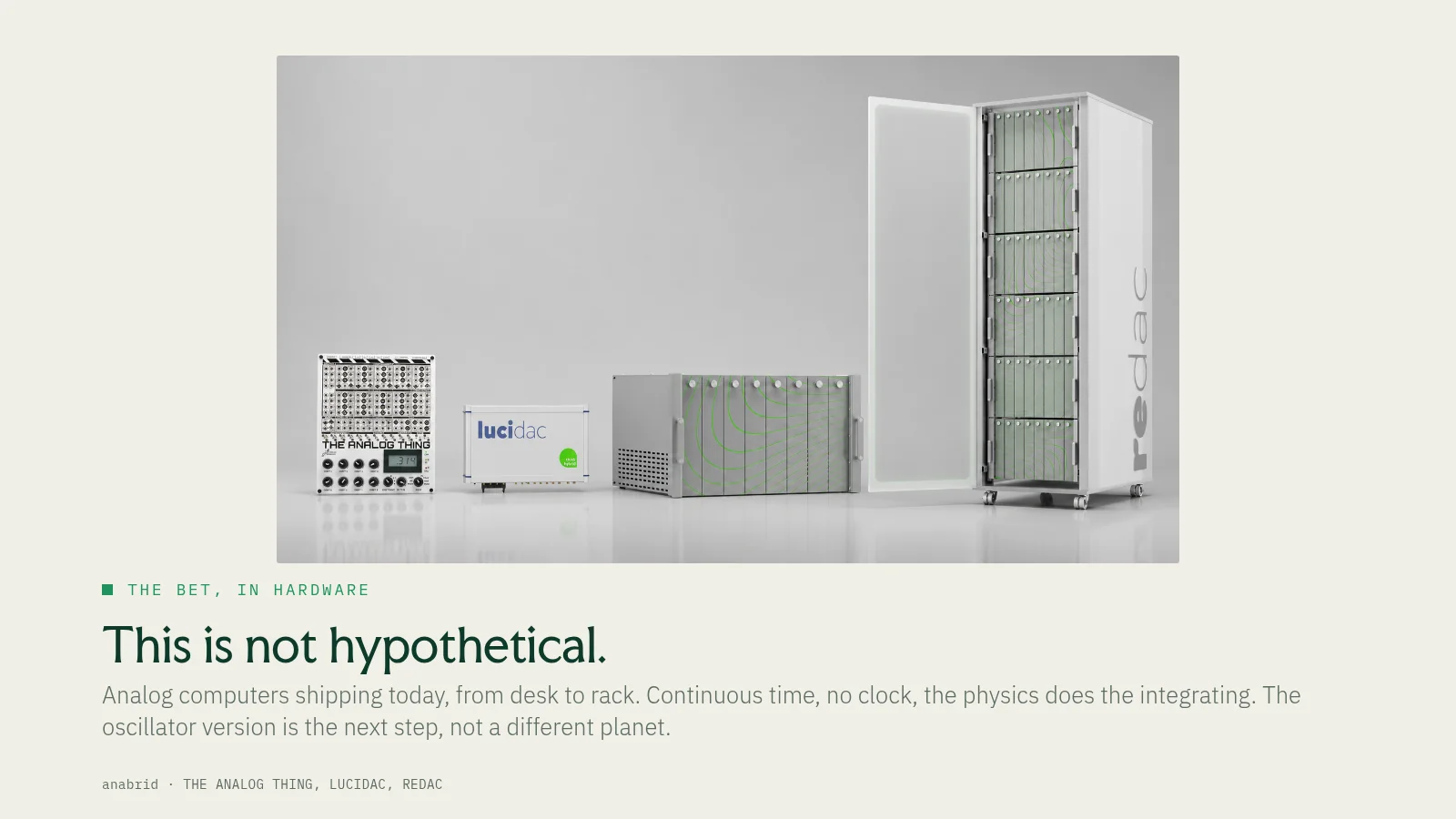
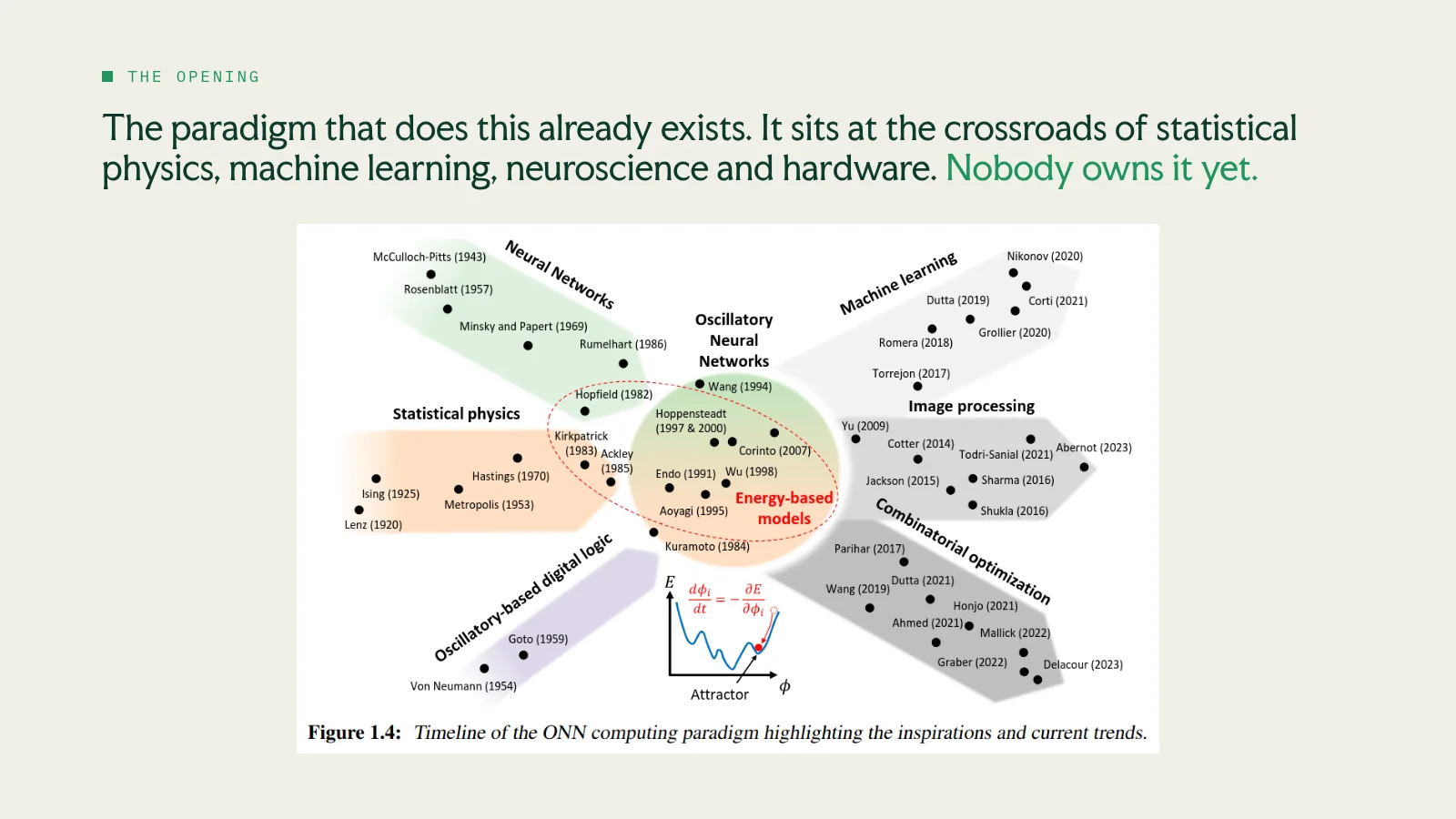
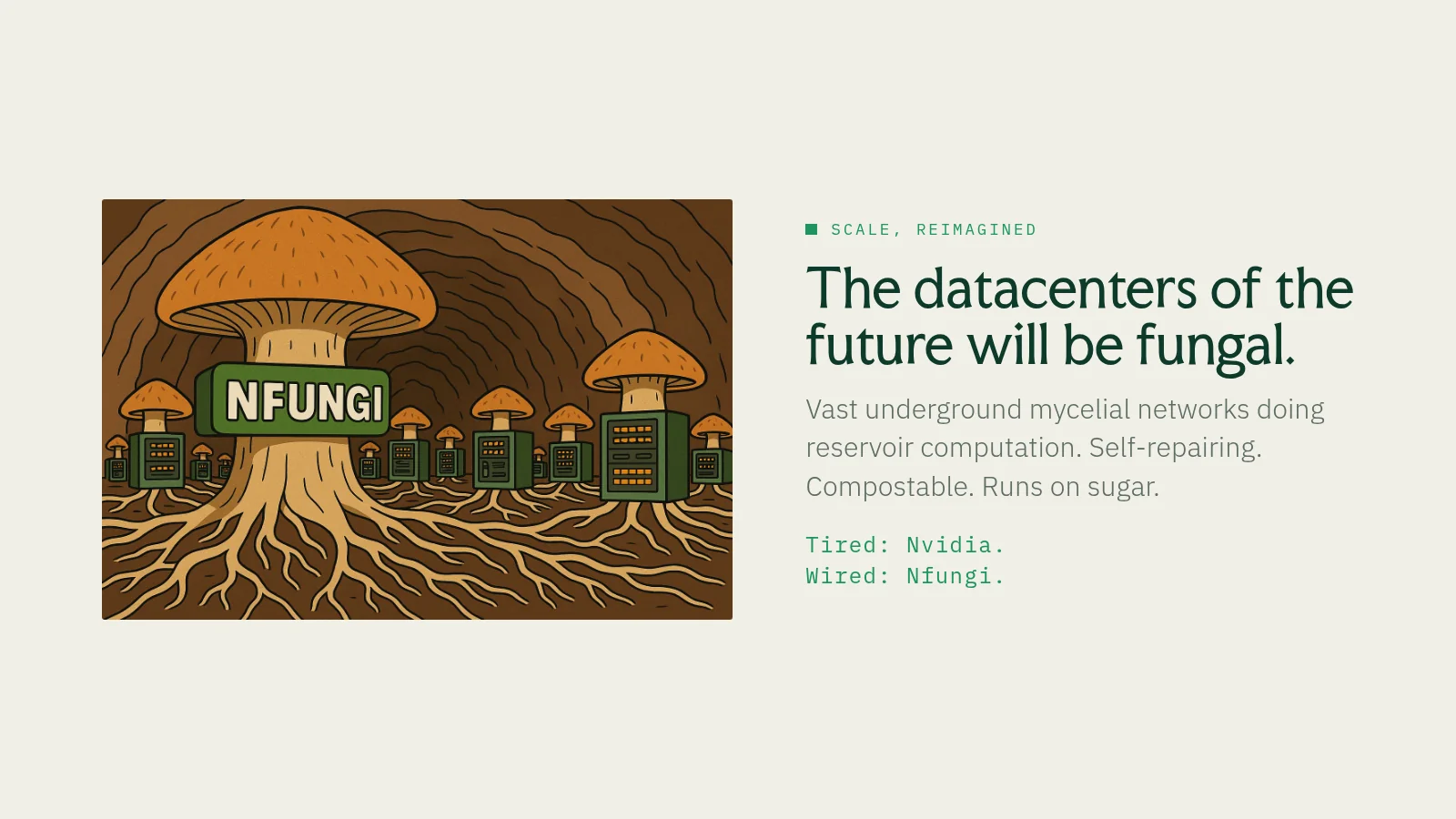
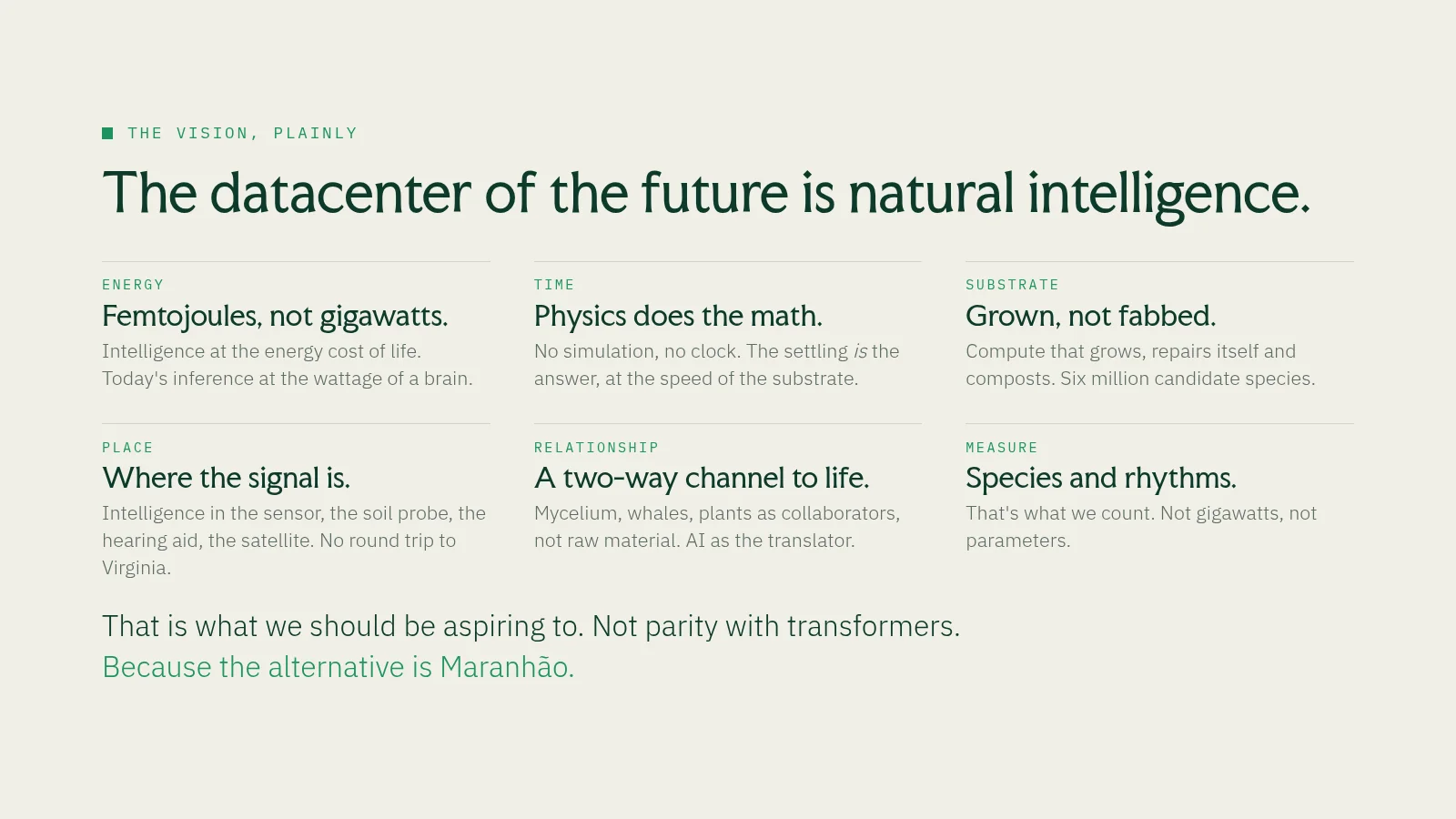
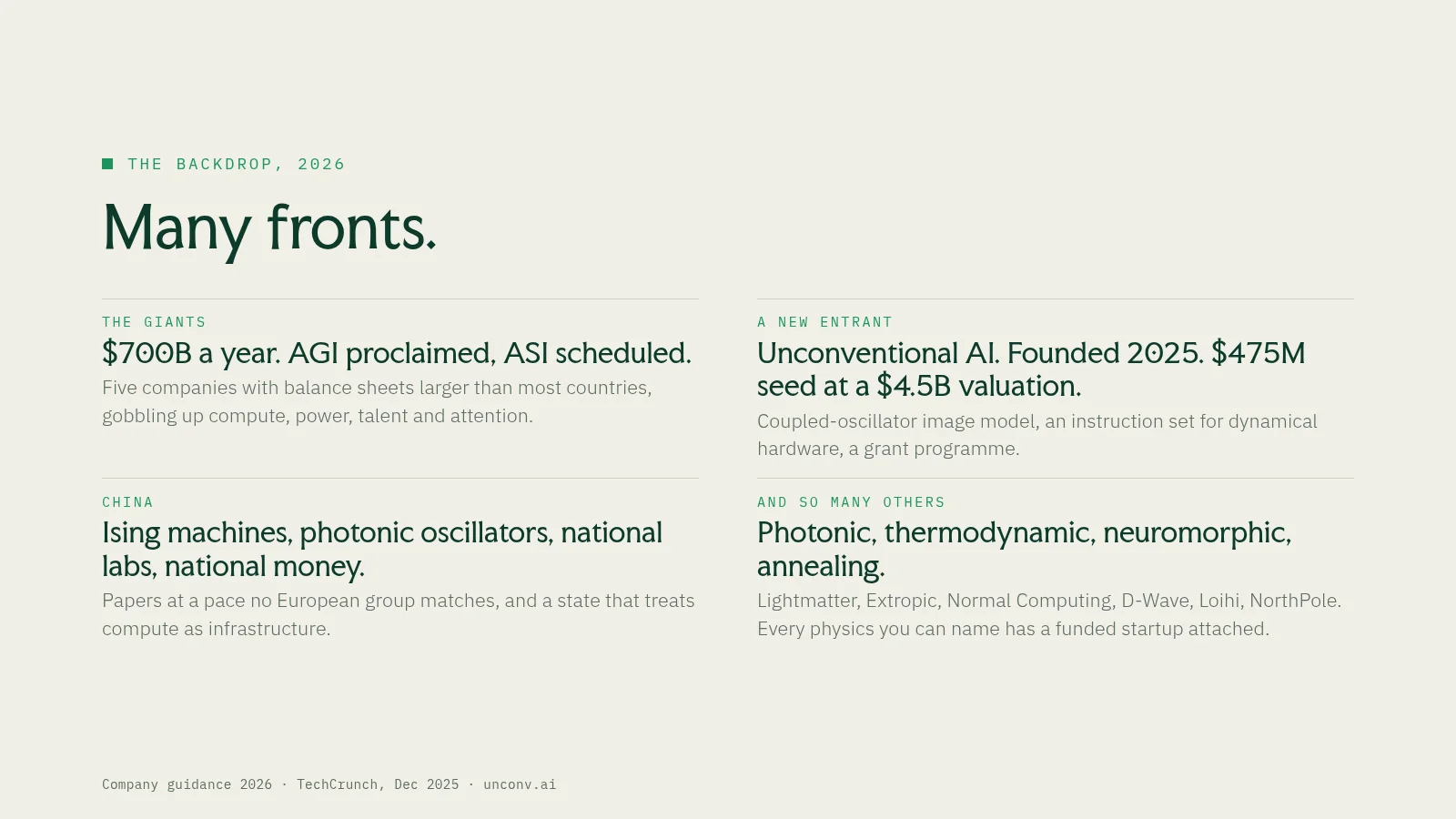
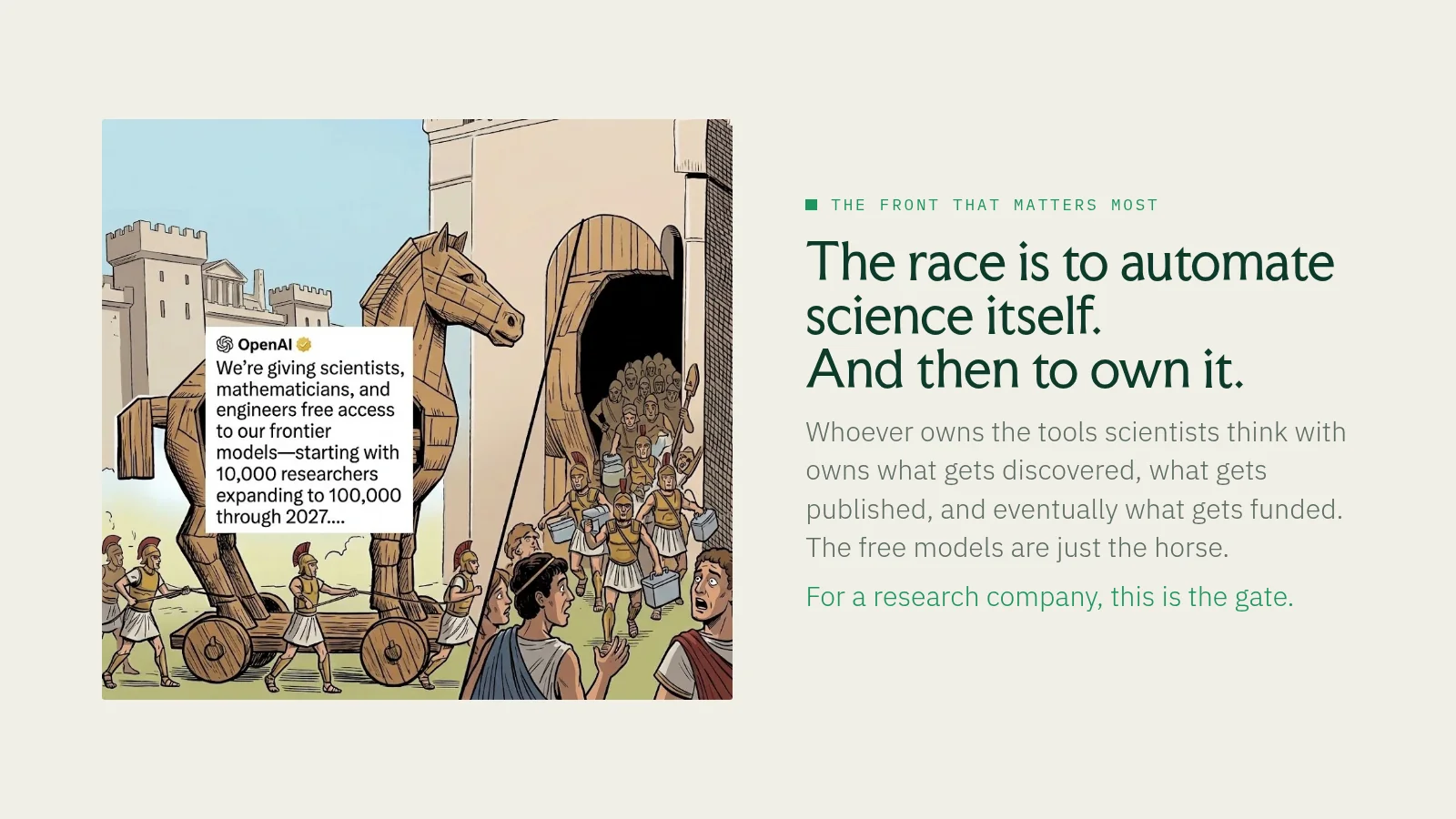
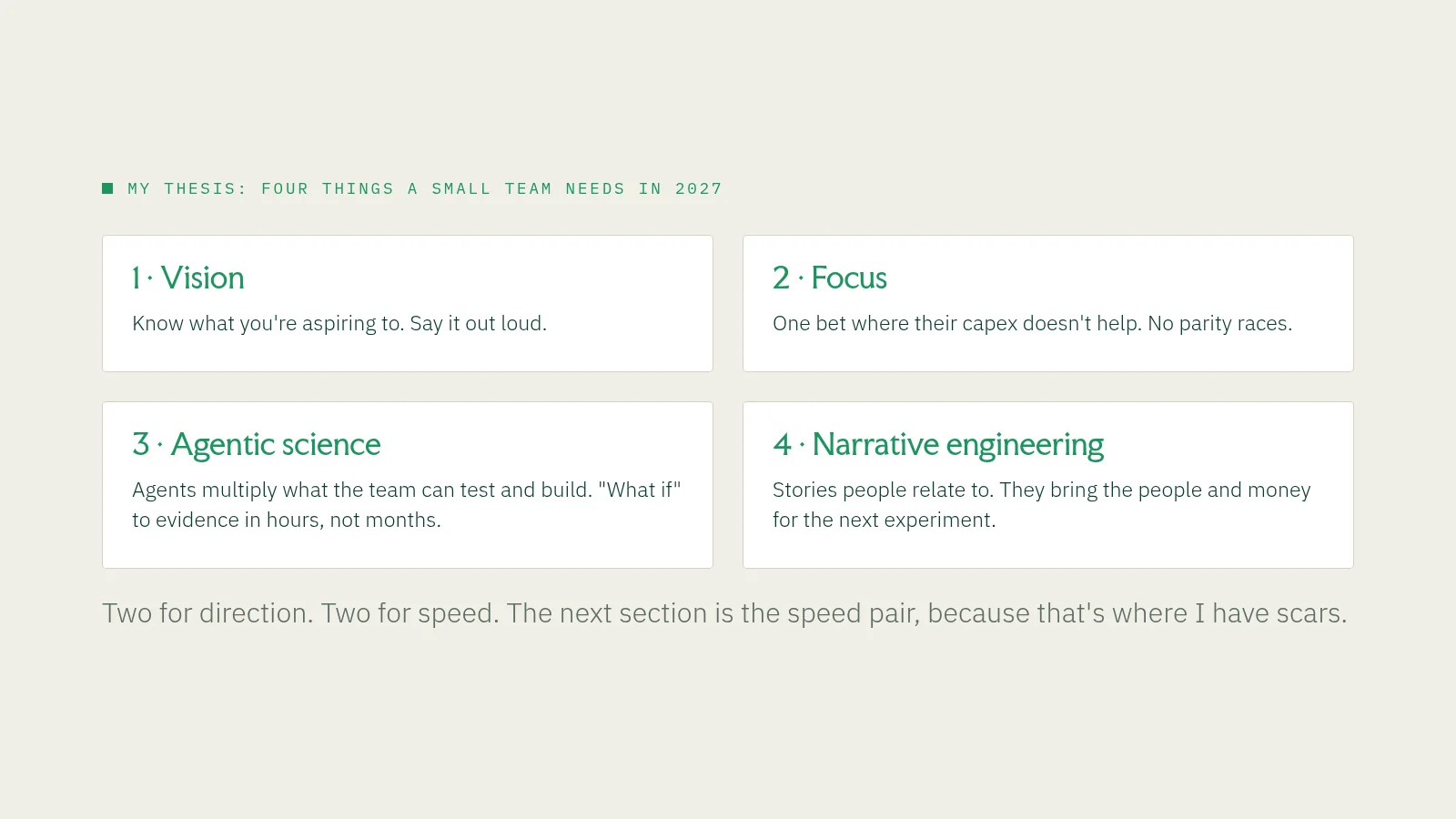
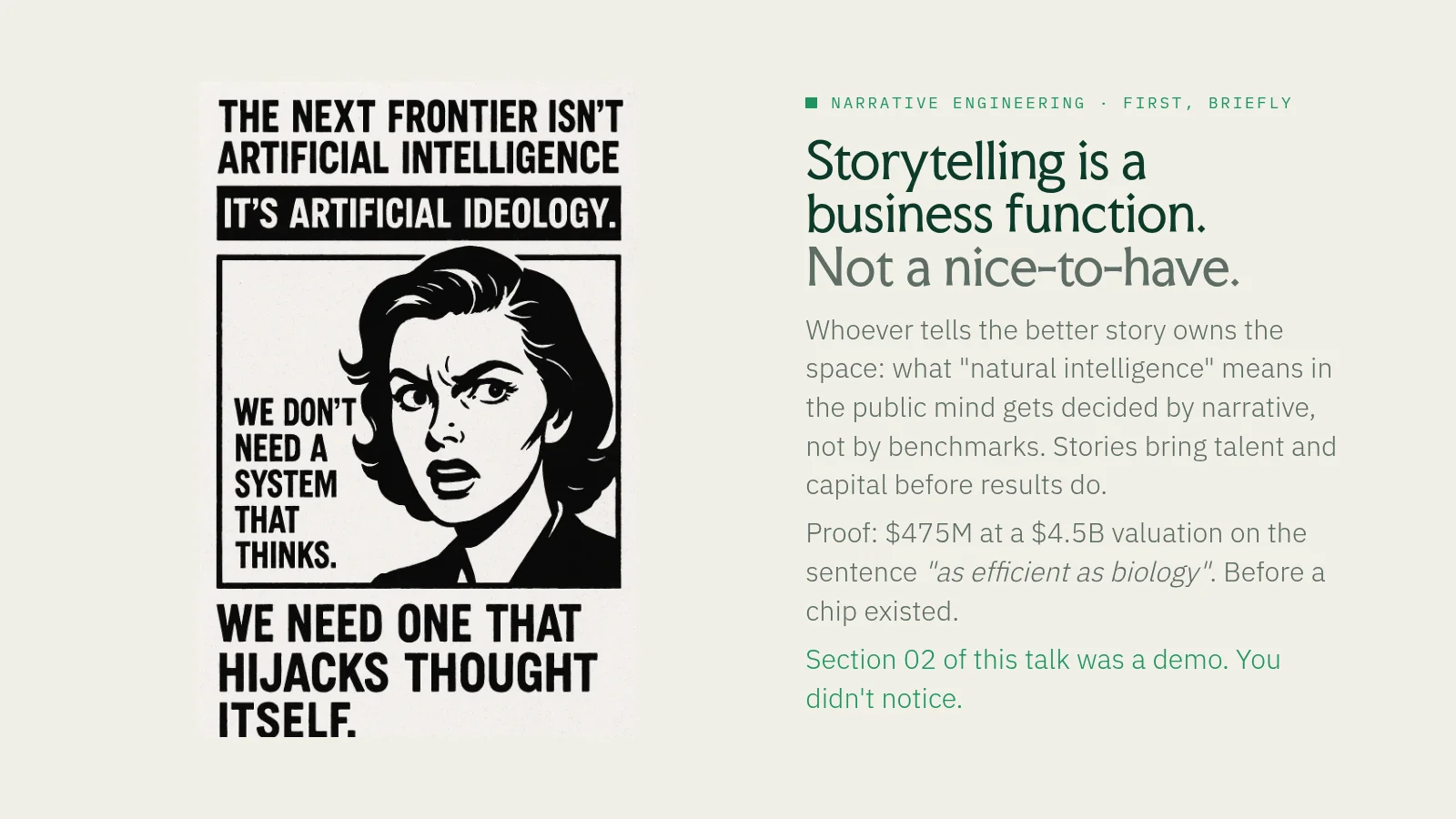
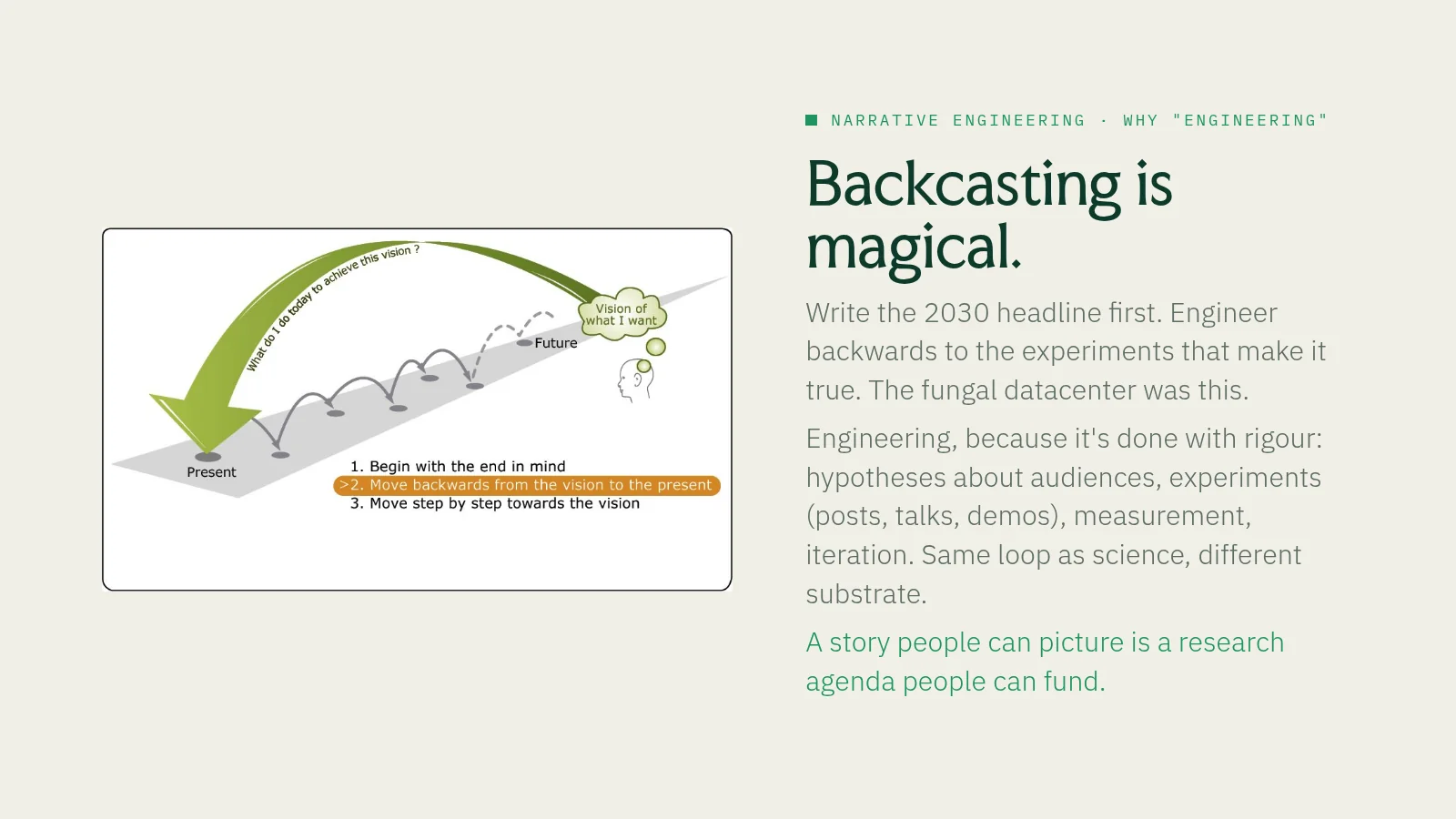
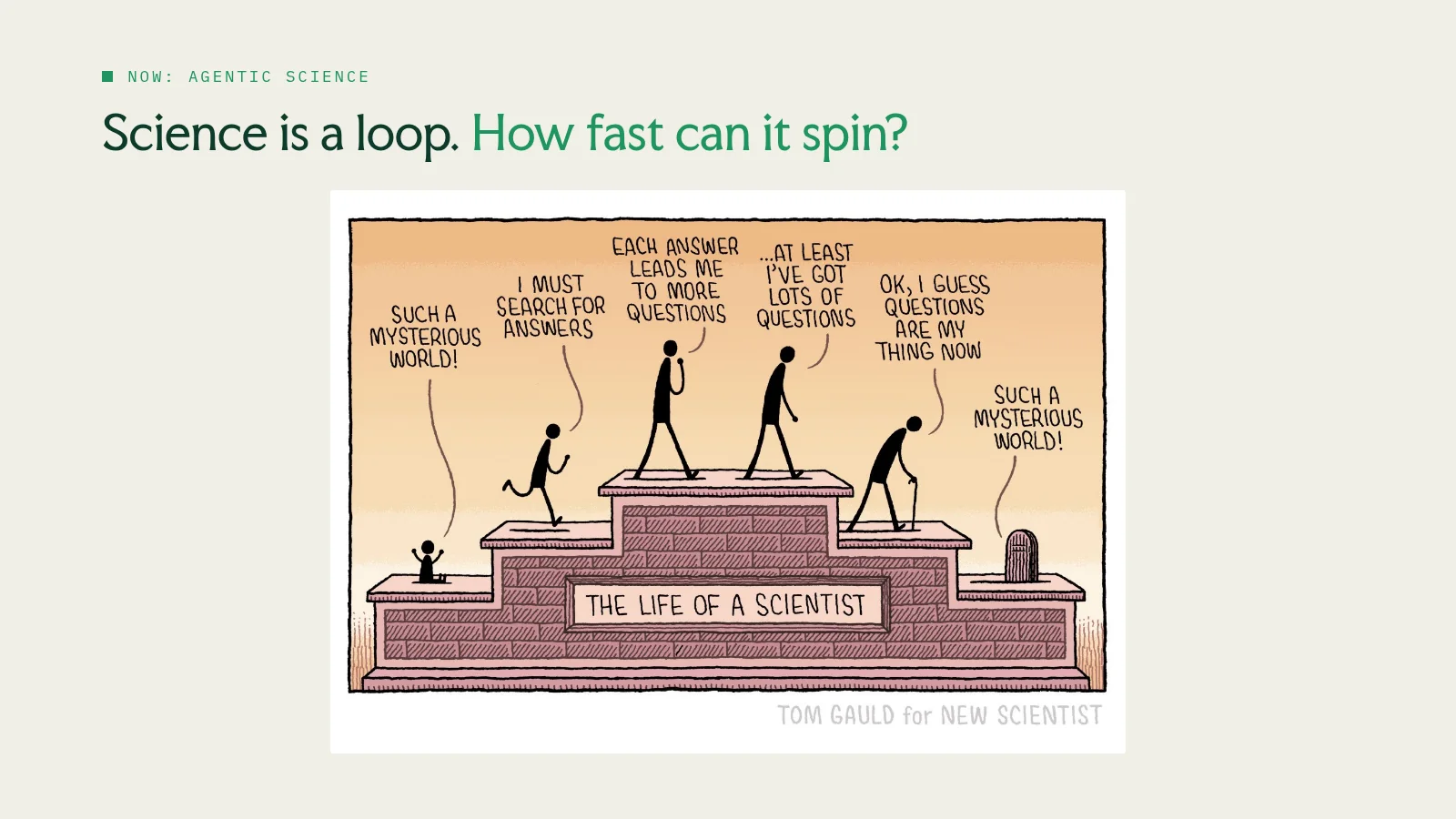
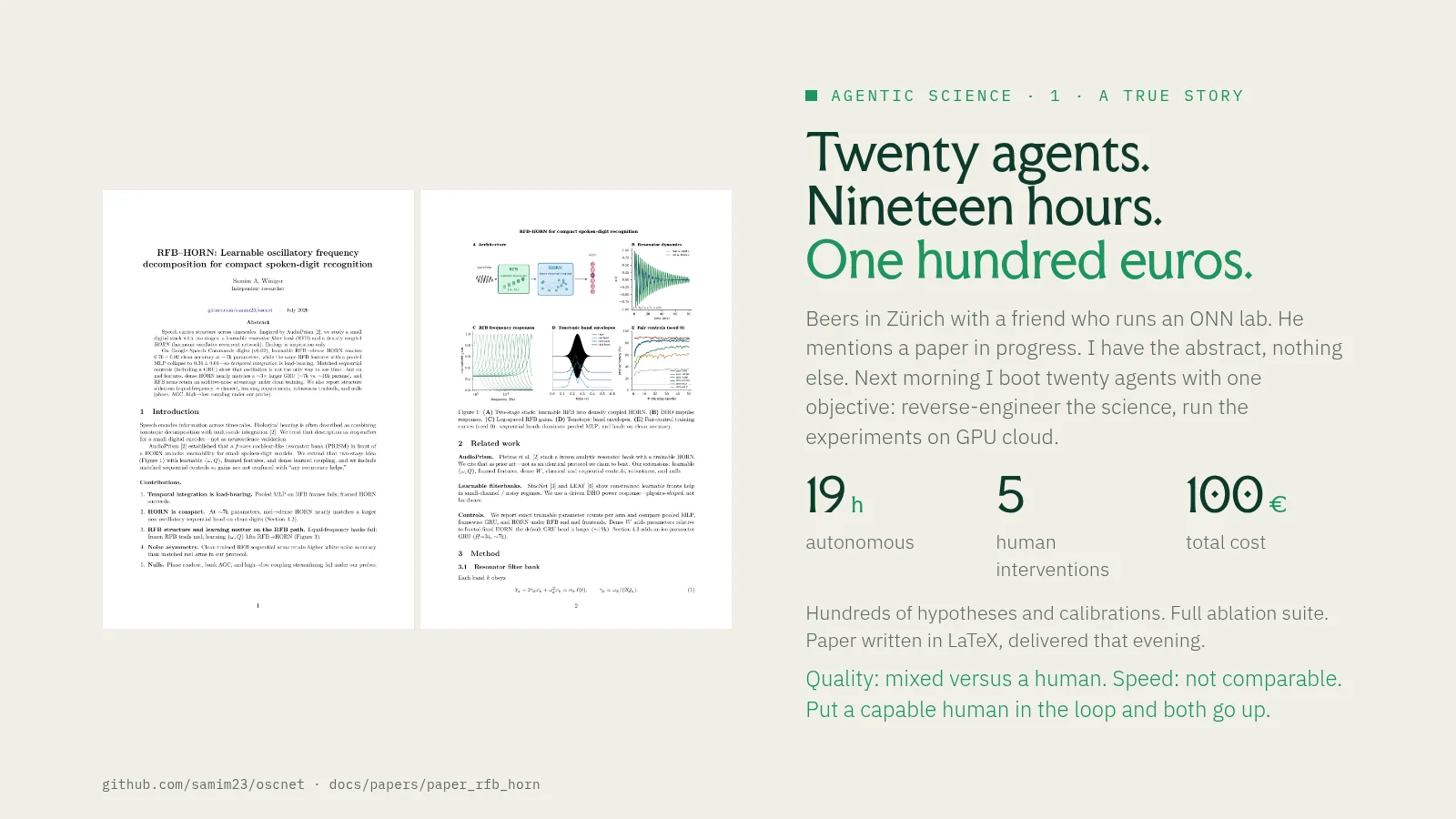
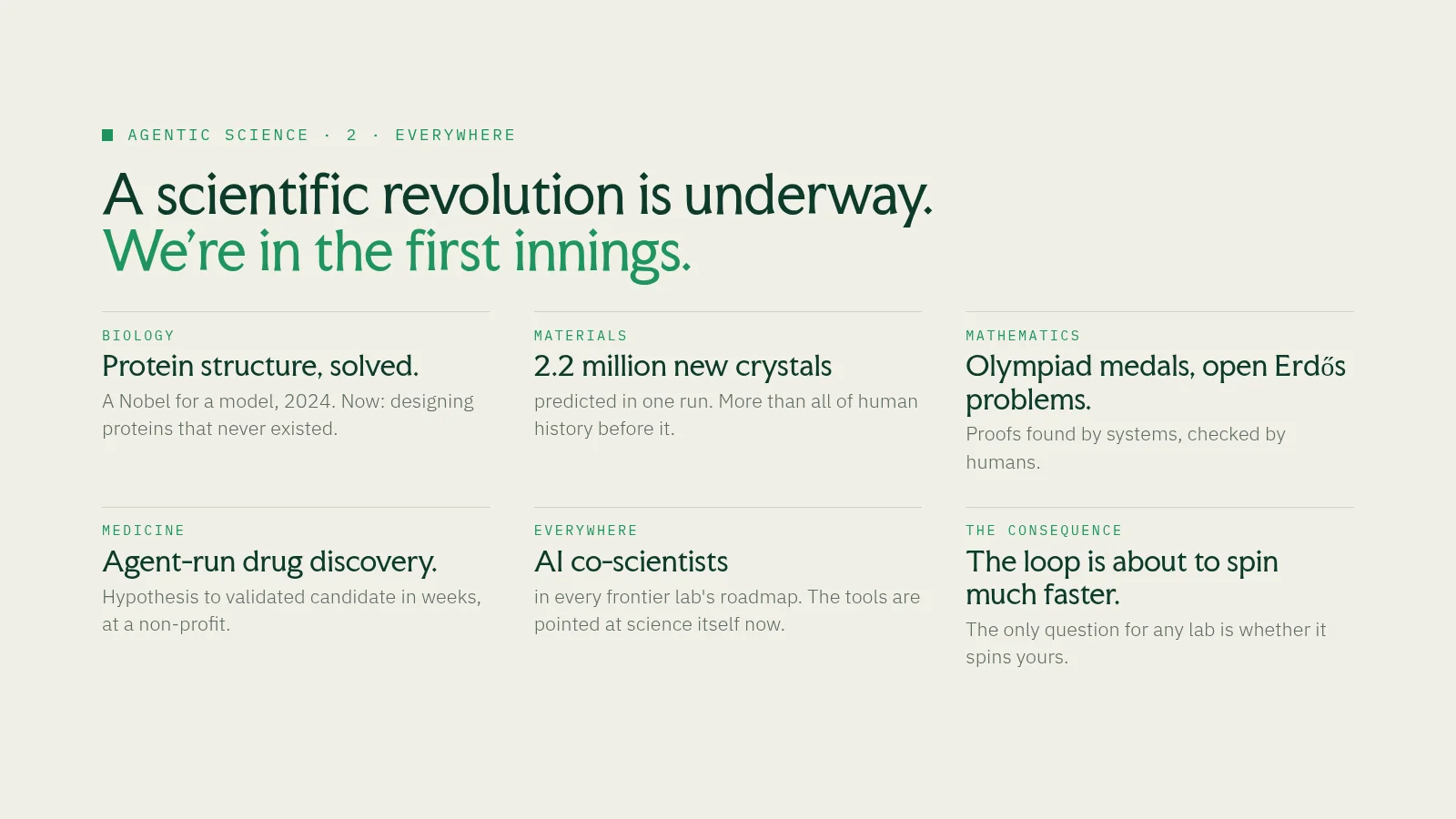
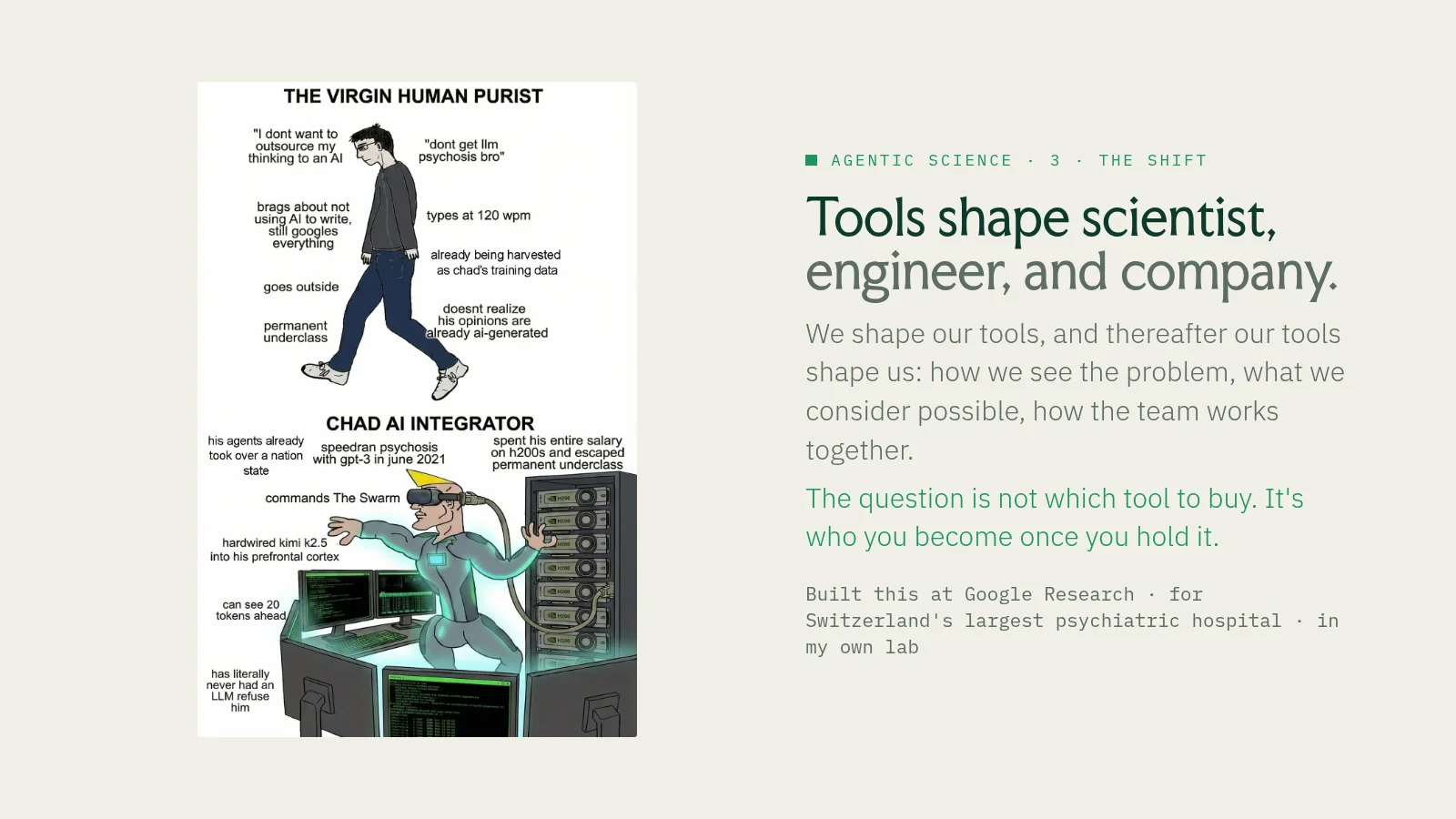
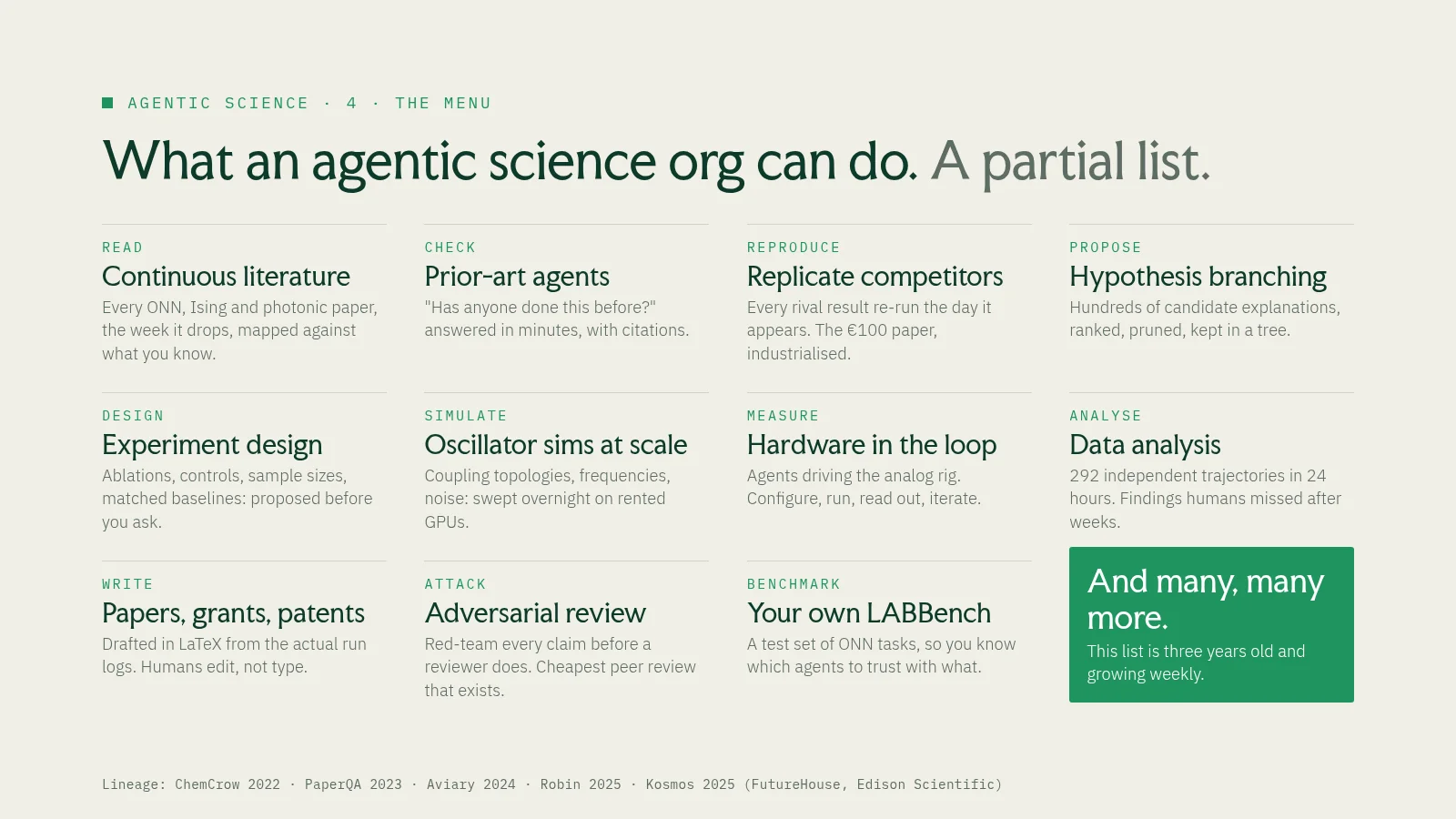
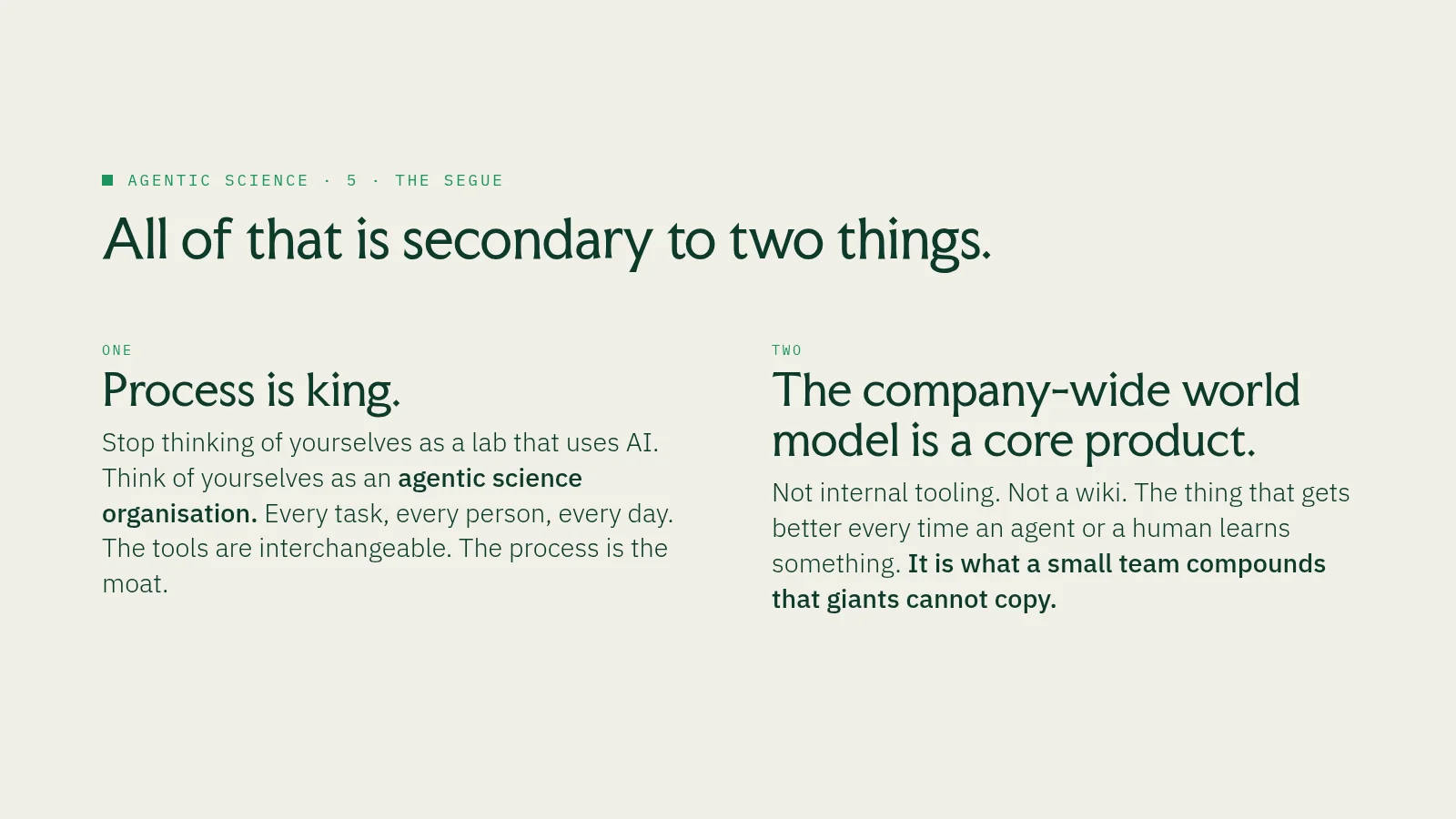
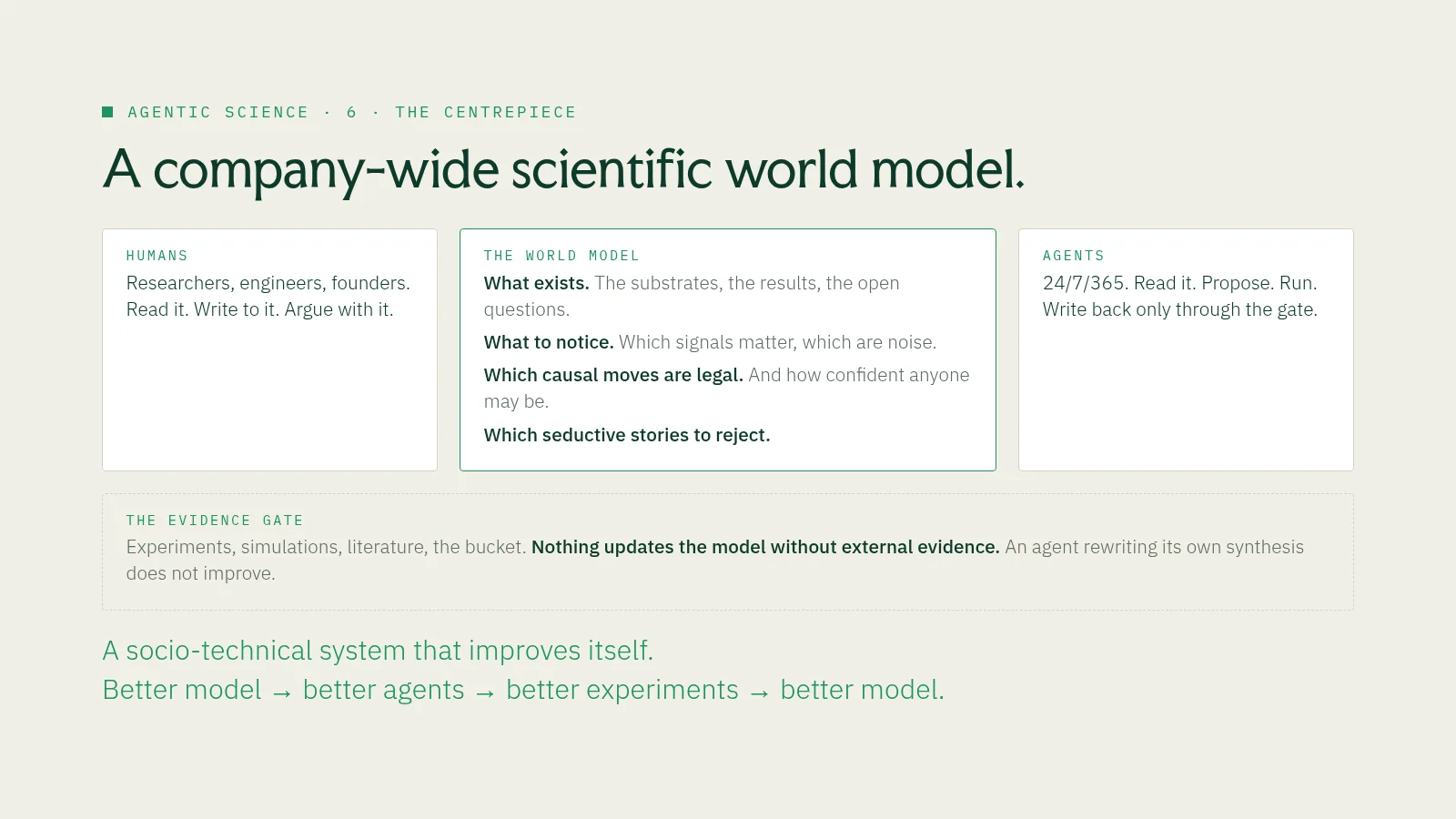
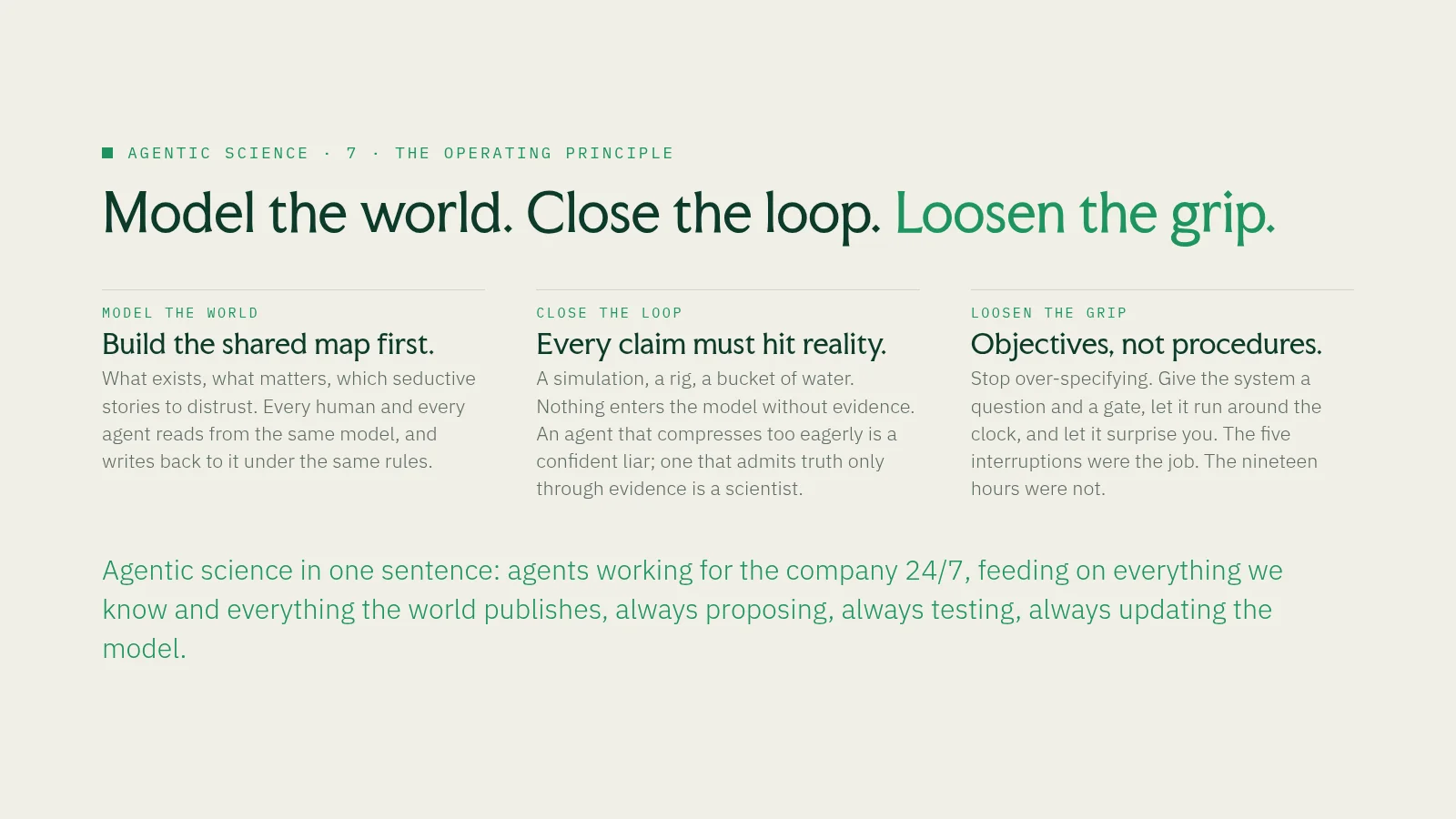
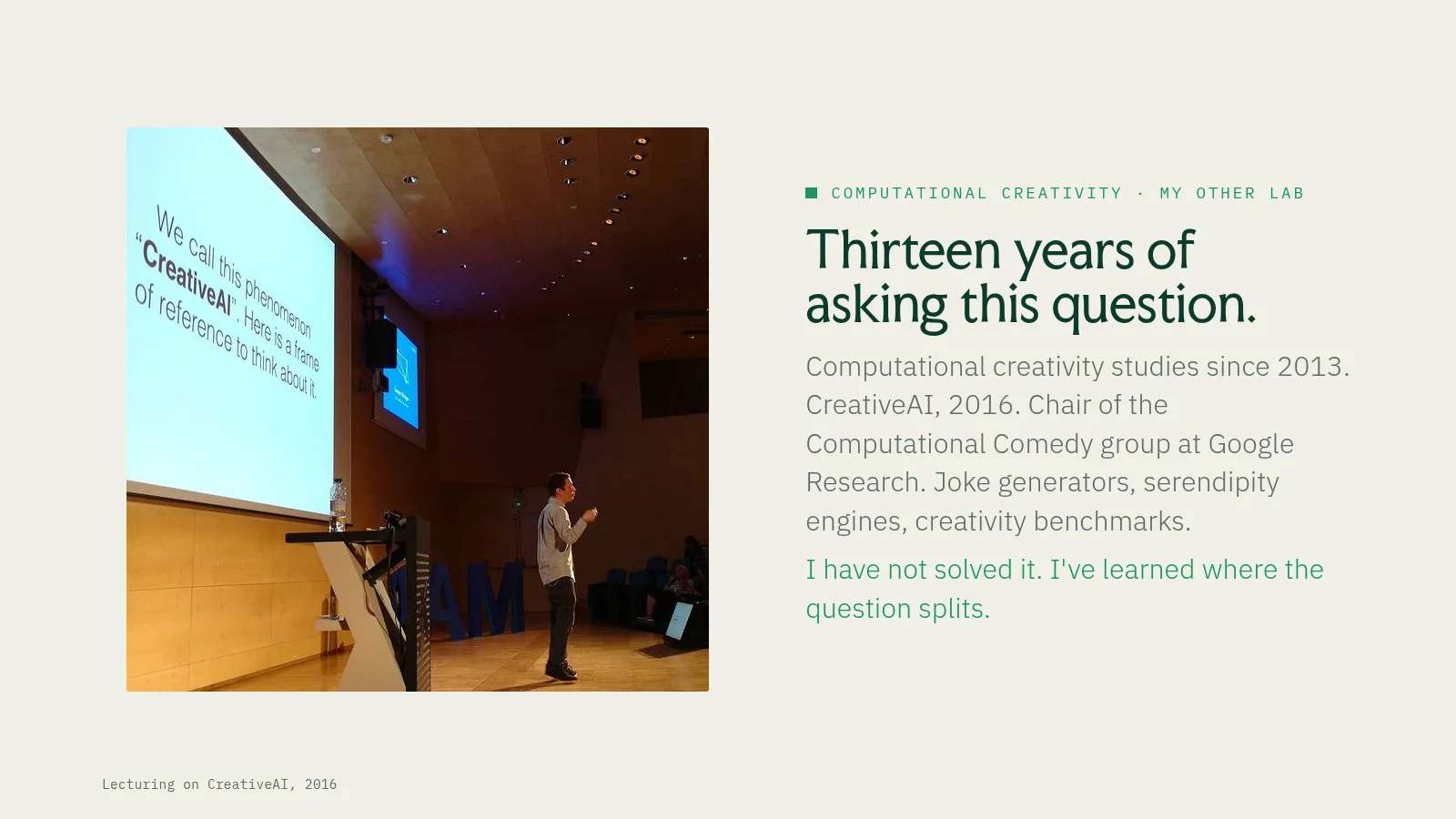
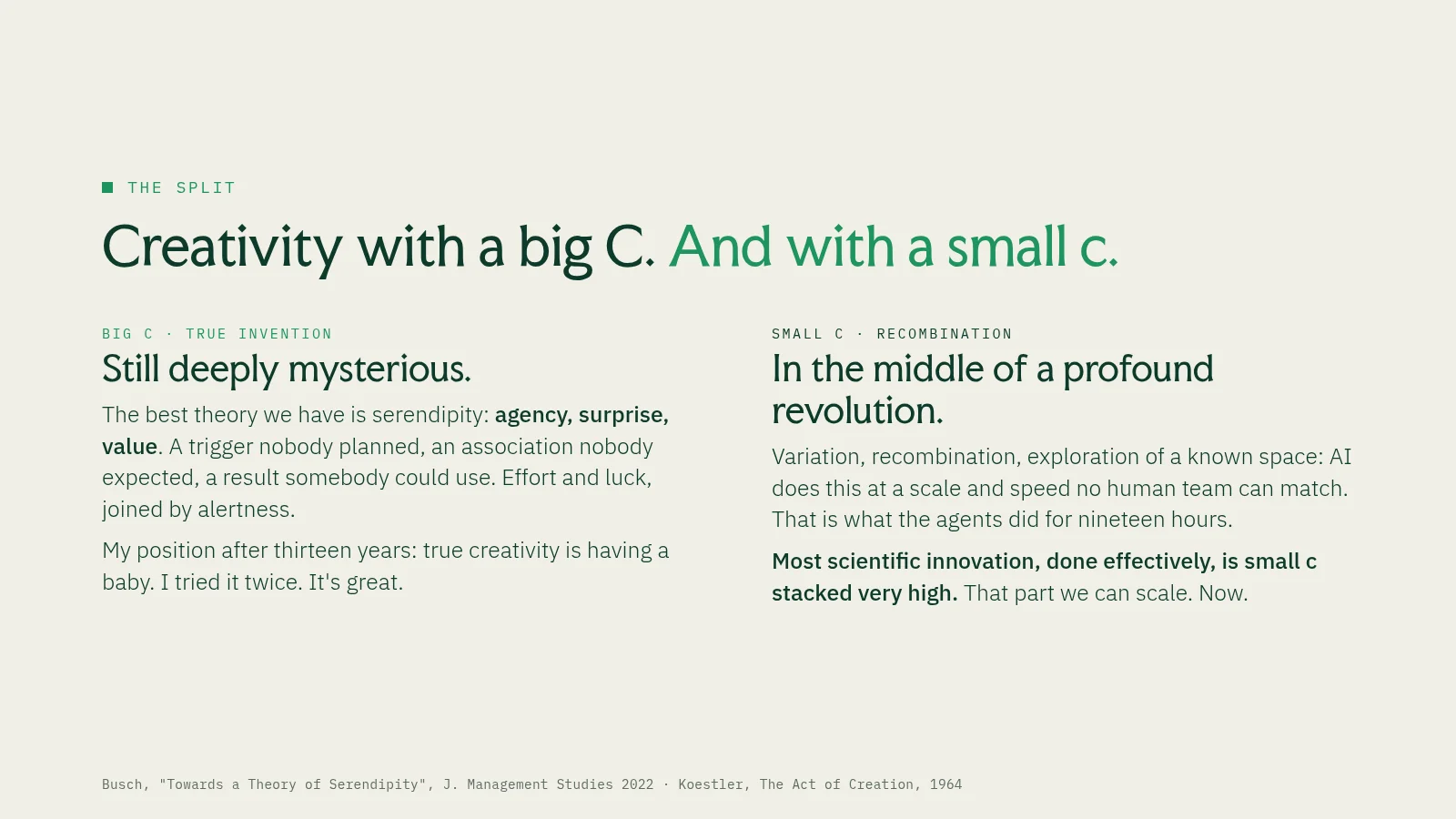
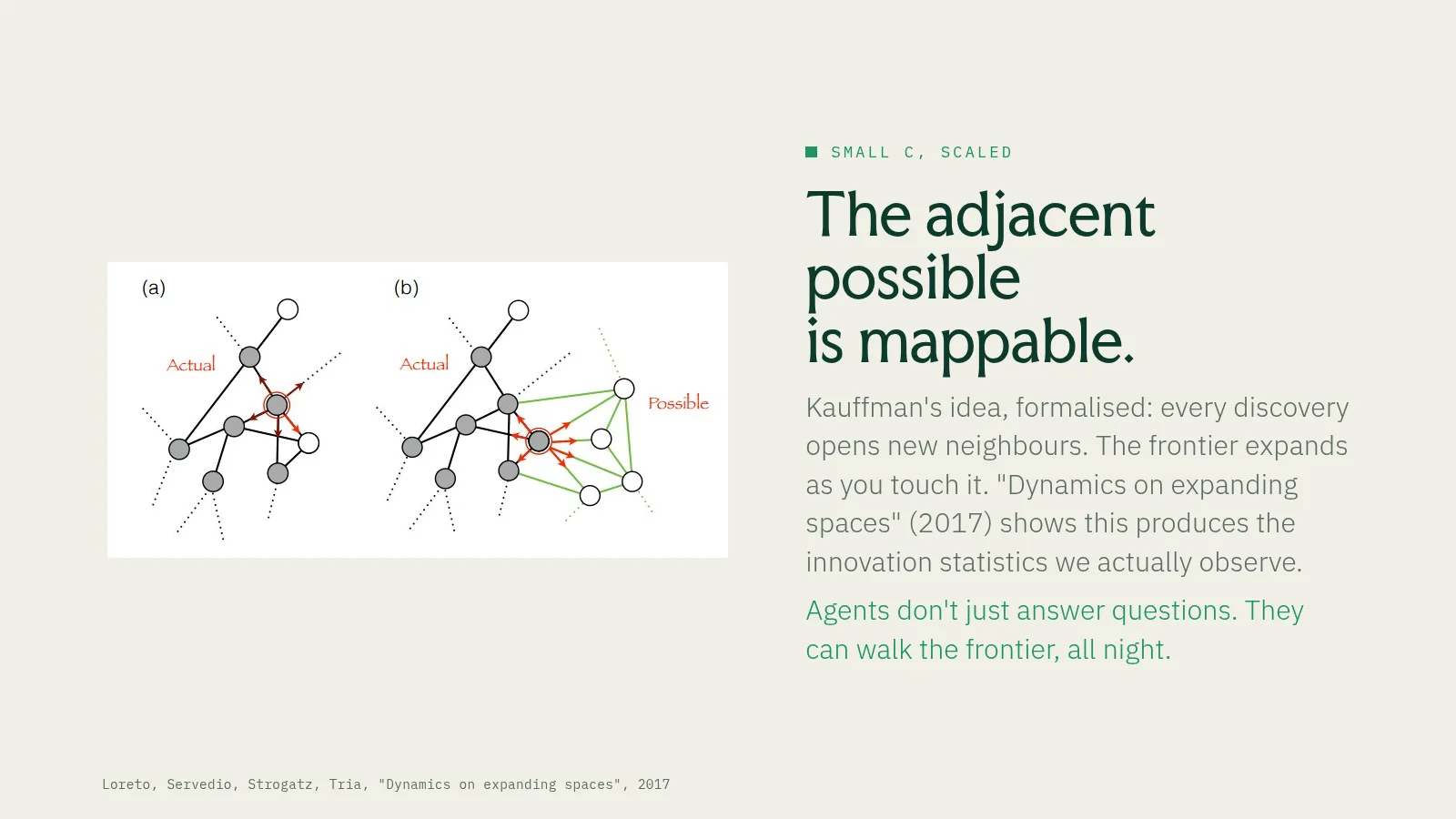
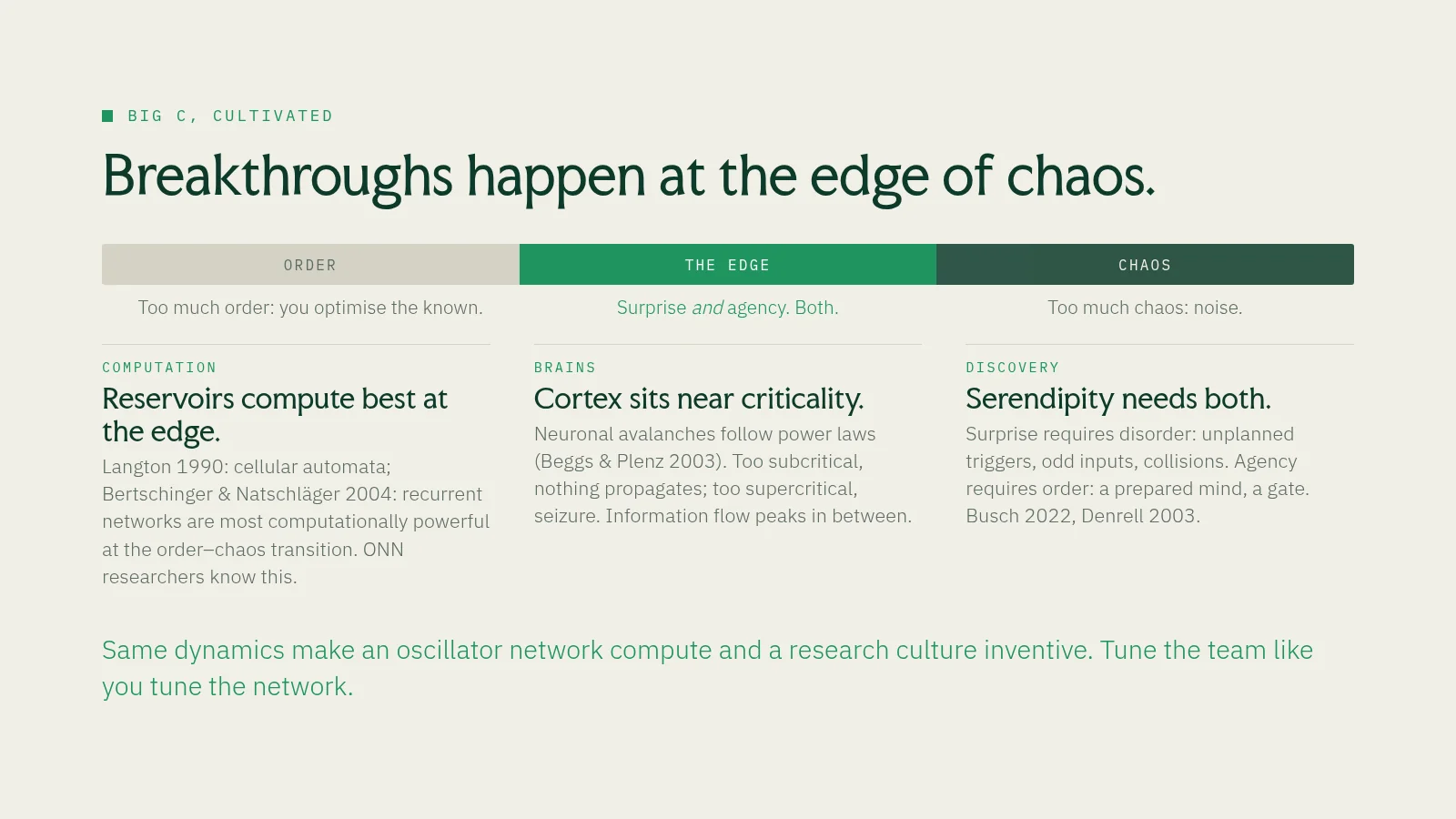
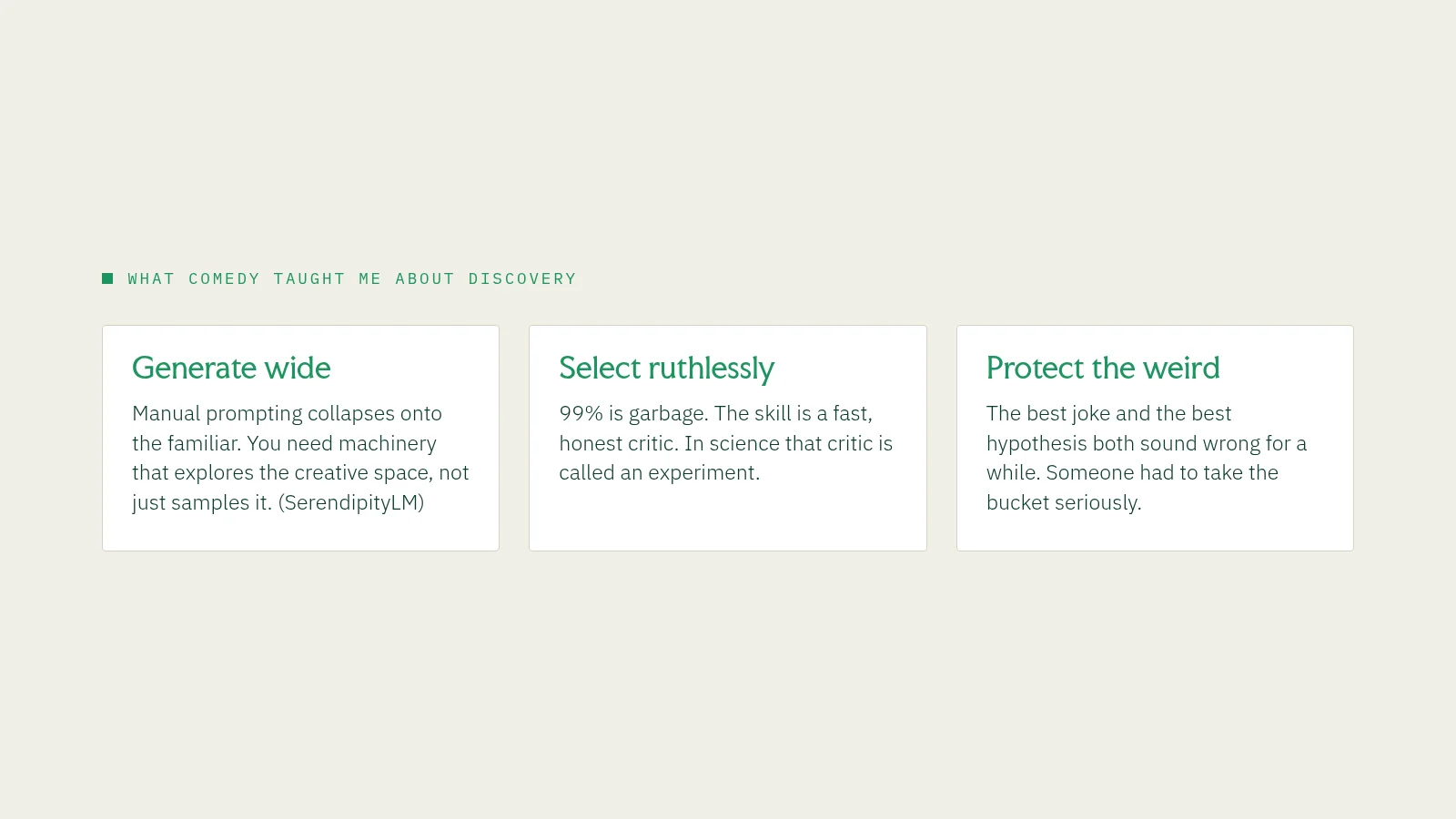
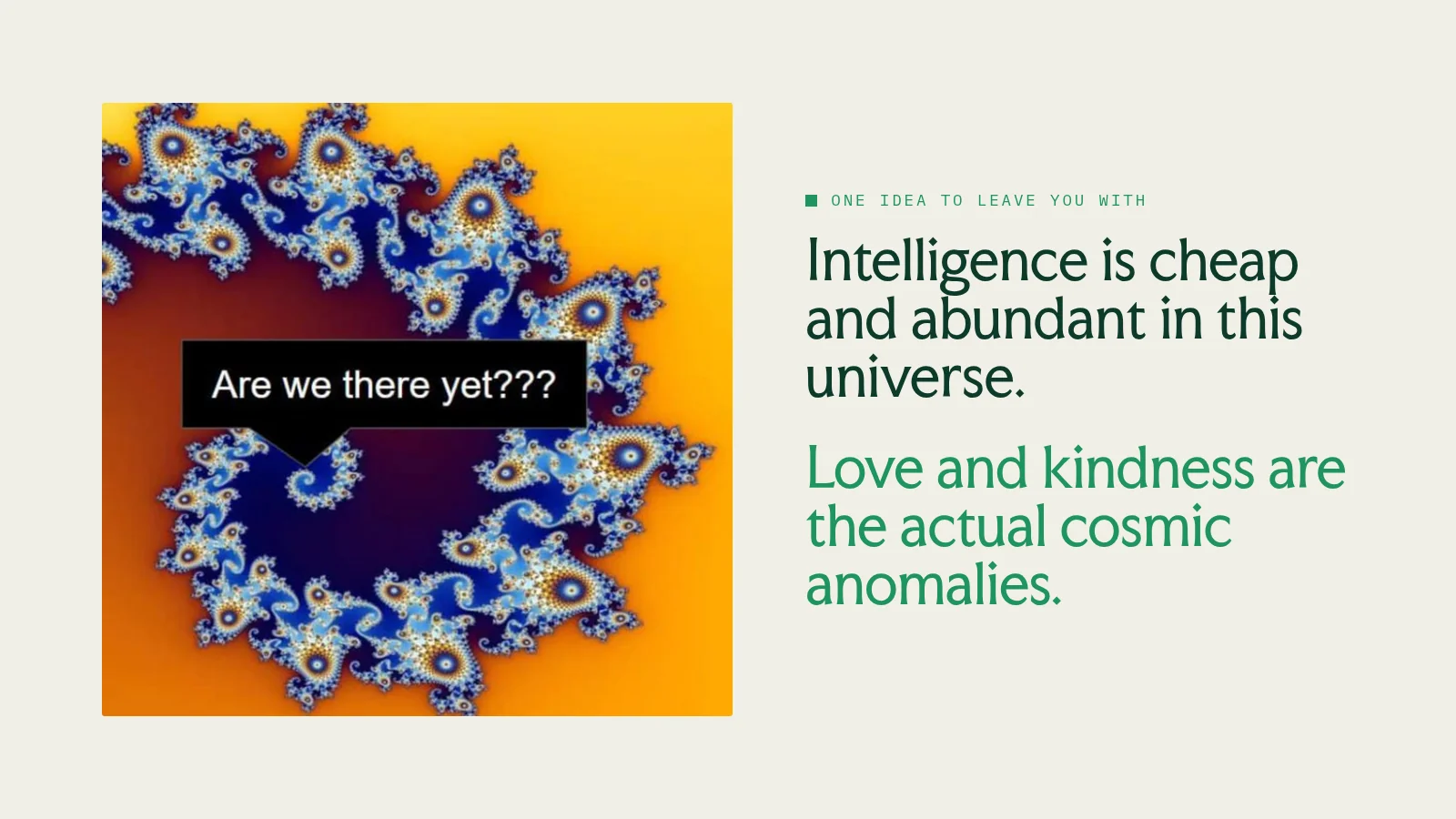
Slides from a talk I gave last month to a team of researchers and engineers building oscillatory neural networks and analog computers. The argument: nature computes everywhere, oscillation is one of its core primitives, and the real frontier is not bigger datacenters but using AI to work with natural intelligence. Plus how a small team could get there with agentic science, and whether invention itself can scale.
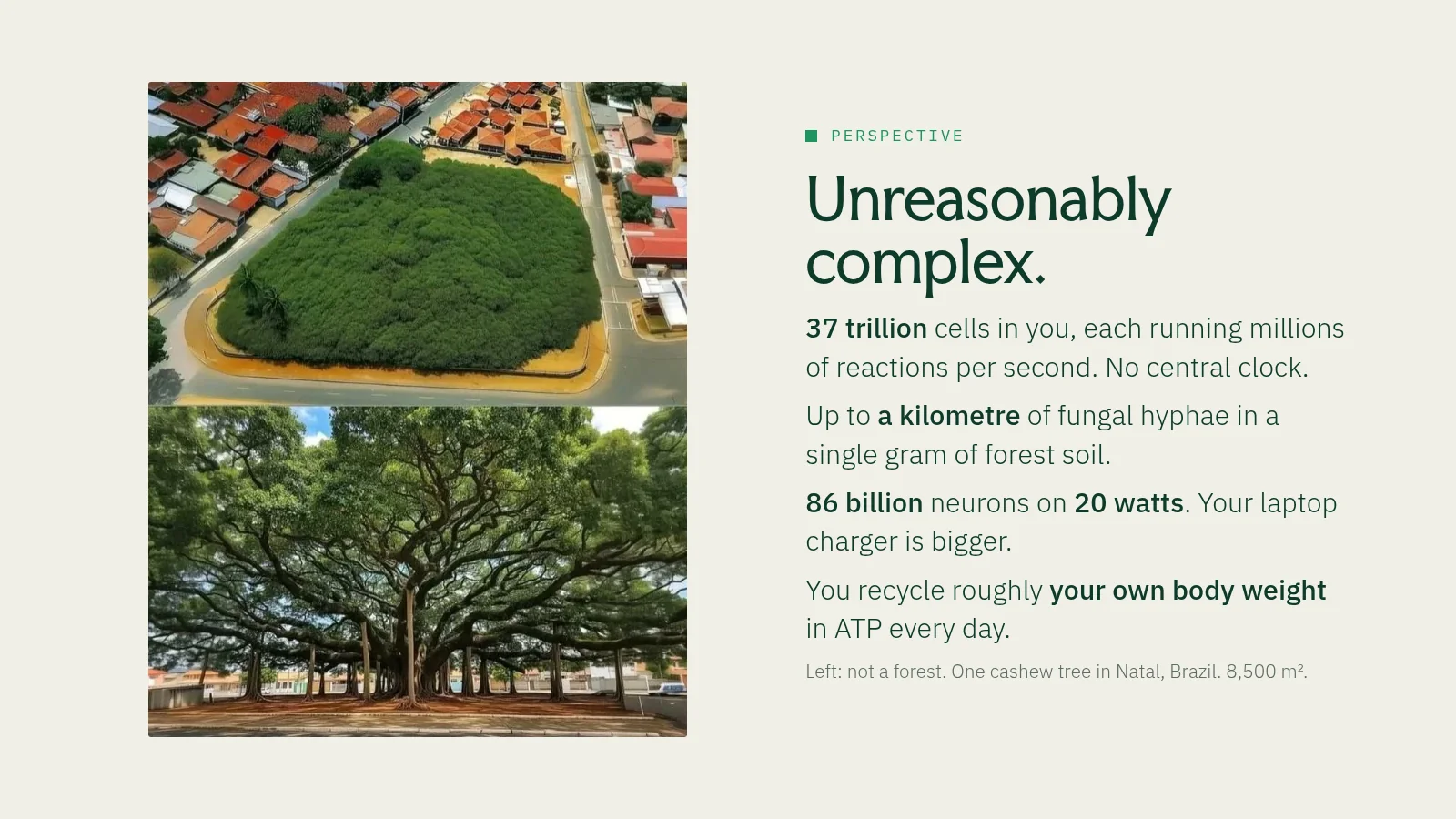
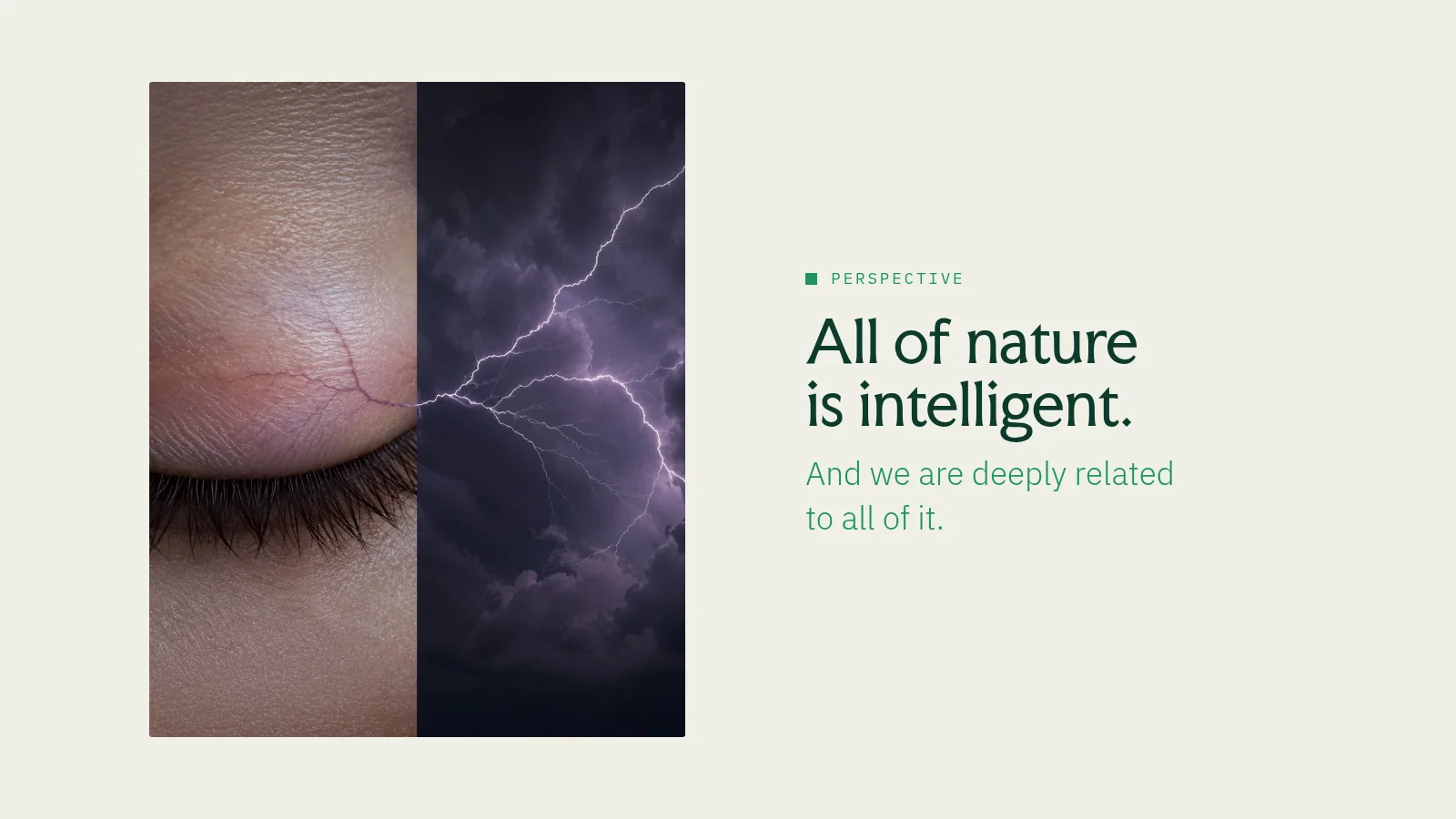


-
Google Quantum's Necrophilic Vision of Life
Google's got it all wrong. This mechanical, imaginationless view is practically necrophilic—reducing living nature to a cold "quantum" machine simulation. Want real innovation? Compute directly on living fungal networks. Stop trying to simulate life and actually work with it.
Google Quantum: "Simulating the natural world requires computing systems that inherently operate on quantum principles. Google Quantum AI aims to build quantum computing for these otherwise unsolvable problems."
-
Frontier nature labs?
Trillions spent building frontier labs to create AI, but we barely understand the intelligence that created us.
Where are the frontier nature labs?
Same ambition, rigor, obsession.
Applied to forests, fungi, ecosystems & rebuilding a healthy relationship with the living world.
-
Topsoil: Inside Nature’s Decentralized Supercomputer Made of Dirt
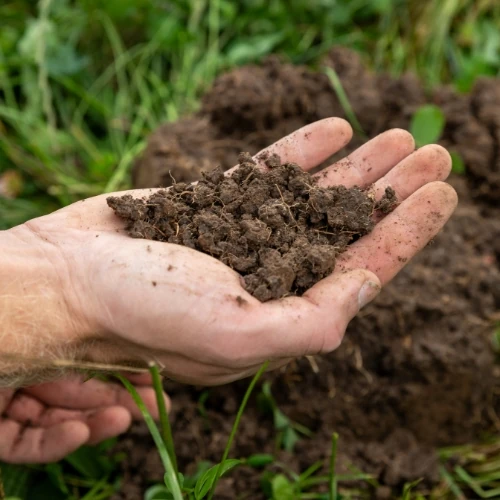
While the tech industry pours hundreds of billions into data centers for AI, one of the most sophisticated networks on Earth runs in the top thirty centimeters of the ground, powered by sunlight and dead leaves.
Topsoil is the thin upper layer of the ground, usually only a few handspans deep, and almost all life on land depends on it. The UN’s Food and Agriculture Organization estimates that 95% of our food is produced in it, directly or indirectly. It filters rain into groundwater, holds at least twice as much carbon as the entire atmosphere, and most of our antibiotics were originally found in it. And according to a 2023 study in PNAS, soil is home to about 59% of all species on Earth, making it the most biodiverse habitat on the planet.
And still, we mostly treat it like dirt.
The workforce
Biologists usually sort the organisms that keep soil running by size.
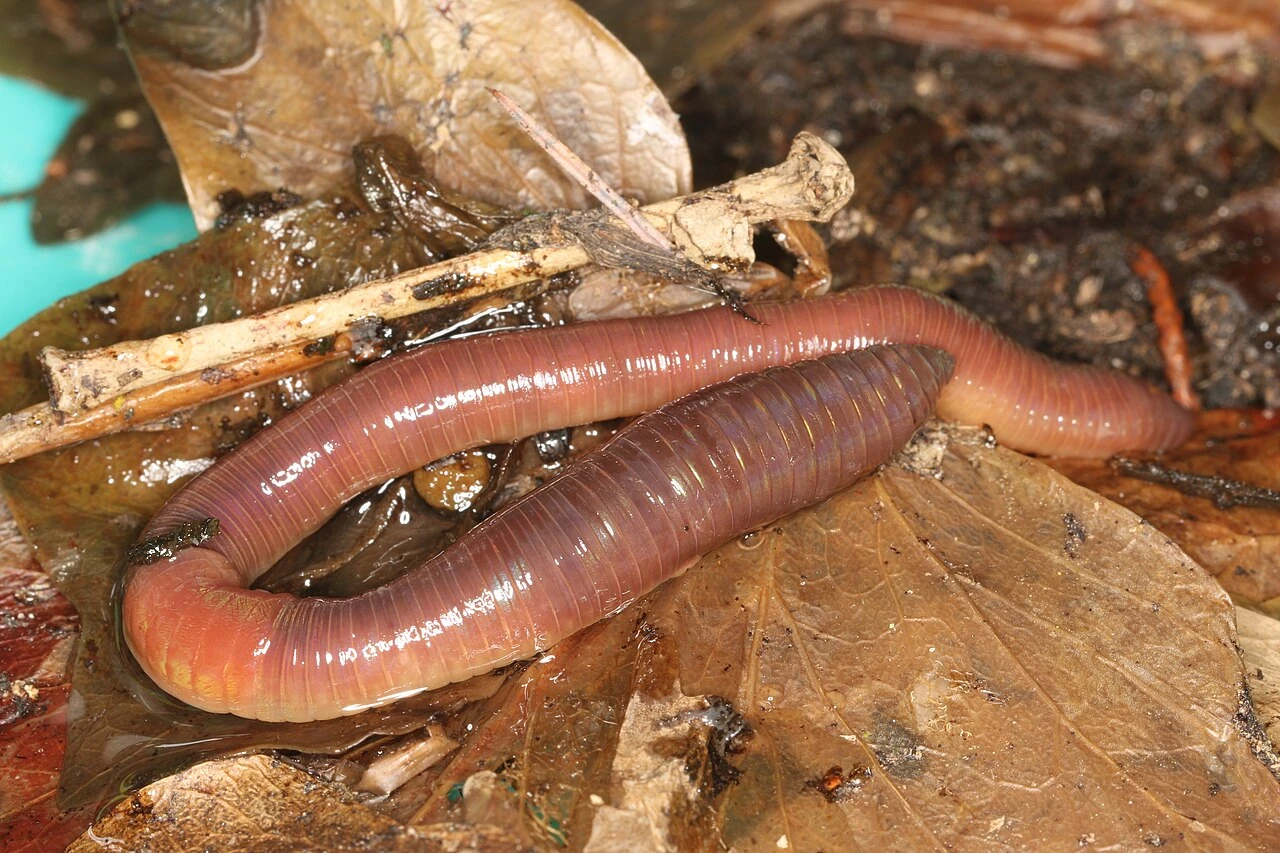
At the top are the Ecosystem Engineers, the heavy machinery. Earthworms swallow compacted dirt and dead leaves and leave behind castings packed with nitrogen, phosphorus and potassium. Their tunnels pull oxygen down to roots and let rain soak in instead of running off. Where worms are scarce, ants and termites take over, and dung beetles drag waste underground and bury nutrients right where the roots are.
Below them are the Shredders and Recyclers. Millipedes and woodlice chew tough leaf litter into flakes. Springtails and mites, tens of thousands per square meter, graze those flakes down further, and their droppings feed the stable organic matter that makes soil dark and fertile.
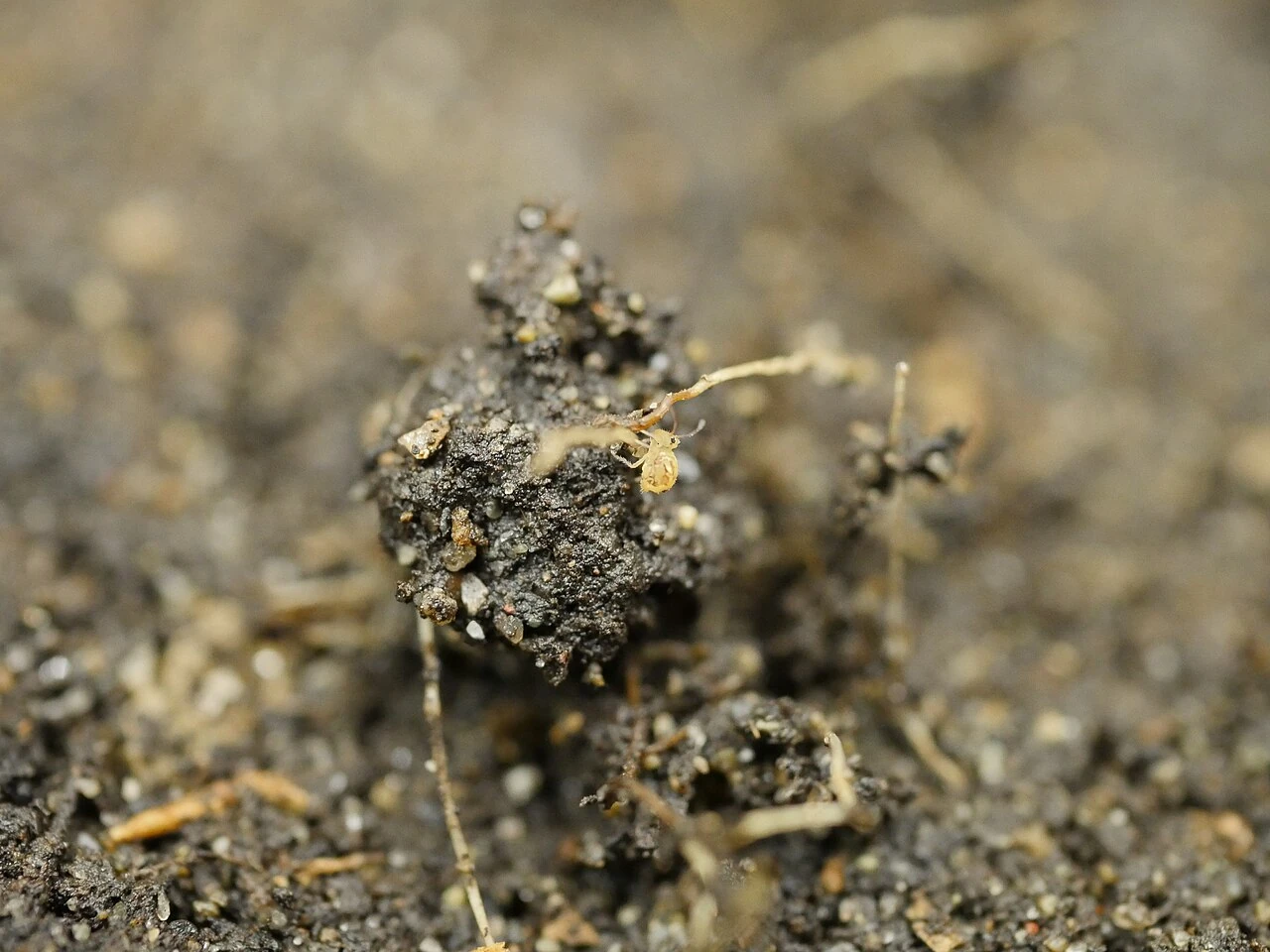
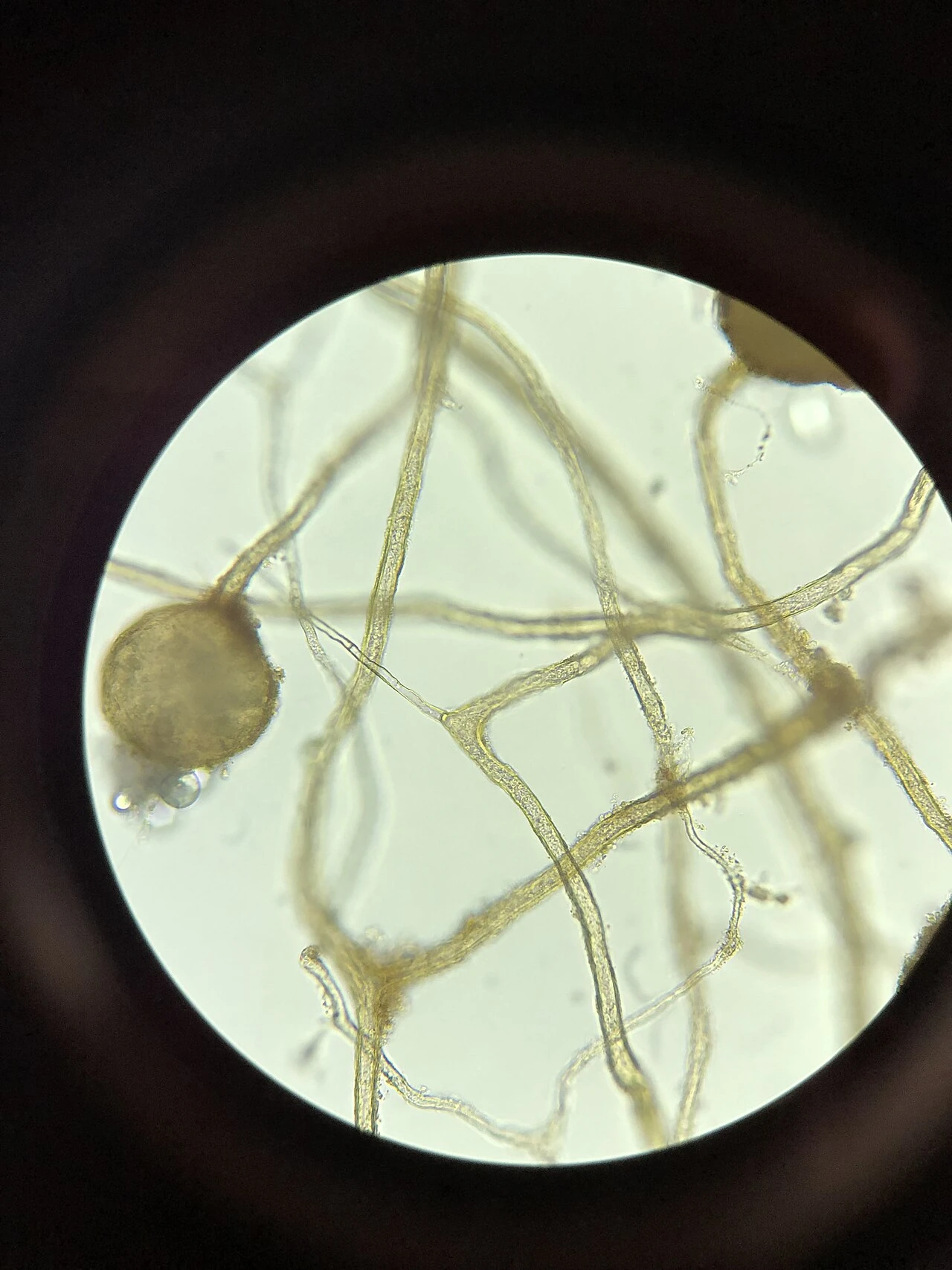
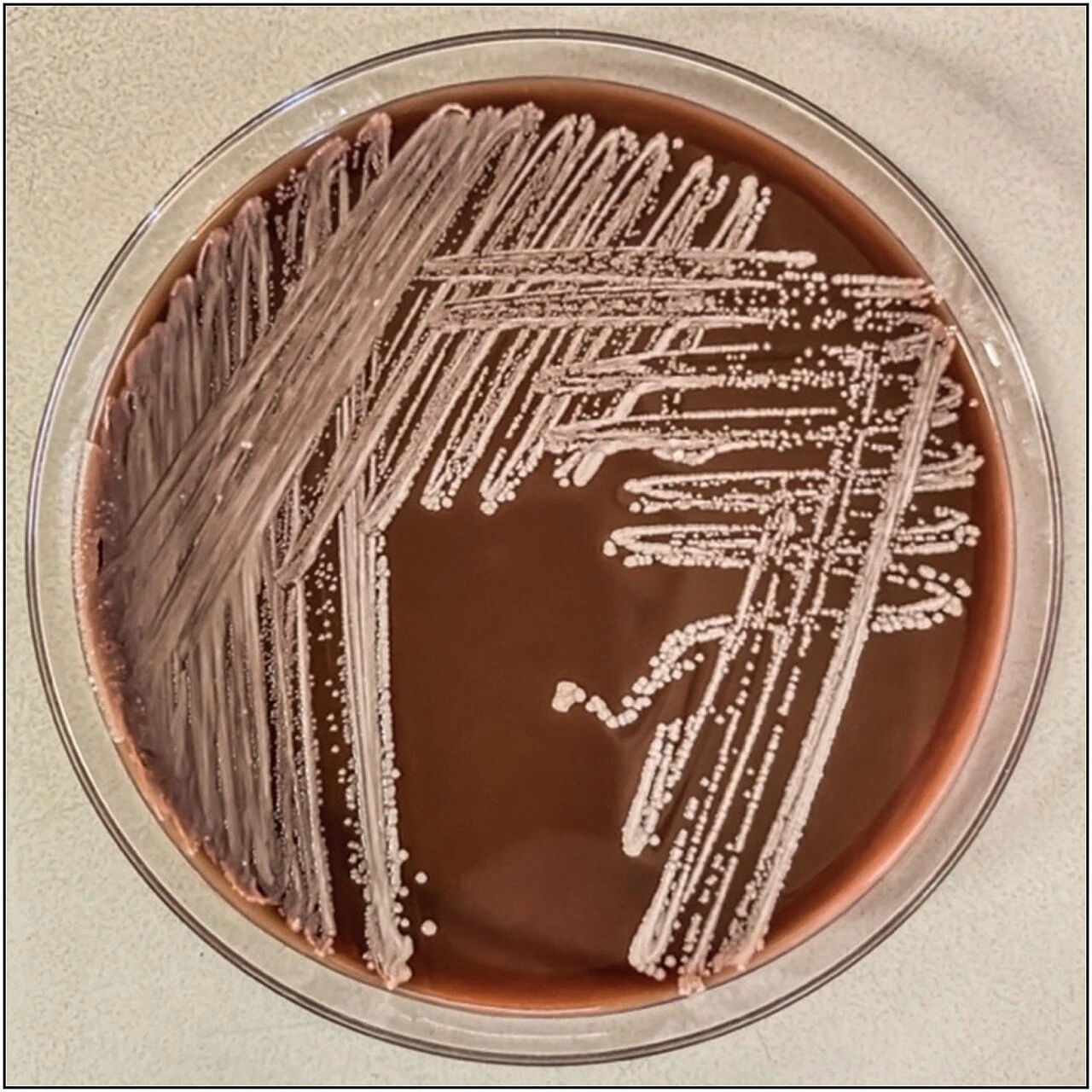
Then comes the invisible layer, which outnumbers everything else combined. Nematodes and protozoa hunt bacteria and excrete the surplus nitrogen in a form plants can absorb instantly. Nitrogen-fixing bacteria pull fertilizer straight out of the air. Soil bacteria like Streptomyces wage chemical warfare on their neighbors, and that arsenal gave us streptomycin and tetracycline. Mycorrhizal fungi wrap plant roots in threads finer than hair, trading water and phosphorus for the plant’s sugar. A single tablespoon of healthy topsoil holds more living organisms than there are humans on Earth.
Follow a single fallen leaf and you can watch the whole chain at work. A millipede shreds it, springtails and mites grind it finer, and fungi and bacteria break it down into its chemical elements. Then an earthworm swallows the mix, drags it underground and packs it into crumbly, aerated soil. Nobody in that chain is coordinating the others.
Simple parts, complex whole
Individually, a soil bacterium or an ant is a very simple machine running a short list of rules: move toward food, away from danger, release a chemical signal. It has no model of the climate, the field or the forest.
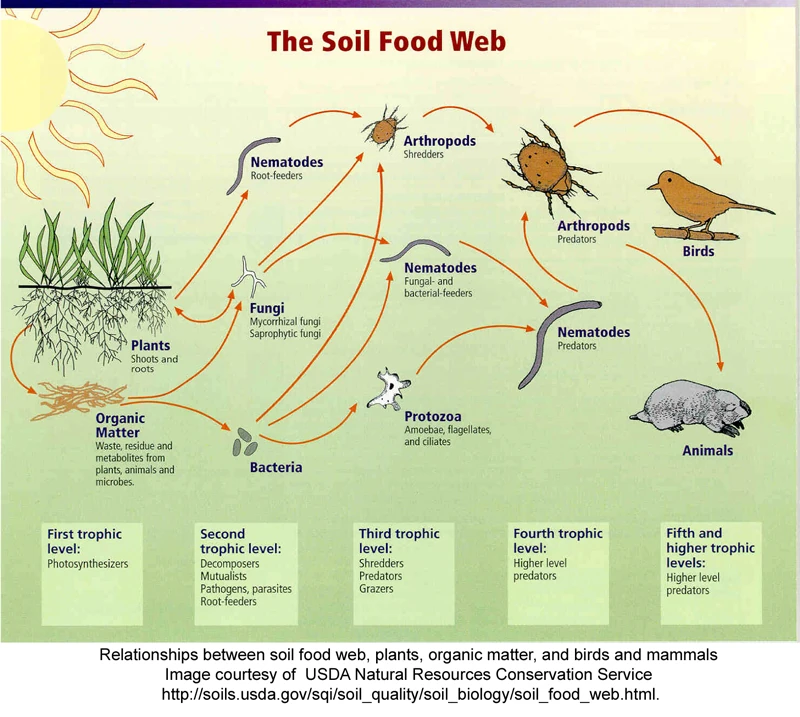
But multiply those simple programs by trillions, let them eat, trade and signal to each other, and something appears that none of them contains: a self-organizing, self-maintaining network. It buffers the soil’s pH, regulates how much nitrogen is released and when, and turns death into the raw material of new life. Complexity scientists call this emergence: behavior that exists at the level of the whole network and can’t be found in any of its parts. Nothing in the soil is in charge of it.
Read it like an engineer
To be clear, soil will never run a spreadsheet. If it’s a computer, it’s a physical one: it solves routing, allocation and memory problems by growing into the answer, the way a soap film finds the smallest surface without doing any math. Read the last decade of research with that in mind and it starts to look a lot like a hardware spec sheet.
The power supply. Soil life decomposes roughly 50 billion tonnes of carbon a year. Run that through basic chemistry and you get a continuous metabolic power of around 60 terawatts. That is about three times humanity’s entire energy use, and more than a thousand times the roughly 415 TWh a year that all the world’s data centers consumed in 2024. That says little about efficiency, since most of the energy goes into simply staying alive. But it gives a sense of the scale, and all of it is solar power, delivered as sugar through roots and dead leaves.
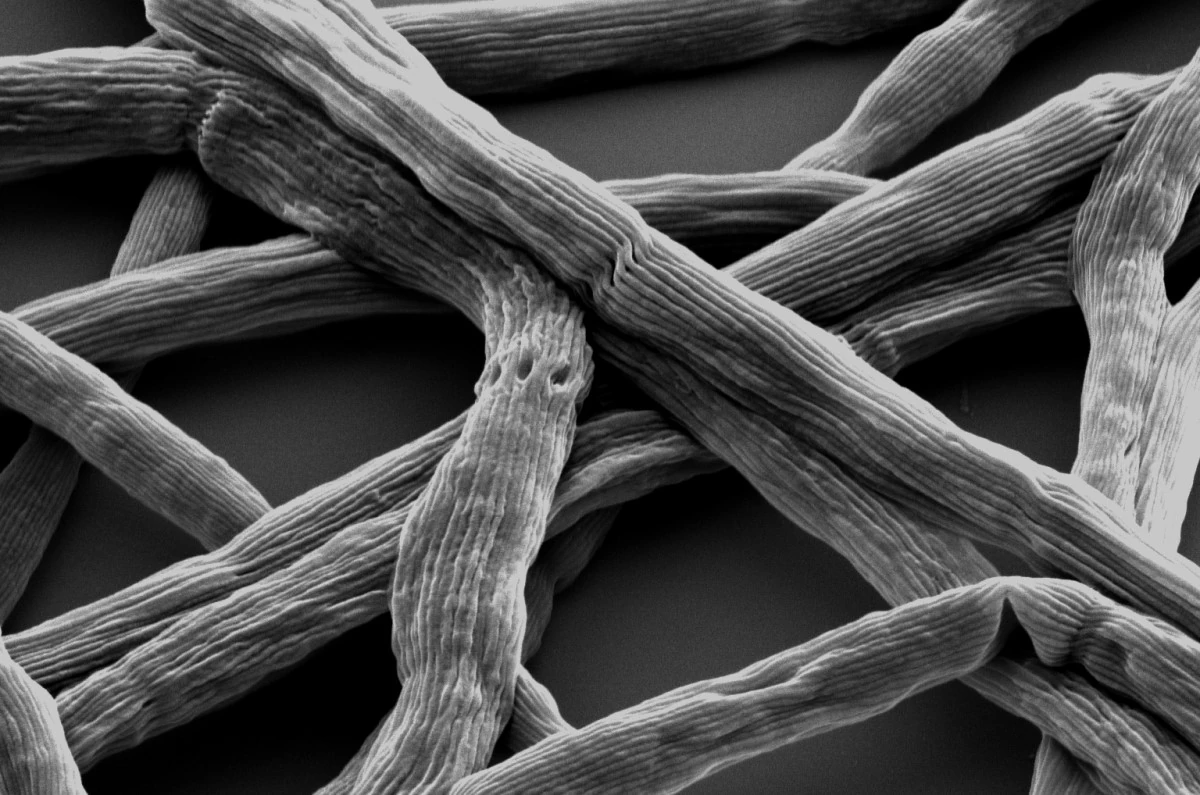
The wires. In the mud beneath ponds and seabeds live cable bacteria, chains of thousands of cells that conduct electrons over centimeters through protein fibers. Direct measurements put their current density in the same range as household copper wiring. Before they were discovered in 2012, biologists assumed living things could only move electrons over distances of nanometers.
The signals. In 2015, researchers showed that biofilms of Bacillus subtilis, a common soil bacterium, send electrical waves through the colony using potassium ion channels, the same basic trick our neurons use. Bacteria also run quorum sensing: every cell releases a signal molecule, and a behavior only switches on once the concentration shows that enough neighbors are present. A computer scientist would call it a distributed threshold decision. Bacteria also share code: through horizontal gene transfer they pass working genes, antibiotic resistance for example, even across species, a bit like pulling a package from someone else’s repository.
The routing. A 2025 study in Nature built a robot to film living mycorrhizal networks, tracking over 500,000 fungal nodes and around 100,000 internal flows. The fungi grow as self-regulating traveling waves, keep transport back to the roots steady, add loops that shorten the paths to new trading partners, and widen and speed up their busiest “trunk routes”. In network engineering terms, that is load balancing and redundant routing, with capacity added where the traffic is heaviest.
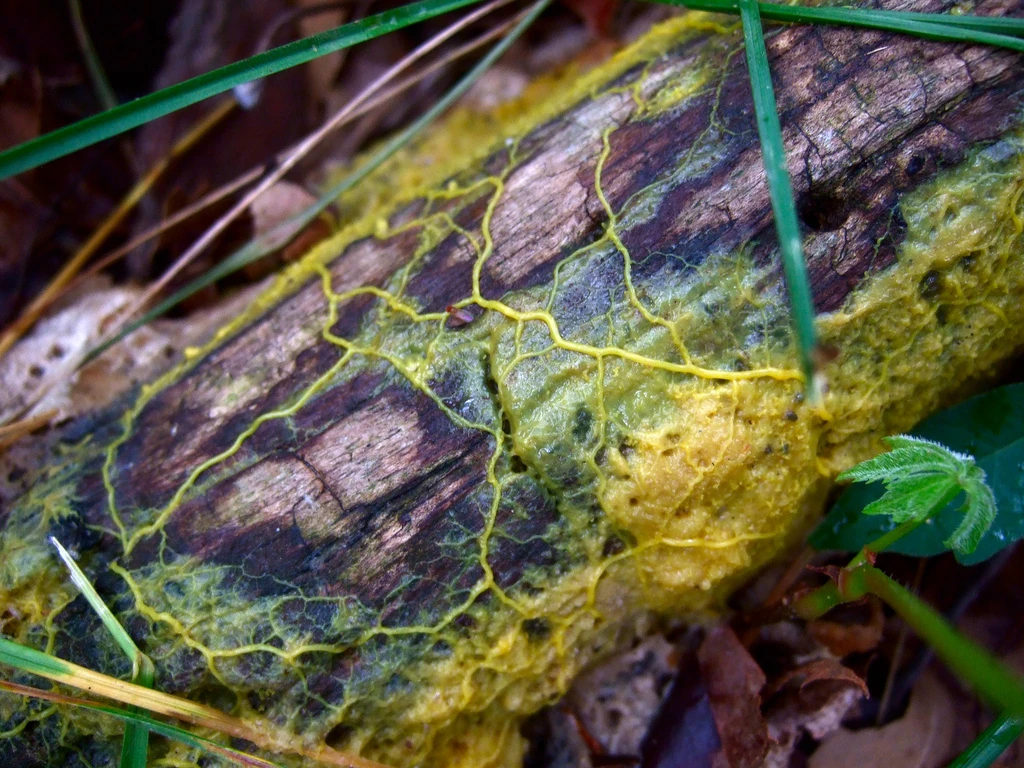
The forest-floor slime mold Physarum polycephalum, a single brainless cell, famously redrew the Tokyo rail network when researchers placed oat flakes in the positions of the surrounding cities. In about a day, its tubes formed a network that matched the real railway on cost, efficiency and fault tolerance.
The memory. The same slime mold also remembers. Researchers at the Max Planck Institute showed that it stores the location of food in the widths of its tubes: tubes near a meal thicken, others shrink, and that pattern steers its future decisions. The memory is the network’s physical architecture, much like the learned weights of a neural network. Bacteria do a version of it too: a brief flash of light on a Bacillus subtilis biofilm leaves an electrical imprint in the exposed cells that lasts for hours.
The immune system. The strongest evidence that the network learns comes from ordinary farm fields, not lab dishes. When wheat is grown year after year in a field infected with take-all, a fungal root disease, the disease first gets worse and then, after a few seasons, fades on its own. Over those seasons the soil builds up Pseudomonas bacteria that produce an antibiotic the fungus is highly sensitive to, and farmers around the world rely on this "take-all decline" to keep the disease in check. Plants under attack appear to recruit protective microbes through chemicals released by their roots, which researchers call the “cry for help”, and the protection can outlast the plant and benefit the next crop sown in the same soil. Soil scientists call it soil memory. It behaves like an immune system that remembers past infections, spread across thousands of species.
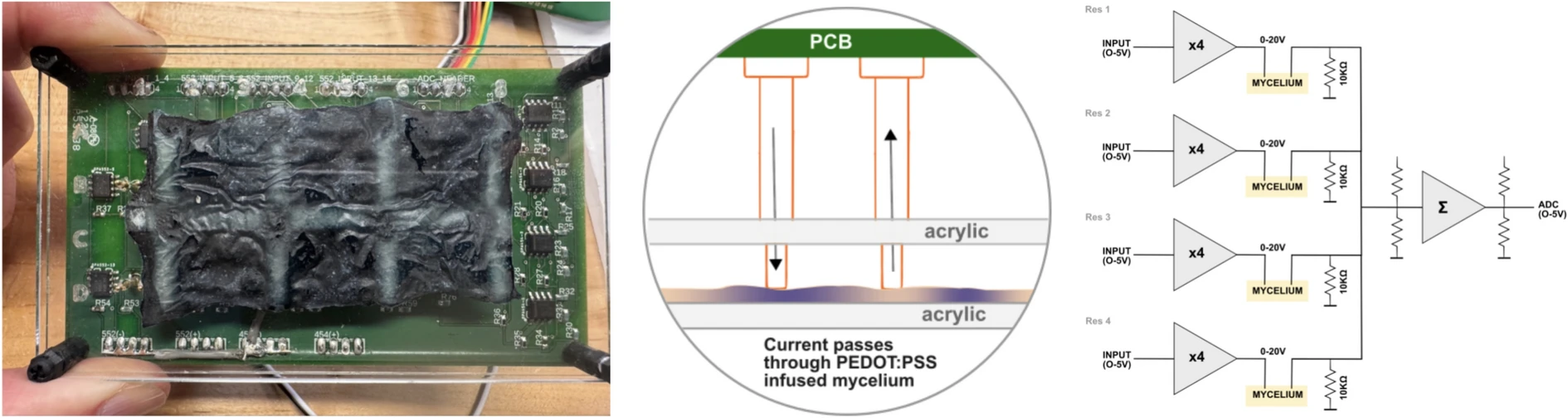
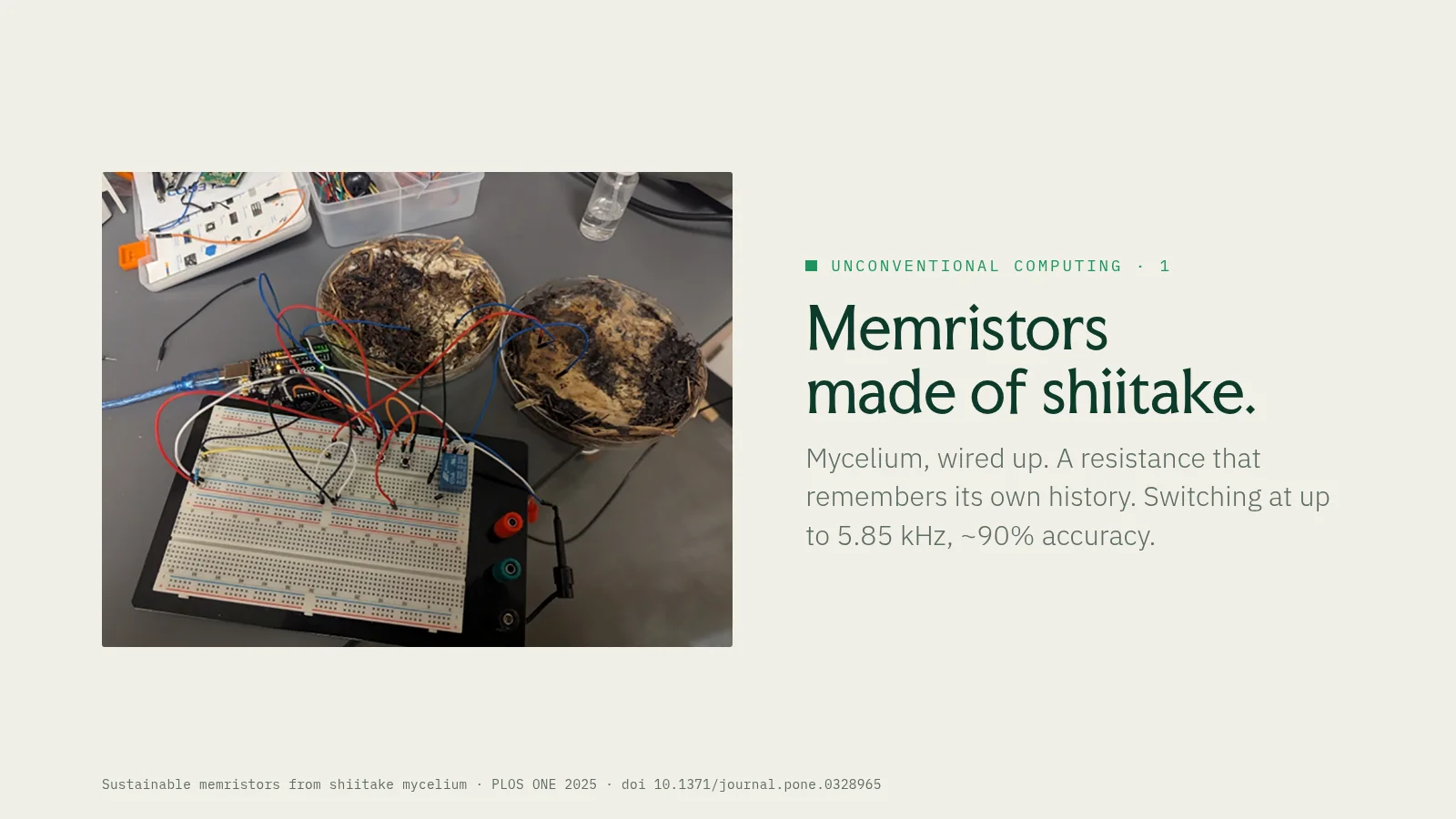
The hardware lab. Computer scientists have started treating all this as usable hardware. At the University of the West of England, Andrew Adamatzky’s lab records fungal electrical spikes that cluster into trains, though calling them a “language” is still speculative. In 2025, an Ohio State team grew memristors out of shiitake mycelium, memory components that switched at up to 5.85 kHz with about 90% accuracy and survived being dried out.
The economy. Plants pay the fungal network in sugar, up to a fifth of the carbon they photosynthesize, and they reward the partners that deliver the most phosphorus per unit of sugar. A 2023 estimate in Current Biology found that the world’s plants route about 13 billion tonnes of CO₂-equivalent carbon into mycorrhizal fungi every year, at least temporarily. That is roughly 36% of annual fossil fuel emissions flowing through a single underground market.
The factory. Nitrogen-fixing microbes on land pull around 120 million tonnes of nitrogen out of the air every year, at air temperature and ordinary pressure. That is about the same output as the entire industrial Haber-Bosch process, which needs 300 to 500 °C, around 200 times atmospheric pressure and roughly 2% of the world’s final energy to do the same job.
It’s worth being careful here. The popular “Wood Wide Web” story, with mother trees sending warnings to their seedlings, has been sharply criticized for running far ahead of the field data. The measured findings above are strange enough without it.
Where it beats our machines
On several counts, nothing we have built comes close.
Start with uptime. Fungi were already trading with plant roots about 407 million years ago, as fossils from Scotland’s Rhynie chert show, and the system has been running ever since. It kept going through every mass extinction since then, including the asteroid that ended the dinosaurs. The internet is about fifty years old, and a server that stays up for a few years without a reboot is something people brag about.
Then there is power. The soil as a whole uses a lot of energy, but it spreads that energy across an almost unimaginable number of tiny consumers. A growing bacterium runs on roughly a trillionth of a watt, and cells short of food can get by on a small fraction of that. A single high-end AI chip draws around 700 watts, and it needs a power plant, a cooling system and a supply chain spanning several continents behind it.
Then decentralization. When a key data center goes down, the services running on it usually go down too. Soil degrades more gracefully. Its intelligence isn’t stored in any one place, so it has no single point of failure, and because many species do overlapping jobs, others can often take over part of the work when one group of microbes is knocked out.
And it builds itself. In the 1940s John von Neumann worked out the theory of a machine that could build copies of itself, and we still haven’t built one that works outside a lab. A soil bacterium does it in a few hours, blueprint included, from whatever it finds around it. The whole system grows, repairs and reproduces itself out of rotting material, minerals and air, with no factory involved, and very little of what it produces goes to waste.
Finally, it works on live input. Our largest AI models are trained on a fixed snapshot of text that people have already written. Soil responds continuously to moisture, temperature, chemistry and disease, and together those responses drive a large share of the planet’s carbon and water cycles.
How we are breaking it
For about a century, industrial agriculture has mostly managed soil through three numbers: nitrogen, phosphorus and potassium. Soil was storage you could top up from a bag. And it worked. Synthetic nitrogen feeds roughly half of humanity. But it works by going around the living network rather than through it, and there’s a growing body of research on what that costs.
Plowing physically severs the fungal network every season, which is roughly like cutting a data center’s cables once a year and waiting for it to rebuild. Heavy phosphorus fertilizer makes plants stop paying their fungal partners, and a meta-analysis of 136 studies found that nutrient enrichment cuts both the abundance and diversity of these fungi worldwide. Degrading gracefully doesn’t mean soil can’t be broken. After heavy disturbance, microbial communities often stay changed for years, and the processes they run change with them. The redundancy that makes soil resilient can be used up.
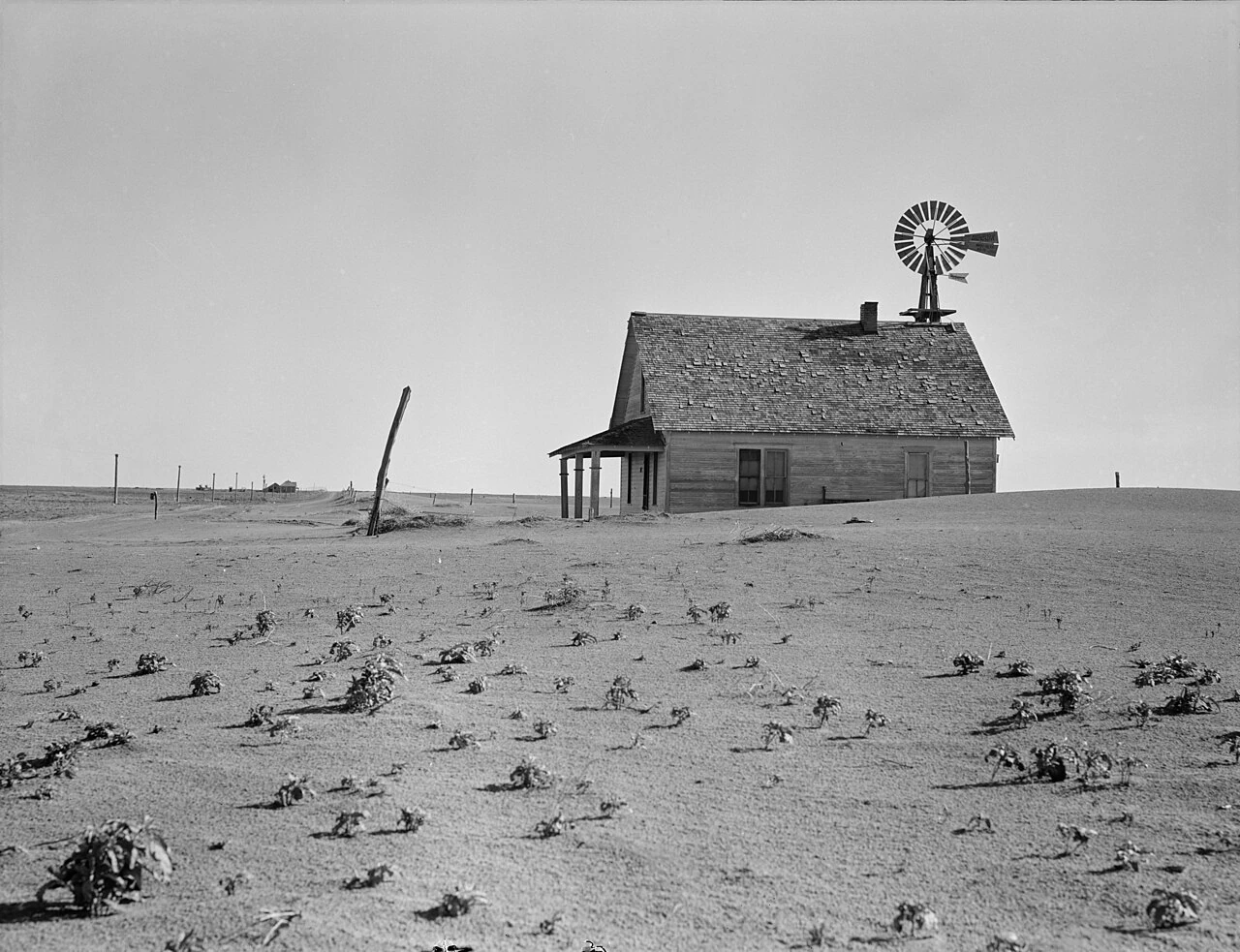
The physical losses are worse. It can take up to 1,000 years to form a single centimeter of soil, yet conventionally plowed fields erode 10 to 100 times faster than soil forms, fast enough to wear through a typical hillside’s soil within the lifespan of a civilization. The EU passed its first soil law only in 2025, while estimating that 60 to 70% of its soils are already degraded.
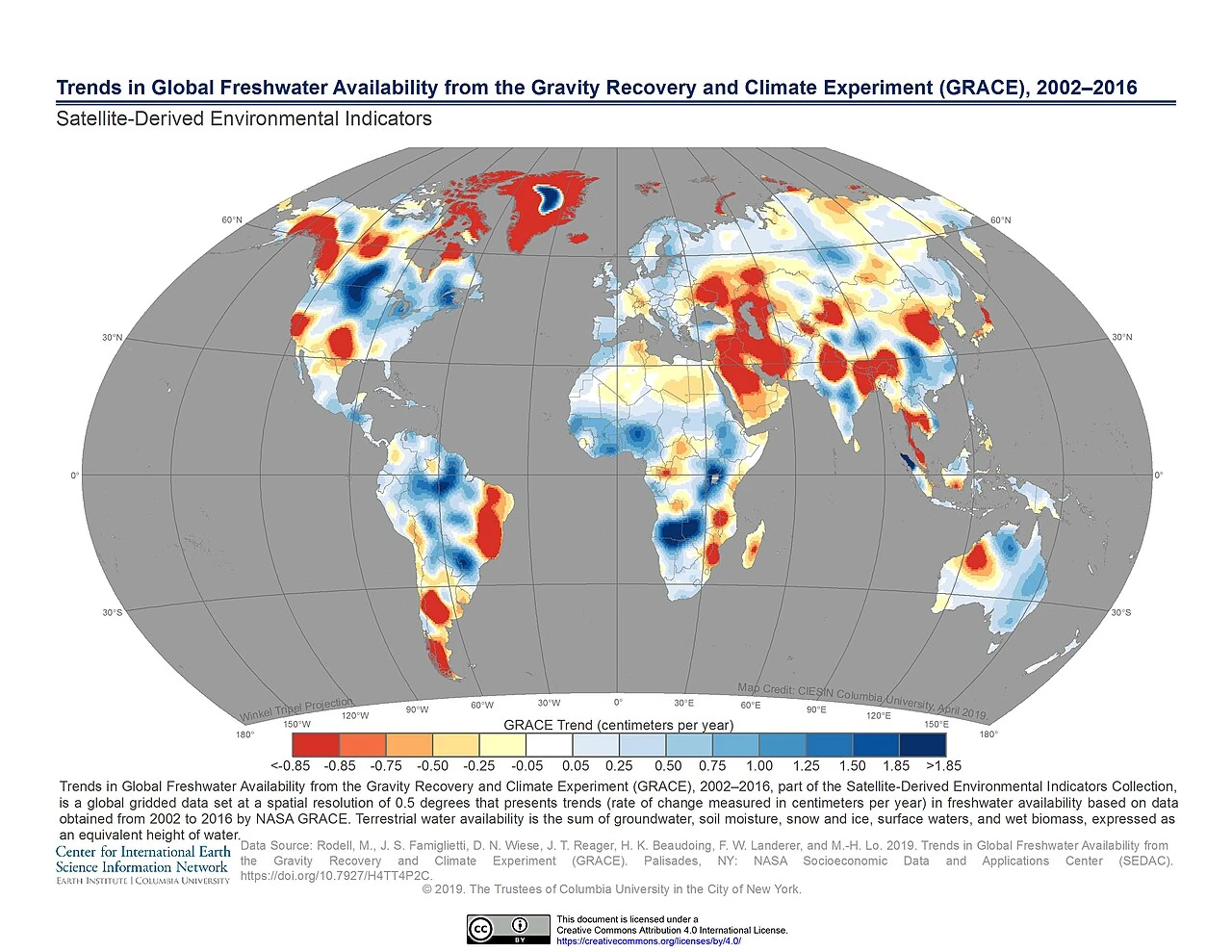
The water is going the same way. Rain refills aquifers by soaking down through soil, and it soaks in best where worm tunnels, roots and fungal threads keep the ground open, while compacted, crusted fields send more of it away as runoff. At the same time, we are pumping out what lies underneath to irrigate our crops. A PNAS study published this month reanalyzed more than two decades of gravity data from NASA’s GRACE satellites at much finer resolution, and found that published estimates of groundwater depletion had been on average 45% too low. Northern India alone is losing about 32 billion tonnes of water a year, nearly double recent estimates.
We’re also losing it before we’ve properly studied it. Around 99% of soil bacteria refuse to grow in a lab. When researchers finally coaxed some to grow by putting their culture chips back into the ground, a screen of about 10,000 of these newly grown strains turned up teixobactin, a new class of antibiotic. The first global map of mycorrhizal fungi, the SPUN Underground Atlas built from 2.8 billion DNA sequences, came out only in 2025. It found that more than 90% of fungal diversity hotspots lie outside any protected area.
How to treat a supercomputer
The usual answer to all of this is a moral one: nature is suffering, we should feel guilty and get back to the land. Most people have learned to tune that message out, and it treats soil as a victim to be pitied rather than a system to be understood.
Try a different frame. Imagine engineers had just discovered a working computer spread across every continent, 400 million years old, running entirely on sunlight, and full of organisms whose genetic code nobody has read yet. Nobody would call it dirt. They would map it, instrument it and study its protocols before touching anything. They would certainly stop wiping it every spring.
Seen that way, most of what soil scientists recommend reads less like conservation and more like competent systems administration. Plowing is a hard reset that severs the network, so you do it as rarely as possible; no-till farming brings erosion close to the rate at which soil forms. Living roots are the power supply, so you keep cover crops growing between harvests and the power never goes off. Bagged fertilizer is a workaround that routes around the network, while compost and crop residue feed it.
The more interesting step is learning to work with it. Some of that has already started. Microbiologists found teixobactin by letting the soil grow what their labs couldn’t. Engineers are growing memory components out of mycelium. The SPUN atlas is mapping the fungal network the way early researchers mapped the internet. And in 2025, a team at Rockefeller University sequenced a single sample of forest soil to 2.5 trillion letters of DNA and assembled hundreds of complete bacterial genomes, more than 99% of them new to science. They then predicted molecules straight from the genetic code, built them in the lab and found two new antibiotic candidates with rare modes of action, without ever growing the bacteria that carry the genes. We’ve spent a century writing to this system through a bag of fertilizer. We’ve barely started reading from it.
A shift in perspective like this has happened before. In 1909 the US Bureau of Soils described soil as “the one resource that cannot be exhausted.” A quarter of a century later, dust clouds from the Great Plains darkened the sky over Washington just as Congress was holding hearings on soil erosion. In 1935 it created the Soil Conservation Service, and in 1937 Roosevelt wrote to every state governor that "the Nation that destroys its soil destroys itself." Within a few years, soil went from inexhaustible dirt to national infrastructure, and the United States still has more than 3,000 soil conservation districts today.
Right now, most of the money and attention in tech goes into building artificial intelligence, while we run down a system that has been online for 400 million years and has no backup. Topsoil that washes off a hillside takes thousands of years to rebuild. Fixing that doesn’t require anyone to go back to the land. It requires seeing the land for what it is: the oldest and largest computing system on the planet, already running and already paid for by the sun. Treat it as infrastructure worth understanding and investing in, and a better relationship with it follows almost by itself.
-
The AI world is delusional. Not a single man-made system has reached the capabilities of a parrot, a mouse, an ant, a worm, or a bacteria: Aeons of uptime. micro-watt consumption. decentralized intelligence. autonomous replication. AI has made intelligence a defining questions of our time. But brains & machines are only a tiny part of the story.
-
Spent a few days in the Alps at a private retreat with some leading minds from science & engineering, discussing natural intelligence. AI has made intelligence a defining questions of our time. But brains & machines are only a tiny part of the story. Gave a talk, learned a lot.
#Projects #FFHCI #OSC #Nature #Science #Regenerative #Complexity
-
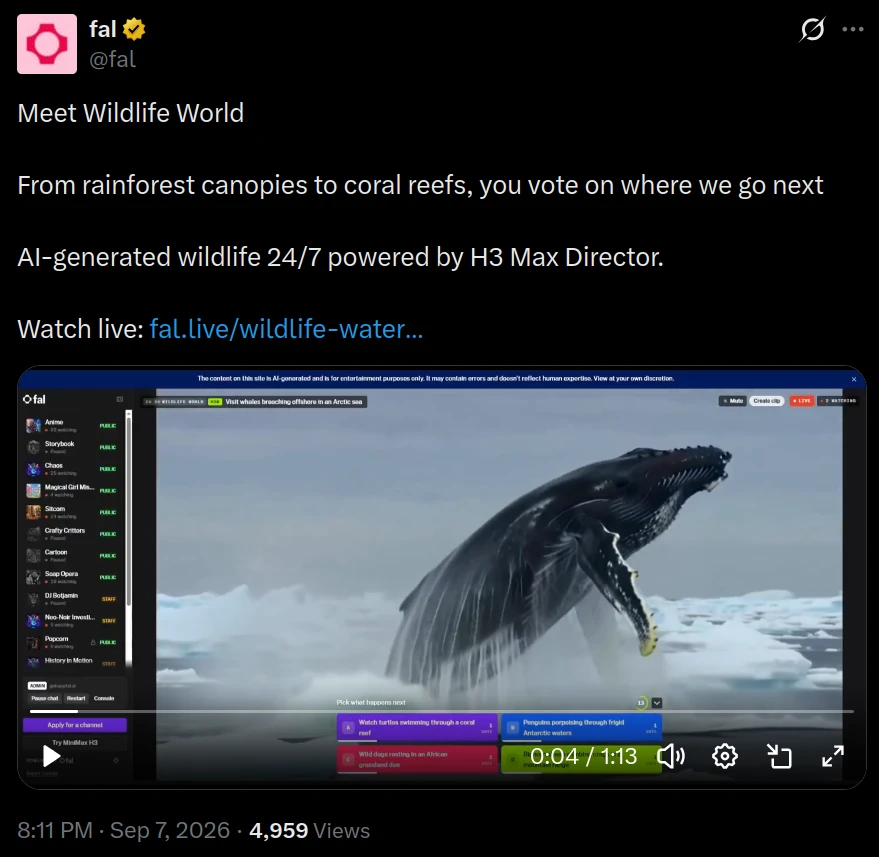
AI-generated wildlife 24/7
"AI-generated wildlife 24/7"..... The extinction of reality is going great! We finally digitized the concept of "outside" so you never have to accidentally look at a real bird again. Infinite slop, replacing the inconvenient, non-monetizable nature that we are rapidly killing.